


In 2001, scholar Joachim Schliesinger’s study of the Lao Lom in Thailand confirmed them as a distinct ethnic group. Because they have remained relatively insular, they have preserved many of their cultural traditions in full. Interestingly, Lao Lom communities are known by different names depending on the village. Those living in Loei Province are called Tai Loei or Tai Lei, while those in Nong Khai Province are known as Tai Dan. They are also referred to more broadly as Tai Lom.
The Lao Lom have Lao ancestry, tracing their origins to the Luang Prabang region of Lan Xang. In the past, Lao Lom men commonly tattooed both thighs. The tattoos did not extend above the abdomen or waist and were used as protective charms. At the same time, they were a display of masculinity and strength, signs of endurance and resilience, marking a man’s ability to lead and provide for his family. Later, when Siam came to rule Laos, Lao Lom men encountered new ideas and gradually reduced the practice of thigh tattooing. After World War II, the custom disappeared altogether.
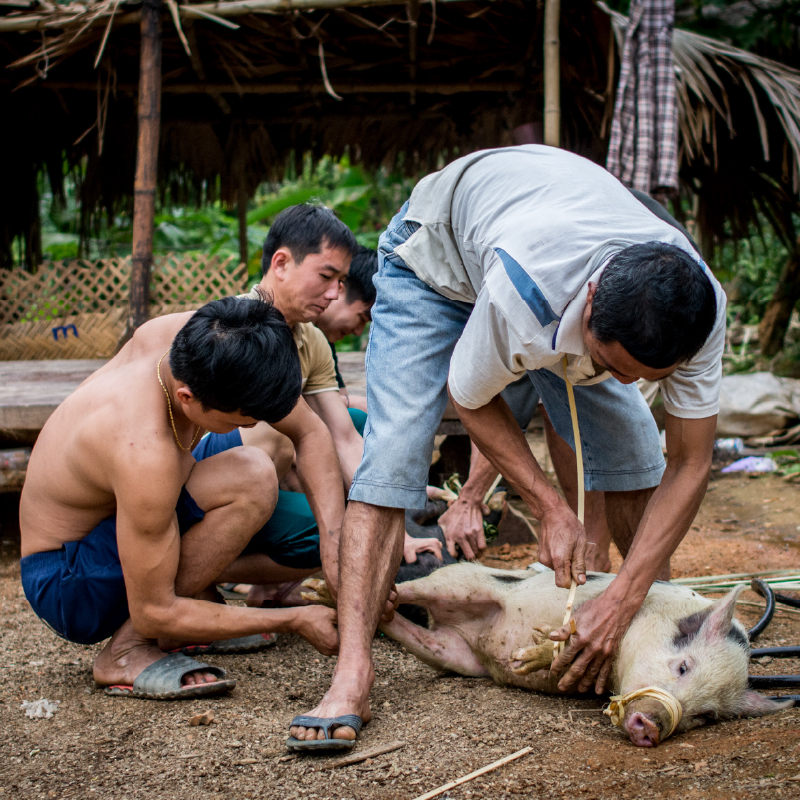
Today, the Lao Lom live in three areas of northern Thailand. They venerate many deities and hold several annual rituals, offering sacrifices and prayers to village guardian spirits for wealth and prosperity. They fear that failing to fulfill these ritual obligations would offend the spirits and bring misfortune upon the community.
Tai Lom way of lifePrayer
Heavenly Father, the tides of history and the upheavals of war brought the ancestors of the Lao Lom into Thailand. May they come to know You as the unchanging God amid life’s shifting circumstances, the Shepherd who has walked with them through generations as they settled and took root. May the Lao Lom seek the comfort and guidance of Your rod and staff, trusting in Your steadfast love and covenant of grace: “Though the mountains be shaken and the hills be removed, yet My unfailing love for you will not be shaken nor My covenant of peace be removed.” Raise up many gospel workers to call them in love, that the Lao Lom may return from every direction to Jesus, the Great Shepherd, offering You their wholehearted and sincere devotion. May the people and government of Thailand receive the Lao Lom with openness, not allowing history or outsider identity to stand in the way of mutual love. In the name of our Lord Jesus Christ we pray, Amen.