Thailand

A Gentle Faith in the Lamplight

FEB
1-17
Writer Teeth

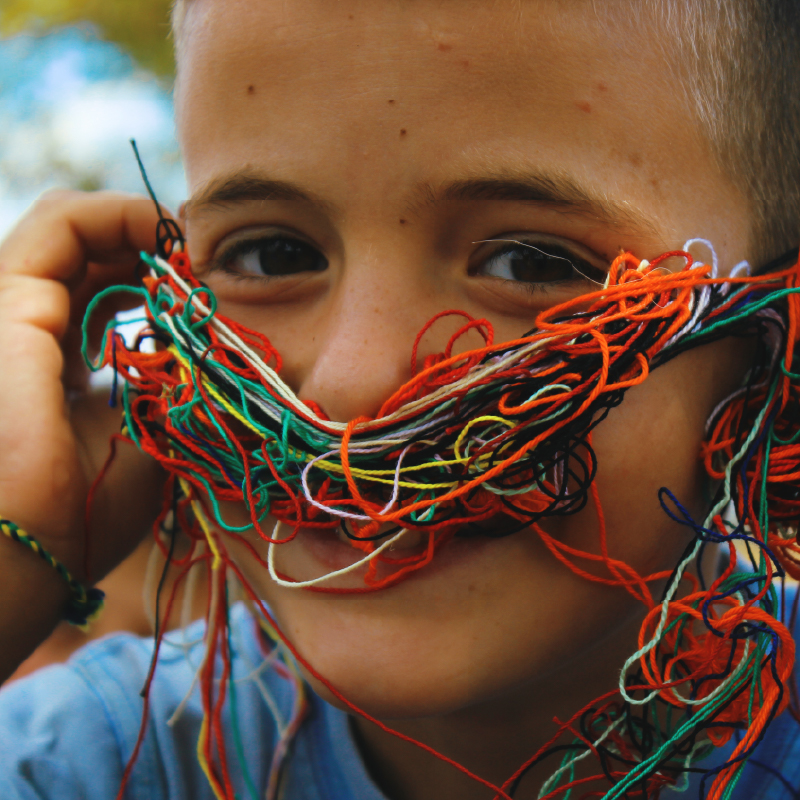
Behind every smile
lies a heart we have not yet learned to read


Culture of Politeness Eleven Social Portraits Unreached People Groups
To pray for Thailand, we must first learn to understand.


สะ-หวัด-ดี-ครับ

sawat di khrap

“Pure enjoyment,” “total relaxation,” “so much fun”… travel guides love using breezy slogans to describe Thailand. Coincidentally, in Thai, the word Thai itself means “free.”

As the only country in Southeast Asia never colonized by Western powers, Thailand truly is a land of freedom. Thais are known for their easygoing, optimistic spirit. They prefer not to overthink, to live lightly, and to move at an unhurried pace. That laid-back rhythm, so different from the pressures of modern life, is precisely what draws visitors from around the world to slow down and breathe.


Mai Pen Rai

“It’s Nothing”….or is it Thai Politeness?

Thais are famously courteous and deeply attentive to manners. Mai pen rai, literally “it’s nothing” or “never mind,” is a national catchphrase and a way of life. It can mean it’s okay, don’t worry about it, no need to trouble yourself, and is often used to decline indirectly.

Thai culture places great importance on preserving face. Direct refusals or criticism are usually avoided. This preference for indirectness, combined with the easy refrain of “mai pen rai,” creates an atmosphere that appears endlessly tolerant. Many visitors come away with the impression that Thailand is open, permissive, and free, that anything goes. In the process, they may miss the deeper emotions behind the smile, unintentionally causing offense without ever realizing it.

“‘Mai pen rai’ is polite, but it doesn’t mean nothing is wrong.”

“To provide for one’s family, life still comes with many constraints.”

Behind the surface of “anything is fine” lie unspoken pressures: the weight of religious tradition, family obligation, economic hardship, and communal expectations.

Smiles and “mai pen rai” become armor, ways of weathering life’s storms. Even in the so-called “land of freedom,” many Thais are still searching for a deeper freedom, one marked by true release, inner peace, and courage without fear.

May this thirty-day journey of prayer help us come to know Thai people more fully—to draw near to the layered, often unspoken emotions behind the smile. And may God lead us, as well, to reflect on and experience the true freedom He gives.

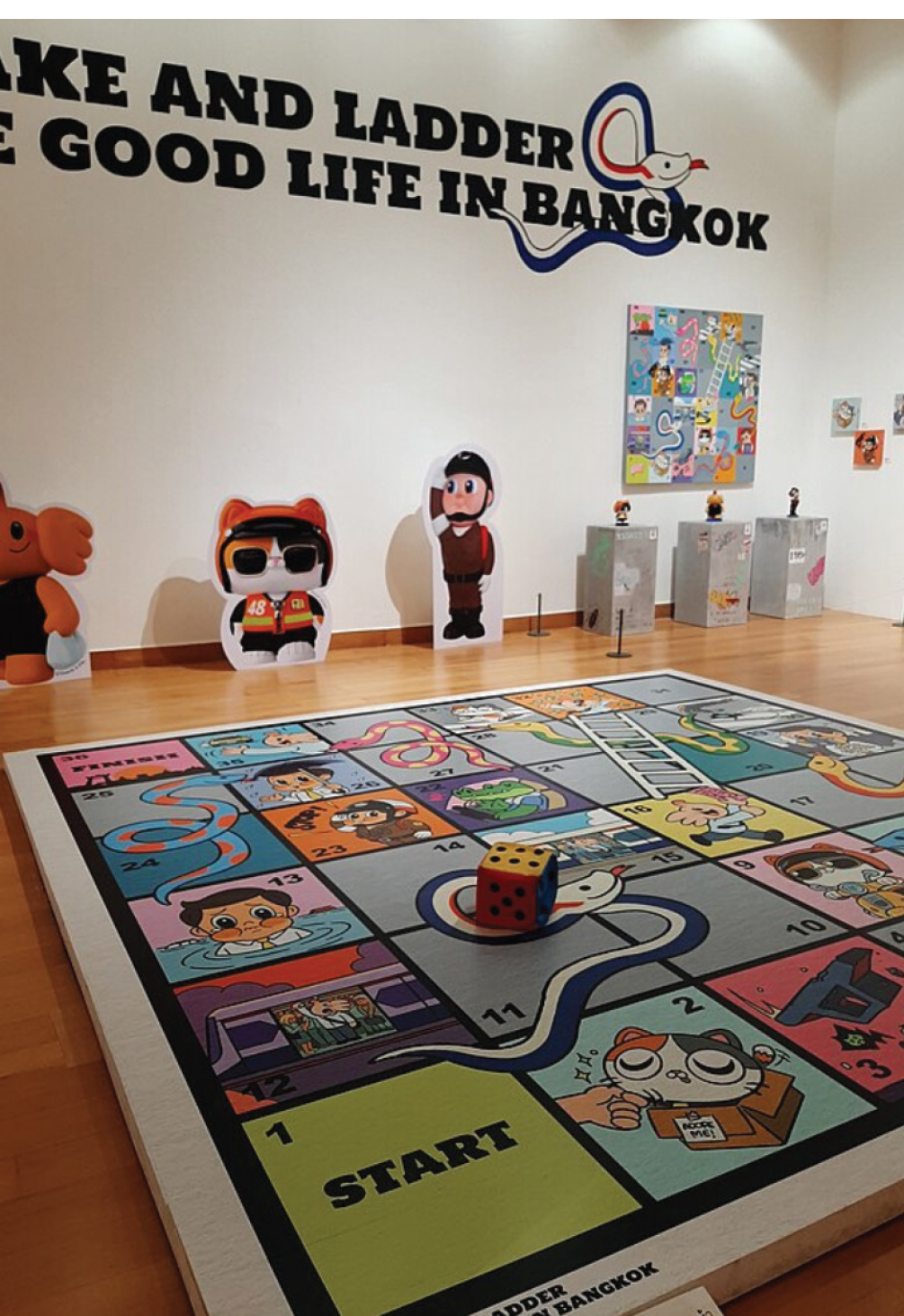
Bangkok: A Design Capital in Its Own Right

Thailand has quietly reinvented itself through the soft power of design. Rather than making bold, attention-grabbing statements, Thai design leans toward the everyday. It is rooted in lifestyle, practicality, and a distinctly playful sense of humor. Ordinary household items become objects of delight, infused with warmth and an easygoing optimism.

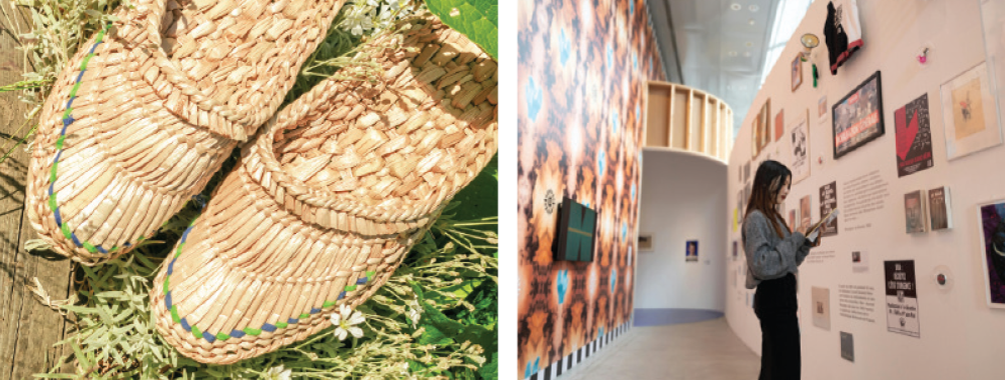
Traditional crafts are reimagined, and local products are refreshed with packaging so beautiful that visitors can’t help but buy them. Design, however, doesn’t stop at the storefront. It spills out into the streets with Instagram-worthy corners and affordable fashion labels by emerging designers, inviting you to wander until your legs ache and your wallet grows lighter, gladly so.


You’re Always “Folded” in Thailand

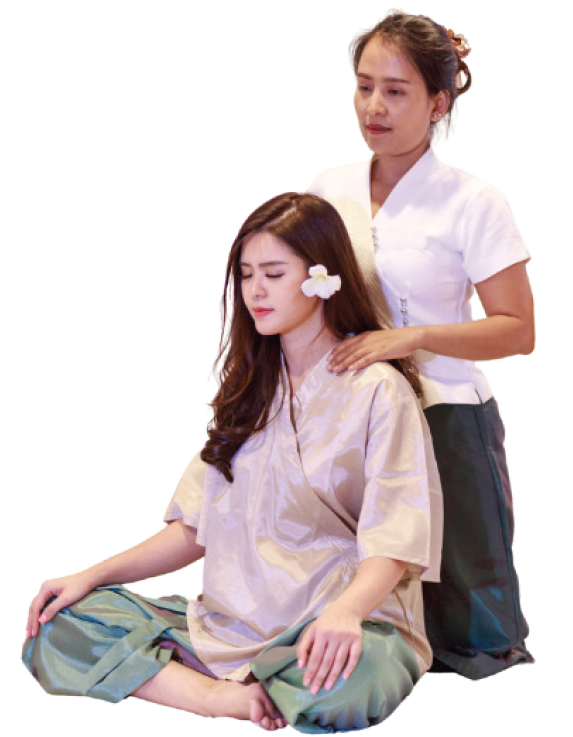
What kind of grappling move is this? Relax—it’s just Thai massage. Welcome to the Three Moves of Ultimate Thai Comfort.


Thai massage doesn’t rely on hands alone. Elbows, knees, even feet come into play, delivering a sensation that’s equal parts ache and bliss. First-timers often gasp: “Wait—this is allowed?”


01

Sit, legs crossed

Your back is pressed, shoulders kneaded, tension slowly released.

02

The Fold

Your body is stretched and bent—like an advanced yoga pose you never signed up for.

03

Snap! The Final Pull

*Crack!* A sharp, gratifying finish. Painful, refreshing, and strangely satisfying.

ไฮโซ  Hi-So


Short for High Society, Hi-So refers both to Thailand’s social elite and to a lifestyle associated with taste, refinement, and status.


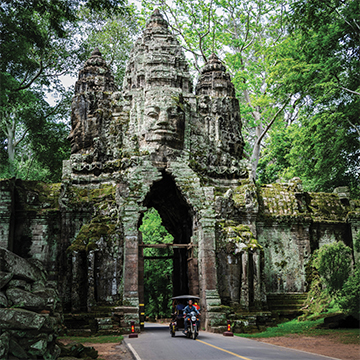
Thailand has a strong awareness of social hierarchy. Historically, its social order was shaped by Indian Brahmanical ideas, transmitted through the Khmer Angkor civilization. Society was organized vertically, from royalty to commoners, farmers, and slaves. With modernization, a new wealthy class emerged, and Thai society came to be broadly divided between the Hi-So (those with money, power, and prestigious family backgrounds) and the Lo-So (those with lower status, fewer resources, and little social influence).

Today, Hi-So and Lo-So function as powerful social labels. In Bangkok, people who dress well, drive luxury cars, live in upscale neighborhoods, and have fair skin are often assumed to be Hi-So. Lo-So, by contrast, has become shorthand for rural backgrounds, darker skin, manual labor, poverty, and a perceived lack of taste or refinement.

On the surface, Thai society appears easygoing, everything seems “mai pen rai,” “no problem.” Yet these class labels quietly shape how people see themselves and what they aspire to. Under the pressure to become Hi-So and avoid being seen as Lo-So, many Thais find it difficult to feel truly free, or to say “it’s nothing” with genuine ease.


  • May Thai people discover their true worth in the Lord, no longer confined by definitions of class, wealth, or appearance, for God looks at the heart (1 Samuel 16:7).
  • May Christians draw near to those who are overlooked, helping them see how precious they are in God’s eyes.

*Thai friendliness toward tourists is also shaped by class perceptions. Foreigners are often assumed to be wealthy, as people who can afford to travel abroad. Therefore they are seen as holding higher social status.

ใจ  Jai


Heart—by extension, one’s feelings, attitude, and inner disposition.


When sharing the gospel with Thai people, the heart matters deeply.

In Thai culture, the heart (jai) is the primary measure of good and bad. How people relate to one another, make decisions, form intentions, choose yes or no, show compassion or indifference…all of this is first weighed in the heart. That is why the Thai language is rich with expressions built around “jai.”

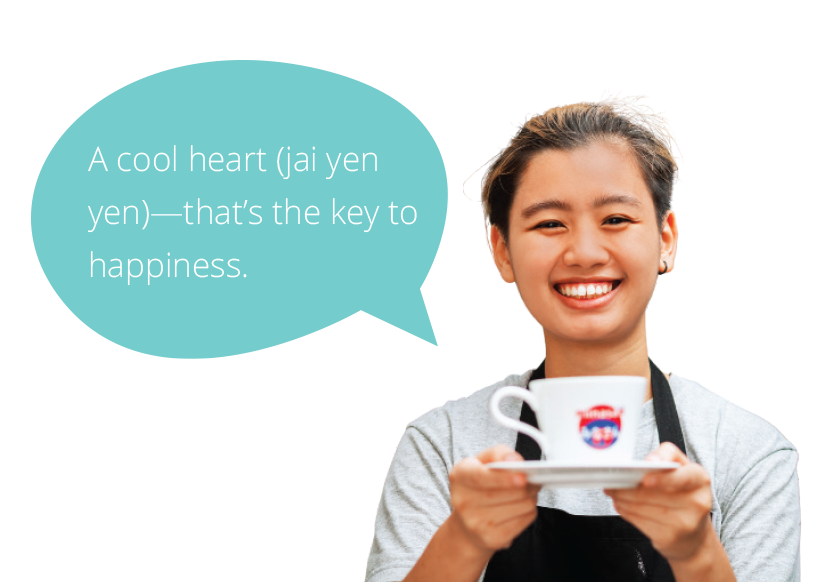
Because the heart is so important, Thais tend not to speak too directly. Direct words can hurt another person’s heart. Jai is closely tied to feelings, and the feelings of others are taken seriously. Many Thai expressions describe emotional states through the heart: human tragedy and regret often arise from a “hot heart” (jai ruoan: impatience, impulsiveness), while those with a “cool heart” (jai yen: calm, composed) are seen as truly happy.

For this reason, when speaking about the gospel with Thai people, one must first have heart.

Learn More Thai “Heart” Words

Kao Jai – to understand; literally, “to enter the heart”

Jai Gwâang – generous; “a wide heart”

Jai Kâep – narrow-minded; “a cramped heart”

Jai dam – cruel, cold-hearted

Jai Dee – kind-hearted; “dee” means “good”

Nahm Jai – “water of the heart,” expressing kindness, thoughtfulness, generosity

Kreng-Jai – a deferential, considerate restraint: respect, not imposing, thinking of others first


  • We pray that when Christians engage with Thai people, they would not rely on reason alone, but love with heart and act with compassion. May both life and words reflect God’s heart for Thailand.
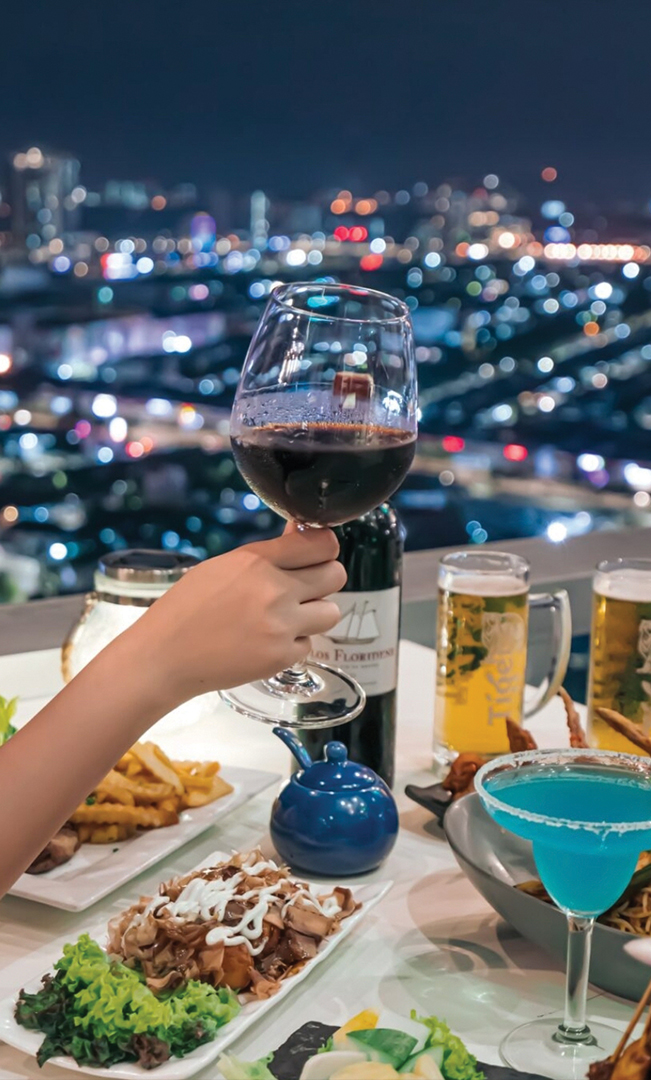
Cool Drinks You Gotta Try in Thailand

Thai milk tea: The iconic orange brew. Going to ChaTraMue (Hand Brand) at the airport is often a traveler’s first ritual after landing.


Butterfly pea flower tea: Mixed with honey and lemon, shifting color as you stir.

Pandan leaf tea: A traditional herbal drink, light, fragrant, and refreshing in the heat.


Red Bull: Yes, the energy drink originated in Thailand, and has deep ties to the brand behind the famous F1 racing team.

Gentle Thai Worship Songs to Learn

What A Beautiful Name

Thailand is deeply international, and many well-known worship songs have been translated into Thai.

Listen to Hillsong’s Thai version of “What a Beautiful Name.”

Love and Faithfulness

A tender Thai worship song with a fresh, everyday feel.

“I see the sun, awakened by mercy.
You send a gentle breeze
so I can still breathe today, still exist.
You never sleep.
Knowing this, my heart rests.”

Speak Thai, Understand the Thai Heart


Decoding the heart behind the language


 Sabai Sabai!

      Sanuk!

Mai Pen Rai! 


Decoding the heart behind the language

สบายๆ

Sabai Sabai
Comfortable · Relaxed · Unforced
Said with a gently drawn-out tone

Thai people value happiness and take pride in enjoying life, relaxing, and keeping things light. Sabai is one of the most commonly used words in everyday conversation, usually drawn out slightly and spoken in a calm, easygoing tone. It broadly conveys a sense of being relaxed, comfortable, at ease, and unburdened.

When repeated (Sabai Sabai) the feeling is amplified. It’s similar to how young people say “chill.”

It can mean: “It’s good.” “Don’t stress.” “Take it easy.” “Everything’s fine.”

If someone asks you “Sabai dee mai?” (“How are you?”), a perfectly natural reply is simply: “Sabai Sabai!”


 This reveals something important: Thai culture is not drawn to seriousness, rigidity, or moral lecturing.

So when sharing the gospel, it’s often best to begin gently, light, relational, and unforced.


Faith Can Be Joyful

สนุก

Sanuk
Joyful · Fun · Delightful · Life-giving
Thai-style happiness

Thai people place great value on enjoying the present. The idea “To live is to be happy” is captured in the word Sanuk. It describes a way of life that is light, playful, and free, finding joy in ordinary moments, even without material abundance.

When you ask a Thai person, “Did you have fun?” they often don’t answer “yes” (chai).

Instead, they say simply: “Sanuk!” The word also appears in blessings, such as: “Khŏr hâi sànuk ná” — “Hope you have a great time!”


 Scripture speaks often about joy—for example, 1 Peter 1:8b.

This gives us a natural bridge. We can tell Thai friends that following Christ is also Sanuk, a joy that is deep, life-giving, and free.


Got Tension? Say Mai Pen Rai

ไม่เป็นไร

Mai Pen Rai
“It’s okay · No problem · Don’t worry”
Thailand’s social lifesaver

Thai people often say “Mai Pen Rai.” It reflects their preference for harmony and calm conversation. But since conflict and trouble are unavoidable in life, this “it’s okay” mindset steps in as a social buffer, softening tension and easing everyday frustrations.


In a relationship-centered culture like Thailand’s, open anger or loud confrontation is seen as damaging to harmony and relationships. Some describe Mai Pen Rai as a kind of social formula: a way to defuse conflict, protect the other person’s dignity, and preserve one’s own face at the same time.

This outlook is also shaped by Buddhist thought, especially the idea that life is suffering. Arguments, complaints, and clinging only deepen that suffering. Letting go brings relief and freedom.


 Does the Bible teach Mai Pen Rai? In Colossians 3:13, Scripture says: “Bear with each other and forgive one another if any of you has a grievance against someone. Forgive as the Lord forgave you.” So when friction arises among brothers and sisters, we, too, are invited to practice a kind of Mai Pen Rai, one rooted not in avoidance, but in forgiveness. This also opens a bridge for conversation with Thai friends. The Christian faith likewise values reconciliation, patience, and gracious forbearance.


Thailand’s Polite Hello

สวัสดี

Sawadee
“Hello”
The Thai way of greeting

When Thai people meet, they usually don’t shake hands. Instead, they perform the wai (ไหว้), bringing the palms together, and say “Sawadee.”

Three common forms of the wai:

  1. To monks (highest respect): Bow the head deeply, hands angled forward until the thumbs touch the forehead.
  2. To elders: Bow with thumbs touching the tip of the nose.
  3. To peers or the general public: Palms together at chest level, with a slight bow and gentle forward tilt of the hands.

When receiving a wai, it’s enough to return the gesture with hands at chest level—no need to bow or raise the hands forward.


 Scripture speaks often about joy—for example, 1 Peter 1:8b.

This gives us a natural bridge. We can tell Thai friends that following Christ is also Sanuk, a joy that is deep, life-giving, and free.


Thai people wear easy smiles, with these words never far from their lips.

These everyday expressions reveal something deeper about Thai character and values. To learn these Thai phrases is not just to learn the language, it is to begin to understand the unseen heart behind the smile.

30 Days of Prayer for Muslims

God’s Word Is Never Chained
2月18-28

Many Muslims come to know Jesus through the Gospel of John. This month, we encourage readers to read through this book in its entirety, practicing lectio divina each day, meditating on one verse at a time and turning Scripture into prayer and action.

The intercessory materials for February 18 to March 19 are reproduced, with permission from OM. We gratefully acknowledge their permission.


This month, let us pray together
that during Ramadan,
God’s Word will continue to open hearts,
for the Word of God is never chained.


Muslims that Read the Bible

During Ramadan each year, we join the global church in 30 Days of Prayer for the Muslim World. This year, we have specially gathered thirty testimonies of Muslims who came to faith in Christ through reading the Bible. These stories reveal the power of God’s Word, able to cross every boundary and overcome every limitation. When God’s Word enters the human heart, it accomplishes His work.

Among these testimonies are people who read the Gospel of John and recognized Jesus as the one and only Savior. Others were drawn by the God revealed in Scripture and discovered that He longs for a personal relationship with humanity, deeply moving their hearts. Some were shaken by Jesus’ love in laying down His life for sinners. Others, fleeing war or wandering without direction, found answers to life in the pages of Scripture. Still others, former extremists or prisoners, encountered the Bible behind bars. As they read of Jesus forgiving sinners, they came to understand that God is not only a judge, but also a God who forgives and heals, and their lives were radically transformed.

There are also many who studied the Bible alongside Christians and, under the light of truth, chose to believe in Jesus. Some even began reading Scripture with the intent of refuting the Christian faith, only to be won over by the depth and coherence of biblical truth, and by the love of Jesus, finding their life direction forever changed.


A Sacred Encounter Within the Pages

The Bible is not merely a religious text, a system of doctrines, or a book of historical insights and moral teachings. The Bible is the Word of God, “God-breathed” (2 Timothy 3:16). Every word and every sentence does not arise from human imagination, philosophy, or experience, but comes from the eternal God, carrying heavenly authority and the power to transform hearts.

No other book in human history has crossed time and culture as the Bible has, bringing people of vastly different backgrounds, languages, and circumstances into a real encounter with the Creator. The Bible is God’s chosen vessel of revelation for all humanity, revealing who God is, who we are, why we exist, where our brokenness comes from, and how we may receive the only true salvation.

Regardless of ethnicity, social status, cultural background, or religious tradition, anyone who is willing to open the Bible and open their heart can hear God speak through it. In this month’s thirty testimonies, many Muslims encountered God precisely in this way: by reading Scripture, hearing God’s voice, being pierced by His Word, repenting, believing in Christ, and experiencing a complete transformation of life.


The Wonder of Bible Translation

In today’s information age, Muslims have greater access than ever to digital Bibles, audio-visual Scripture resources, and even direct interaction with Christians through social media, enabling them to engage the gospel more actively.

Our short-term missions team once visited a sensitive region where local missionaries recognized this opportunity and began investing in audio Bible translation several years ago. Portions of both the Old and New Testaments have now been completed. What is especially moving is that many of those involved in the translation work are not Christians, but Muslims. Each week, they “work” alongside Christians, engaging in in-depth discussion over every verse being translated. We earnestly pray that they would not see this merely as a job, but that God’s Word would touch their hearts and lead them to open themselves to Jesus as Lord. We also pray for their safety, for if their participation in Bible translation were discovered by the community, they would face grave danger.

The greatest challenge of this ministry is the tension between the desire to make the audio Bible widely accessible and the reality that such work is considered illegal in the local context, requiring extreme caution and secrecy. May the Lord grant wisdom to the local workers, that they would not lose heart amid every challenge, but press on in reliance on Him.


Islam and Christianity
Foundational Positions and Shared Language


Islam
Christianity
Shared Language
Identity

Accepts ʿĪsā (Jesus) as al-Masīḥ (the Messiah) and as one of the prophets (Qur’an 4:171)

Jesus is the Son of God, God incarnate

Acknowledges Jesus as coming from God and sent by God

Birth

Accepts that Jesus was born of the virgin Maryam (Mary), without a human father (Qur’an 19:19–21)

Jesus was conceived by the Holy Spirit and born of the virgin Mary

Affirms the miraculous birth of Jesus

Divinity

Denies that Jesus is God and rejects the Trinity (Qur’an 5:116)

Affirms Jesus as fully God and fully human

Jesus performed miracles, spoke truth, and came from God

The Cross

Denies that Jesus was crucified, viewing it as a substitution event (Qur’an 4:157)

Affirms that Jesus died for atonement and rose again

Jesus is seen as one who suffered and obeyed God

Scriptures

Accepts the Torah (Tawrat), Psalms (Zabur), and Gospel (Injil) as revelations from God

Holds that these scriptures were later corrupted, and that the Qur’an is the final and complete revelation

Considers Arabic the original language of revelation

The entire Bible is God-breathed

The Bible is the Word of God, preserved throughout history

The Bible includes Hebrew, Aramaic, and Greek

Belief that God revealed scriptures through prophets

Reverence for Moses, David, and Jesus

Emphasis on original texts and correct interpretation

Salvation

Emphasizes pleasing God through deeds; denies original sin

Emphasizes forgiveness of sins and grace

Recognition of the need for forgiveness and salvation

Attributes
of God

Emphasizes God’s absolute power, majesty, and judgment

Emphasizes both God’s justice and His love

God is righteous and judges with justice

Note: Mobile users may swipe left or right to view the full content

A Foreigner with a Thai Heart

01Feb

Udom Suksanaih has tens of thousands of Thai followers on YouTube. His quirky humor, fluent and beautifully authentic Northern Thai accent, and down-to-earth videos about everyday life in the North have won him a wide and loyal audience.
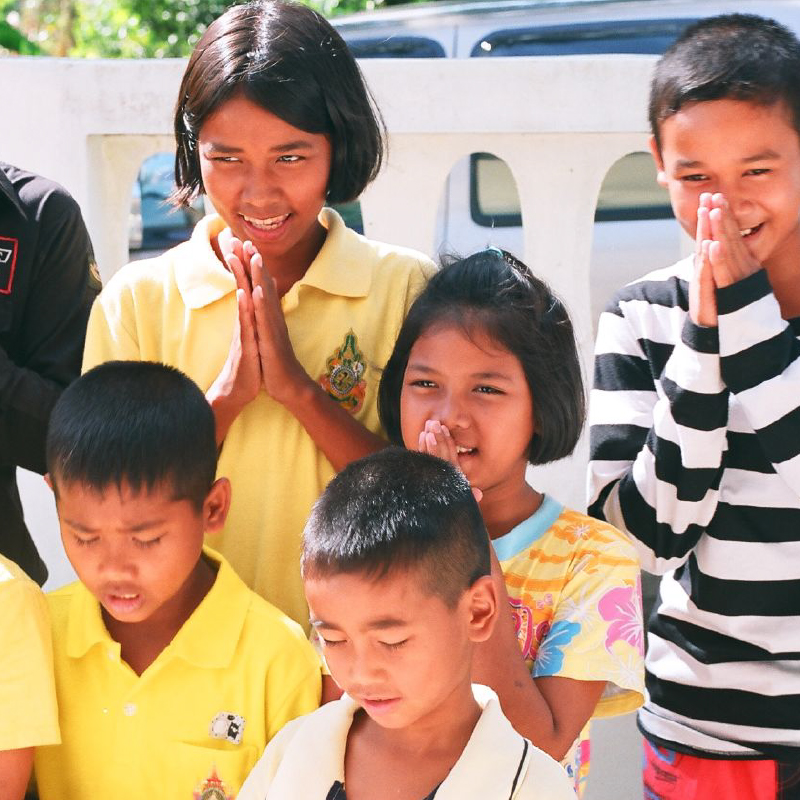
Udom’s given name is Allen Long, and he was born in the United States. When he was two years old, his missionary parents moved to Thailand, where they devoted themselves to serving the Mlabri (Yellow Leaf) people in Phrae Province. Allen attended Thai schools and grew up deeply immersed in Thai society. Beyond mastering the Northern dialect, he absorbed Thai ways of speaking, thinking, and expressing emotion, something clearly evident in his videos. Even his laughter sounds unmistakably Thai.
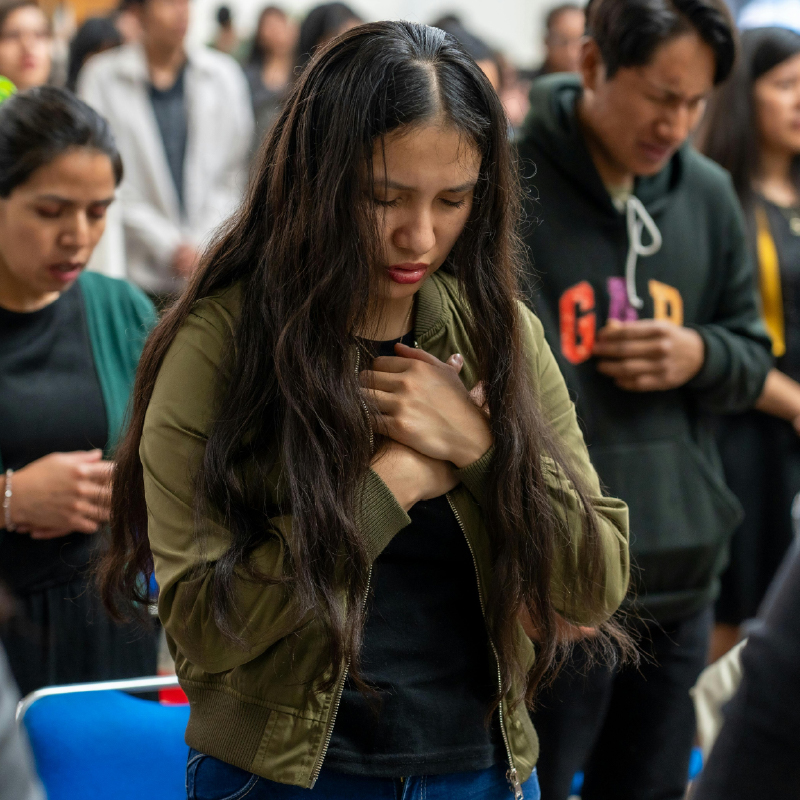
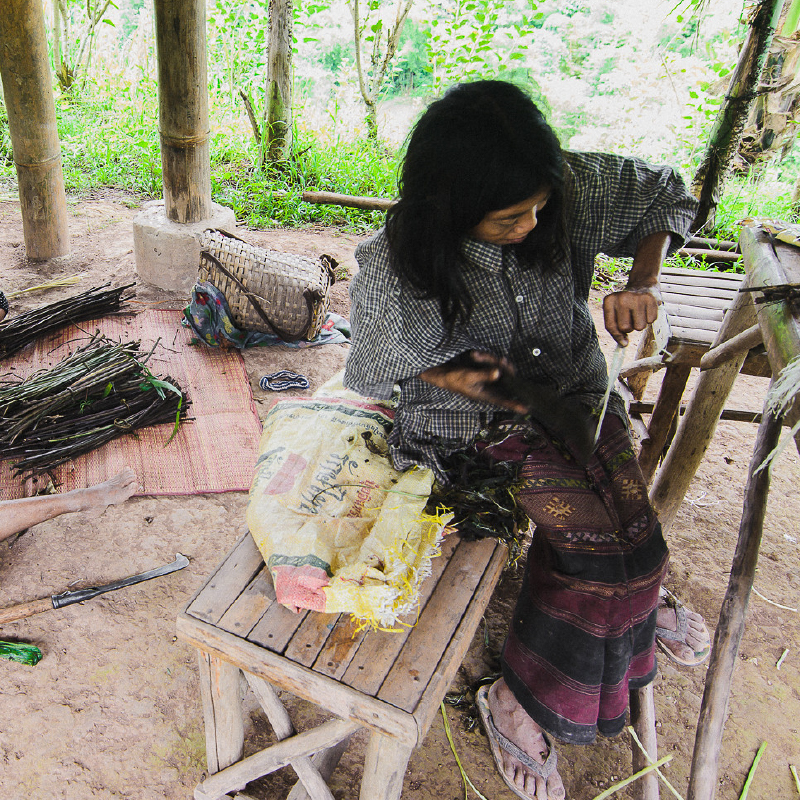
Today, Udom runs a hammock business that trains Mlabri artisans to weave hammocks, providing stable employment and supporting their transition from life deep in the forest to a more secure and settled livelihood.
After 32 years-old, Udom officially became a Thai citizen in 2020, renouncing his U.S. citizenship in the process. Fully embracing his Thai identity, he has expressed deep love for Thailand, its land and its people, earning widespread respect and admiration. Under the video announcing his naturalization, one Thai viewer commented simply and affectionately: “So adorable. A foreigner (farang), but with a Thai heart (jai Thai).”

Udom’s YouTube channel
Prayer

Heavenly Father, thank You for calling Udom’s parents to faithfully serve in Thailand, and for shaping Udom’s life among the Thai people from such a young age. Thank You for giving him a deep love for this land and its people, and a heart that walks alongside the Mlabri with care and commitment. We ask You to raise up more missionaries, believers, and entrepreneurs who, like Udom, draw near to Thai people with heart, sincerity, and love, reaching those who deeply value inner intention. We lift up the Mlabri people living in the mountains, often unseen by the wider world, yet never unseen by You. Please watch over their livelihoods, strengthen those who seek to support them, and open pathways for meaningful connection with the broader society. Grant the Mlabri community the resources and dignity to flourish. We pray all this in the name of Jesus Christ, Amen.

An Indigenous Church Movement

Thailand's Gospel Transformation I

02Feb

In 2006, Dwight Martin founded TUTHAI, a database to map and analyze the locations and data of evangelical churches across Thailand.

In 2016, Somsak Rinasak received a vision: to plant 1,000 new churches and see 10,000 new believers come to faith by 2020. Moved by this vision, Martin joined him in the work. Rinasak serves with the Free in Jesus Christ Church Association (FJCCA), a member body of the Association of Free Churches in Thailand (AFT).

By 2021, they had fulfilled the original 2016 vision. Rather than slowing down, they launched a new mission: to establish 800 additional house churches. They were convinced that the gospel must be communicated in ways Thai people can truly understand if it is to take root and grow.

At the time, Phichit Province, north of Bangkok, had roughly 800 villages with little or no gospel presence. Their bold proposal was simple: one house church in every village.

The fruit has been remarkable. In 2016, Phichit Province had 477 evangelical Christians. By April 2024, that number had grown to 7,073 believers, worshiping in 1,010 house churches and 12 district churches.

(Data provided with thanks to Dwight Martin and Global Missiology)

Global Missiology
Thai Indigenous Church Movement
Prayer

Heavenly Father, we thank You for calling and sending gospel workers who willingly devote themselves to serving the people of Thailand. Continue to raise up disciples who are captivated by Your vision and offer their lives for the mission You have entrusted to them. We pray for the work at TUTHAI. We ask that You would use its research and data to bring wisdom, clarity, and strategic insight to gospel work across the nation. We bless Pastor Somsak and the Free in Jesus Christ Church Association as they press into villages one by one, planting vibrant house churches and witnessing Your multiplying grace. Strengthen gospel workers to move forward with joy, trusting Your promise that those who sow in tears will reap with songs of joy. We pray all this in the name of Jesus Christ, Amen.

A Gospel They Can Understand

Thailand's Gospel Transformation II

03Feb

In earlier years, Dwight Martin, Somsak Rinasak, and the Association of Free Churches in Thailand (AFT) adopted a progressive church-planting strategy. The gospel was first brought into individual villages through house churches. Once several village churches were established, district-level churches were formed to serve as a hub for discipleship and leadership training. By the end of 2022, every village and district in Phichit Province had a church, making Phichit the fourth most evangelized province in Thailand in terms of gospel coverage.

Historically, missionary approaches in Thailand were strongly Western in form, emphasizing messages such as “Believe in Jesus, your sins will be forgiven, and you will go to heaven.” Yet for many Thais, this framework was difficult to grasp. To the Thai, sin is understood primarily as harmful action that accumulates negative karma, while heaven is not a final or eternal destination. What people ultimately long for is nirvana—release from suffering and the cycle of rebirth.

For this reason, the AFT does not begin with religious rules, legal language, or condemnation. Instead, it proclaims the gospel through love, hope, and reconciliation with God the Creator. People are invited to pray, to encounter Jesus personally, and to enter into a relationship with Him. This approach resonates more deeply and is readily understood within the Thai cultural and spiritual landscape.

(With thanks to Dwight Martin and Global Missiology for data and research)

Global Missiology
FJCCA Baptisms Movement
Prayer

Heavenly Father, You are the supreme Commander who has guided the gospel movement in Phichit Province. May missionary teams continue to receive Your power and strategy through prayer, learning how to overcome cultural and spiritual barriers and to prepare the way for the gospel. Grant gospel workers wisdom, love, and cultural sensitivity. May they understand what truly matters in people’s hearts, like karma, rebirth, merit-making, and the longing for material security, pleasure, and a smooth life. Teach them to speak in ways that are culturally close, spiritually intelligible, and relationally authentic, leading people into an authentic relationship with You and a deeper understanding of Your heart. May all who draw near to the living water find a peace and fullness they have never known, and may their inner thirst be satisfied at last. We pray in the name of Jesus Christ, Amen.

Pastor Somsak’s Testimony of Faith

Thailand's Gospel Transformation III

04Feb

At the age of twenty-four, Somsak Rinasak and his wife were raising three children and facing urgent financial need. They decided to travel 120 kilometers to ask his mother-in-law for help. When they arrived, however, she was attending a gospel outreach. They waited and listened to the sermon preached by a Thai pastor.

The message of the gospel deeply moved them. Both decided to follow Jesus, so absorbed that they completely forgot their original reason for the trip. After coming to faith, they experienced a peace and joy they had never known before. Returning home, they discovered that there were no other Christians within a 120-kilometer radius. With no church community to rely on, they learned to read Scripture, pray, and live out their faith on their own. Somsak’s understanding of Christianity came directly from the Bible, unshaped by Western church traditions or imported forms. Over time, this gave rise to a way of following Christ that was firmly rooted in Scripture and deeply attuned to the Thai context.

This lived, contextualized faith later became a cornerstone of the missionary vision of the Association of Free Churches in Thailand (AFT). Their approach to evangelism and discipleship is distinctly Thai, faithful to the Bible, yet attentive to Thai ways of thinking and seeing the world, so that Thai people may encounter Christ within a cultural framework that feels familiar and intelligible.

Prayer

Heavenly Father, through the blood of Christ we have redemption and the forgiveness of sins, according to the riches of Your grace. May the people of Thailand hear and respond to Your loving call, just as the first disciples left their nets without hesitation to follow You. Pour out Your Holy Spirit upon our Thai brothers and sisters. As they read Scripture and pray, grant them deep spiritual insight and a growing knowledge of You. Equip them with Your truth, that Your people may be made complete and prepared for every good work. Guide the Thai church as it develops discipleship and pastoral-training resources that are truly rooted in the local context. May every gospel worker experience Your abundant provision, strength in body, mind, and spirit, and may their families be kept and sustained by Your grace. We pray in the name of Jesus Christ, Amen.

Why Ordination?

Ordination

05Feb

👑 Make merit for parents and repay the debt of upbringing

💪 As a rite of passage into adulthood

🧘‍♂️ Because temple life is quiet and provided for, allowing focused spiritual practice

❤️ To study Buddhist teachings and help spread the Dharma

🙇‍♂️ Because monks hold high social status and are widely respected


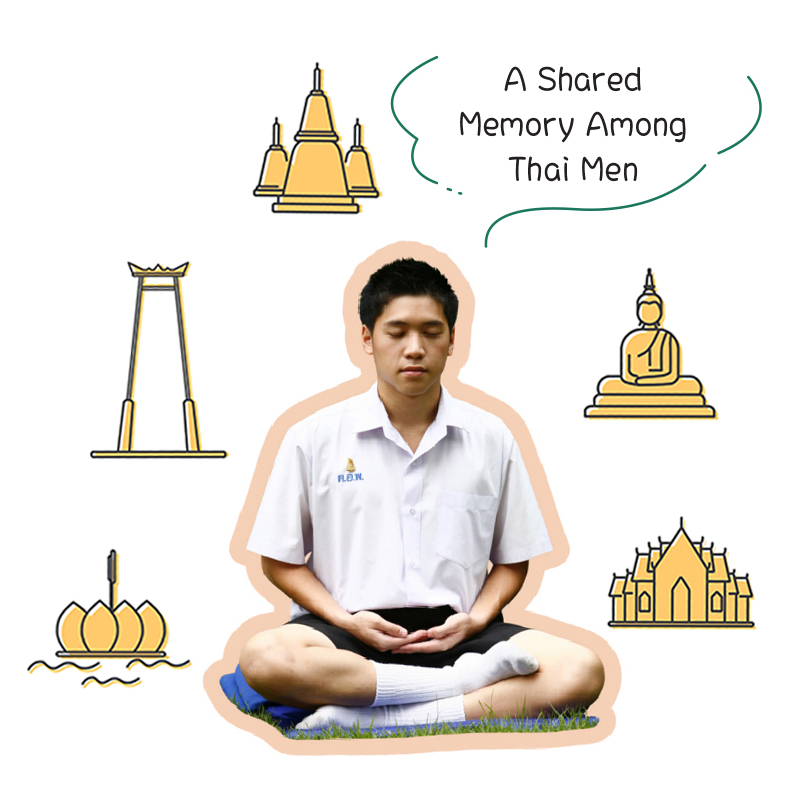
A Required Course for Men: In Thailand, ordination is often described as a man’s required course. Most Thai men will ordain at least once in their lives, whether briefly or long-term, to accumulate merit. This, however, is a “privilege” unavailable to women. If Thai women seek full ordination, they are often accused of offending the Buddha and hastening the decline of Buddhism by five hundred years.

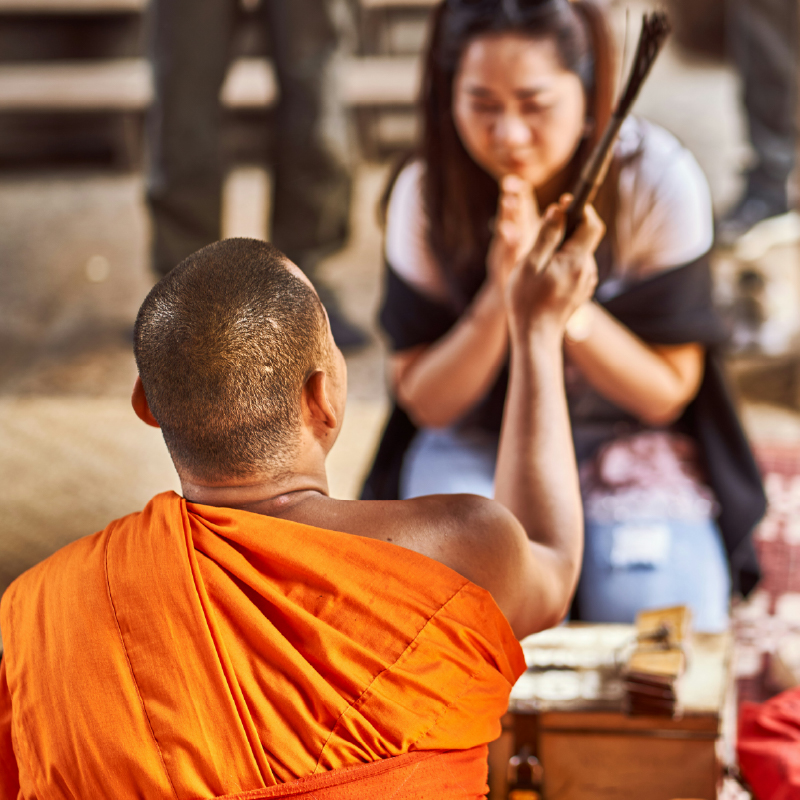
To safeguard monks’ spiritual discipline, Thai monks are strictly forbidden from physical contact with women. When women wish to offer items, they must pass them through a male intermediary or place them on a cloth designated for offerings.

Women and “Indirect Merit”: Traditional Thai culture places women below men. A Thai proverb bluntly states: “Women are buffalo; men are people.” Because women cannot be ordained and directly accumulate merit, how are they to participate? The accepted paths are indirect: performing good deeds at temples, supporting monks, or giving birth to sons who can ordain on their behalf. As a result, women have become the primary supporters of temples and monastic institutions, hoping that in the next life, they may be reborn as men, able to accumulate merit for themselves or their parents.

Prayer

Heavenly Father, You are a God who treasures relationships, and You have commanded us to honor our father and mother. In Thai culture, ordination is often the way children express gratitude toward their parents. May this deep sense of gratitude one day be awakened by Your profound love, renewed and grounded in its true source, so that families may be drawn together toward You and find renewal in Your grace. Father, we also lift up the women who feel small or unseen within cultural and religious systems. May they know that they are Your good creation, and that they can come directly before You. They don’t need intermediaries, and they need not wait for another life. You delight in reaching out with hands of lovingkindness, personally leading them into Your beautiful kingdom. We pray in the name of Jesus Christ, Amen.

Held in Higher Esteem

Thai Monks I

06Feb

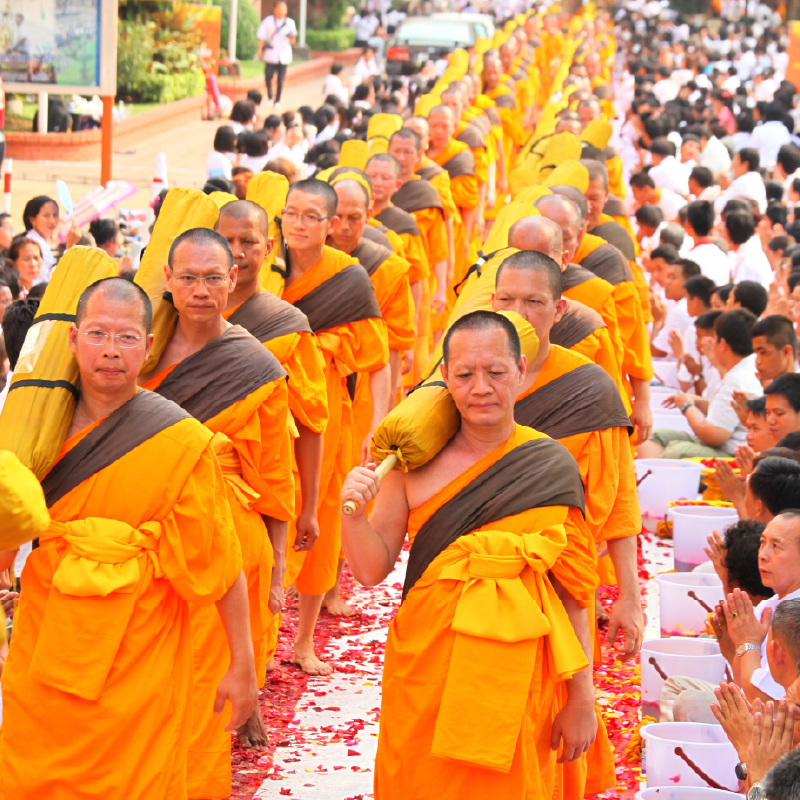
To ordain is to withdraw from the secular world. Monks leave their families, relinquish their work, and devote themselves to Buddhist practice. Because they are seen as having sacrificed everything, they are accorded deep respect.

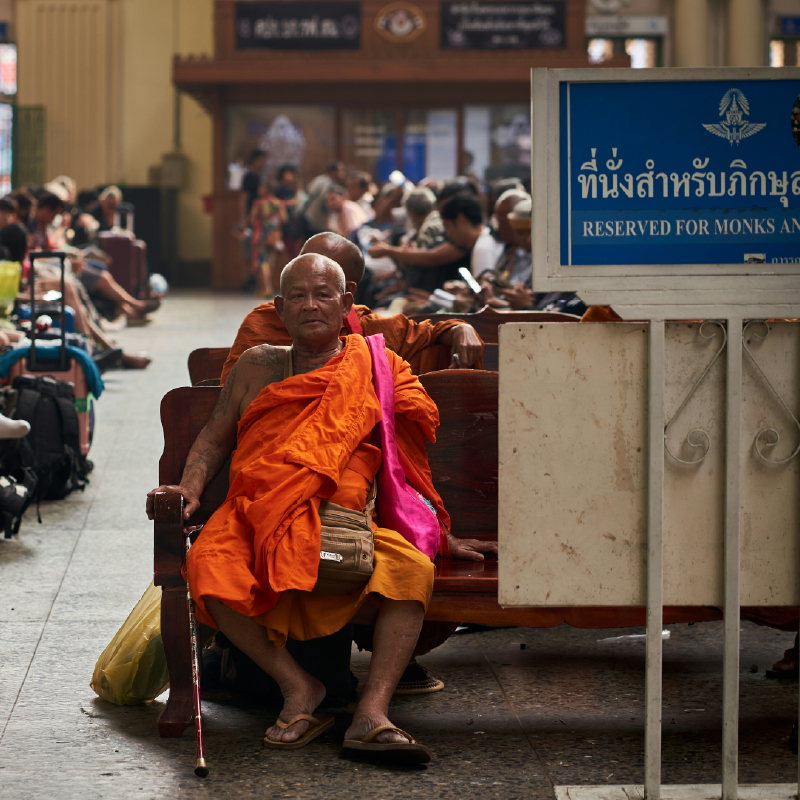
In most Thai villages and towns, temples serve as community centers where monks lead religious rituals and charitable activities. These spaces are both sacred and practical, meeting the everyday needs of society. Monks also act as guides for those who do not fully understand Buddhist teachings, offering counsel and advice. The three major milestones of Thai life—birth, marriage, and death—are all marked by the presence of monks. People make offerings to them and receive their blessings, hoping for good fortune and the accumulation of merit. As a result, monks occupy a status set apart. The public bows down to them, and monks do not bow even before the king. Instead, the king shows respect to them. Signs on public transportation also encourage passengers to give up seats for monks.

Theravāda Buddhism in Thailand emphasizes personal cultivation. Through one’s own discipline and practice, a person seeks moral and spiritual perfection, with the ultimate goal being nirvana: the extinguishing of all desire, attachment, and suffering. Nirvana is also understood as the end of rebirth and the cycle of reincarnation. Yet monks do not know that there is a Savior Jesus Christ who has opened a way to eternal life and deliverance from eternal death.

Prayer

Heavenly Father, we pray that Thai monks, though revered as teachers and guides, would be drawn to Jesus, the Teacher full of wisdom. May they come to the same realization as Simon Peter. “Lord, You have the words of eternal life. To whom else shall we go?” We ask that You prepare opportunities for them to encounter the gospel, to meet Christian friends, to read Your Word, and to hear the good news. As they chant, meditate, and spend time in solitude, may the Holy Spirit work quietly within them, leading them to explore the meaning of the gospel and to be moved by Your truth and redeeming grace. May those monks who come to know You become witnesses within their own familiar contexts, sharing with new hearts and new eyes the hope found in knowing God, and pointing others to the way of salvation through Jesus Christ. We pray in the name of our Lord Jesus Christ, Amen.

Learning Detachment in the Presence of Death

Thai Monks II

07Feb

In November 2024, Thai police raided a temple and discovered that its abbot had kept at least seventy-three corpses on the premises. The abbot stated that each body was accompanied by a death certificate and legal donation documents, and that they had not been obtained unlawfully. His stated purpose was to use them for monastic “training” in meditation.

Meditating on corpses (known as asubha-bhavana or impurity meditation) is regarded by some monks as one of the most demanding forms of practice. Its purpose is to restrain desire, especially sexual desire. By meditating on bodies and skeletal remains, monks carefully observe the stages of decay, coming to grips with the reality that the human body is subject to natural laws and will inevitably deteriorate and disintegrate. Through this practice, they seek to loosen attachment to the body as a means of sensory pleasure.

One monk explained that when sexual desire arises, he first practices mindful breathing. If the desire persists, he continues in prayer-like recitation, reminding himself that he has entered the monastic life, until the impulse subsides. To cultivate celibacy, some monks engage in strenuous physical labor to exhaust the body; others fast, withdraw from social contact, or avoid situations they perceive as tempting. Still others seek companionship with monks who are known for successfully keeping strict discipline, drawing strength and encouragement from them.

Through these various disciplines, monks strive toward an ideal of complete detachment, freedom from desire and craving. They believe that only by reaching this state can one attain liberation from the cycle of rebirth and achieve true freedom.

Prayer

Heavenly Father, You know the human heart, and You understand the longing of Thai monks for purity and an undefiled inner life. May this deep desire lead them to You, and through the good news of the gospel, may they discover that salvation and holiness are gifts You freely give. May they see that forgiveness of sins and cleansing of guilt come not through striving, but through the precious blood of Christ. By the power of the Holy Spirit, may they experience renewal from the inside out. Plant within them a longing for You to dwell in their hearts, strengthening them to overcome weakness and to live lives marked by holiness and joy. Lord, we ask that You personally call them to follow You, making them dwelling places of Your glory. May they respond with love and worship, walking with You both in this life and into eternity, and discovering the true freedom that You alone give. We pray in the name of our Lord Jesus Christ, Amen.

Buddhist Longings Beneath the City Lights

Modern Bangkok

08Feb

In the past, Thai understandings of the world were grounded in the Buddhist cosmology of the Tripiṭaka: the three realms of desire, form, and formlessness, together with heaven and hell. As Western science entered Thai society, rational inquiry and practical concerns gained prominence. Worldviews slowly shifted toward a more human-centered focus. People began to look inward, and the Buddha was increasingly seen not as a godlike figure, but as a profoundly human one.

The arrival of foreigners marked another turning point. In 1862, The Bangkok Calendar reported that 102 Europeans and Americans were living in Siam. Around the same time, large numbers of Chinese migrants arrived. Records from 1854–1855 suggest that roughly half of Bangkok’s population (about two million people) were Chinese. Some intermarried with Thai women, giving rise to a new generation of Sino-Thai descendants (ลูกจีน luk jin). The growing foreign presence energized commerce, drawing Thailand into an emerging capitalist order. Wealthy elites, a middle class, and laborers took shape, along with urban prosperity and a visible “high society.”

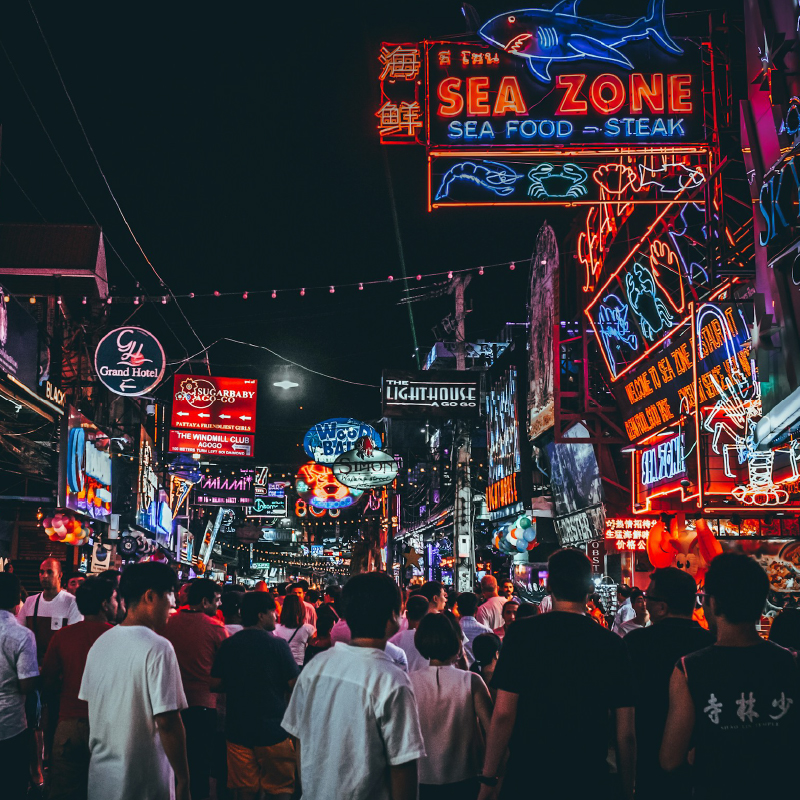
Today, Thailand has opened its doors even wider. Bangkok has risen into a global metropolis, and people from across the country flock to the capital in search of better jobs and higher incomes. In the process, Bangkok has become increasingly money-oriented, a city driven by consumption. To many foreigners, the city no longer bears the marks of Buddhism’s ideal of detachment and freedom from desire.

Prayer

Heavenly Father, modernization has brought remarkable growth to Bangkok. As people strive for success and pursue new opportunities in this city, we pray that through open access to information or through Christian friends, they may be touched by the gospel and come to see that every true good is found in You. We lift up Christians living and working in Bangkok. May they be salt and light in every sphere, good neighbors who embody the love and compassion of Christ to the Thai people. Open our eyes, Lord, to those in the city whom a capital-driven culture overlooks, those unseen and unheard by measures of success. May Your church walk together into these neglected corners, embracing those in need and bringing the hope of Your glorious kingdom into their hearts. We pray in the name of our Lord Jesus Christ, Amen.

Sexual Consumption vs. Ascetic Faith

09Feb

Outsiders often wonder how Thai society navigates the tension between Buddhist ideals of sexual restraint and a flourishing sex industry. Some Thais criticize monks for responding too passively to what they describe as widespread sexual excess. Monks, in turn, explain that they themselves must wrestle with sexual desire in their spiritual practice, and that some even stumble into temptation. Because of this vulnerability, many find it difficult to speak openly about sexuality. When believers receive no clear guidance from monks, sexuality is often shaped instead by secular norms.

In Buddhist teaching, sexual pleasure is regarded as a lower form of happiness. The ideal is complete freedom from desire and attachment. Yet modern society emphasizes consumption and the gratification of desire, placing this ascetic ideal under constant strain. Under such pressure, even some monks break their vows.

The influx of foreign cultures has also introduced sexual values that differ from Buddhist teachings. A notable turning point came during the Vietnam War, when U.S. troops were stationed in Thailand. The rapid expansion of the sex industry followed, eventually becoming a major source of foreign income. Many women from impoverished families, burdened by economic responsibility, entered sex work and donated part of their earnings to temples as a form of atonement and merit-making. Thai men, meanwhile, often came to regard sexual experience as a rite of passage into “real manhood.”

Over time, these social conditions and beliefs have shaped Thailand’s sexual culture, one that accepts women’s participation in sex work as a means of supporting their families, and tolerates men’s frequenting of sex venues.

Prayer

Heavenly Father, when Jesus walked on earth, He consistently drew near to those rejected by society. He listened to their stories and even shared meals and daily life with them. We lift up Thailand’s sex workers before You. When they stumble in darkness, longing to be loved and searching for light, may You embrace them with Your unconditional love and remind them that they have not been abandoned. Just as the Lord once protected the woman condemned by others for her moral failures, we ask that You grant these women deep security and courage, igniting in them hope for change and new life. We pray that You would guide Thai society toward healthy and holistic understandings of sexuality, and that You would transform the complex structures behind the sex industry, dismantling systems that harm human dignity. We ask all this in the name of our Lord Jesus Christ, Amen.

Spiritual Marketplace

10Feb

That day, Naima went to a temple to take part in a “sleeping in a coffin” ritual. She had been facing a string of troubles, and after seeing influencers enthusiastically discuss the ritual on social media, she decided to give it a try. A monk instructed her to hold fresh flowers, lie down inside a coffin, and then covered her with a cloth. Naima imagined herself as dead, receiving funeral rites performed by the monk. When the coffin was opened, she climbed out, feeling that misfortune and bad karma had been buried along with her symbolic death.

Practices involving contact with spirits—rituals, spells, incantations, the manipulation of spiritual beings, the summoning of ghosts, and the directing of the dead to act for oneself or others—are widespread in Thailand. People spend large sums to accumulate merit, seek wealth or ward off evil, venerate “magic monks,” commission rituals, purchase amulets, and travel long distances to worship deities. Together, these activities have given rise to a vast “spiritual” marketplace and a monetized trade in religion. As long as such practices are not intended to harm others and do not violate the Five Precepts, they are generally seen as compatible with Buddhist culture.

As Thailand enters modern society, fortune-telling and ritual practices have also gone digital. Generation Z opens Instagram, and ads for amulets and protective charms flash across their screens—tailored to job searches, interviews, romance, friendships, social relationships, money concerns, and first dates, offering different options for each situation. Thai youth engage with old spirits in new ways, using the tools of a new era.

Prayer

Heavenly Father, we cry out for Your mercy. Grant us eyes to discern the human heart and the needs of society, so that behind this multifarious spiritual marketplace we may see people’s deep spiritual longings and respond with love and the gospel. May we lead the broken, the lost, and the helpless into Your presence. Lord Jesus, You showed compassion to the hungry, the demon-possessed, the sorrowful, and the sick, reaching out Your hand and inviting them to draw near and trust You. May Thai people, like the man by the Pool of Bethesda, experience Your miracle. May they witness not only the resolution of outward circumstances, but may You also touch their hearts, receiving renewal and transformation of life and faith. We pray in the name of our Lord Jesus Christ, Amen.

Magic Monks

11Feb

In Nong Bua Lamphu Province in northeastern Thailand, a monk sits in meditation inside a large vat filled with oil, a fire burning beneath it—yet he remains calm and unmoved. Mostly poor rural devotees, witnessing this, reach into their pockets to give donations. The temple soon prospers, selling large quantities of amulets and small bottles of “holy oil.”

In Nakhon Si Thammarat Province in southern Thailand, Phra (Reverend) Ajarn Cha claims that his sweat can turn into red crystals, quickly gaining fame. Many people pay large sums to buy amulets made from these “red sweat crystals” in hopes of good fortune.

Folk beliefs are widespread in Thailand. Some monks claim to possess supernatural powers, and aths stories spread from person to person, they are elevated into so-called “magic monks.” People come to worship them and seek charms hoping for protection, averting misfortune, attracting good luck, wealth, romance, success, fame, etc.

With modernization, materialism has taken deeper hold in Thai society. In pursuit of wealth and material comfort, some people are willing to offer large sums of money through “magic monks” to fulfill their desires and find reassurance. As faith becomes entangled with profit, scandals involving money or sex have surfaced among Thai monks, severely undermining public confidence in Buddhism and eroding trust in the monastic community.

Prayer

Heavenly Father, there are many things in this world, whether it is pastimes, distractions, or entertainment, that offer fleeting pleasure and a sense of security, yet cannot truly satisfy the hunger of the human heart. Only the Lord Jesus says, “I am the bread of life. Whoever comes to me shall never hunger, and whoever believes in me shall never thirst.” May the people of Thailand, wandering in a parched wilderness, encounter the Lord as the living water of life, behold Your generous grace freely given, and know that Your steadfast love is better than life itself. When they face uncertainty and hardship, may they rest secure in Your all-knowing, all-powerful hands, unafraid of the terror of the enemy. Grant discernment and wisdom, that when people encounter signs, wonders, and magical practices, they may hold fast to the truth and not fall into deception or snares. We pray in the name of our Lord Jesus Christ, Amen.

Similar Yet Distinct

Thai People

12Feb

The Thai people, Thailand’s largest ethnic group (formerly known as the Siamese) are broadly divided into Central Thais, Northeastern Thais (Isan), Northern Thais, and Southern Thais. They all speak different dialects of the Thai language, and Buddhism binds them together into a shared sense of identity.

Historically, the Thai established three powerful kingdoms: the Sukhothai Kingdom, the Ayutthaya Kingdom, and the Bangkok Kingdom (the Chakri Dynasty, 1782 to the present).

With the rise of the Bangkok Kingdom, Central Thais emerged as the dominant group. Surrounding Tai Yuan peoples, Malays, and Lao groups came to pay tribute. In the late nineteenth century, King Rama V (Chulalongkorn) advanced sweeping modernization reforms that further strengthened the Central Thais and enabled territorial expansion into surrounding regions, shaping the Thailand we know today.

So how many people are truly “Thai”? Because of long-standing assimilation policies and ethnic intermixing, even the Thai government finds it difficult to draw a clear boundary.


Central Thais ≈33.7%:Concentrated in Bangkok and the Central Plains (the political and economic core); speakers of Standard Thai

Isan People ≈34.2%:Located in the northeastern Isan region; language closely related to Lao; culturally identify as Thai

Northern Thais ≈18.8%:Also known as Lanna Thais; based in Chiang Mai, Chiang Rai, and the north; influenced by Myanmar; language mutually intelligible with Lao

Southern Thais ≈13.3%:Located on the southern peninsula; influenced by Malay culture; some practice Islam

Prayer

Heavenly Father, within the Thai people there are nuanced layers of culture and language. According to the needs of each region, raise up fitting missionaries and gospel resources to reach them, and to strengthen and nurture local churches and disciples. Help Thai believers across regions to hold fast to the truth amid a Buddhist-majority context, to pursue You with fervor, and to find appropriate pathways to bring the gospel into Thai culture and hearts. We ask the Holy Spirit to soften Thai hearts, that within Your saving plan they may see themselves as Your beloved children, find belonging and purpose in Your family of all nations, and live out new lives filled with hope. We pray in the name of our Lord Jesus Christ, Amen.

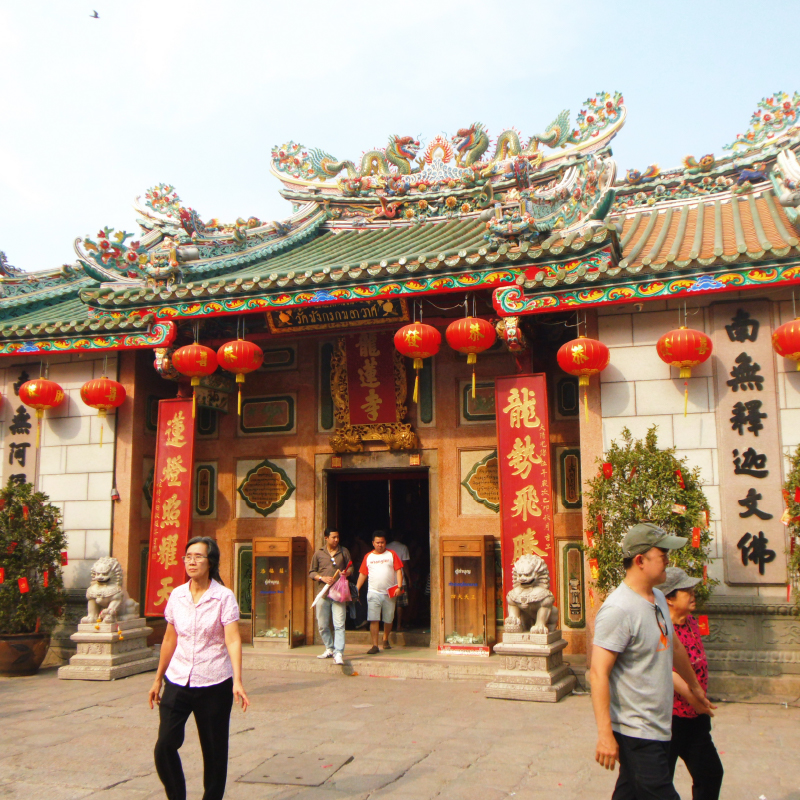
Bangkok’s famous Chinese Buddhist temple, Dragon Lotus Temple

The Chinese Imprint on Thailand’s Streets

Chinese-Thais

13Feb

Chinese-Thais are Thailand’s largest ethnic group after the ethnic Thai majority. Most migrated to Thailand between the 1850s and 1930s, with over half coming from the Teochew region, followed by Hakka communities.

When Chinese migrants “went south,” they organized themselves by place of origin, forming hometown associations to look after their own. They also brought their local deities with them, partly to seek protection, partly to preserve cultural traditions, and perhaps most deeply as a way to hold on to memories of home and family. As these deities arrived in Thailand, they blended with Theravada Buddhism, giving rise to a distinctly Chinese-Thai form of popular Buddhist-Daoist folk religion.

Over time, as Chinese communities put down roots, they adapted to Thai culture, religion, and daily life. They adopted Thai names, attended Thai schools, spoke Thai, obtained Thai citizenship, and intermarried with Thais. After several generations, they became fully integrated into Thai society. Although many can no longer read or write Chinese, they still retain certain ancestral traditions.

Many Chinese-Thais have been influential in society. Former prime minister Paetongtarn, for example, was born in Bangkok, with ancestral roots in Meizhou, Guangdong. Her father and aunt are former Thai prime ministers Thaksin and Yingluck. A small number of Chinese-Thais are Christians—may God use them as messengers of the gospel.

Prayer

Heavenly Father, You care for all things. You cherish the past of Chinese-Thais, understand their struggles, and deeply love who they are today. The traditions they hold on to and the hometown deities they honor are bonds that connect them to their ancestors and places of origin in a foreign land, offering a sense of safety and identity. Grant gospel messengers gentle wisdom to ease their defensiveness toward the gospel and their fear of betraying tradition, and help them discover the fresh power and blessing the gospel brings to life and culture. May they find an unshakable refuge and an identity that will never be forgotten—that they are children forever seen and treasured by God. We pray in the name of our Lord Jesus Christ, Amen.

Thailand Is More Than Buddhist Temples

Muslim Thai and Malay Pattani

14Feb

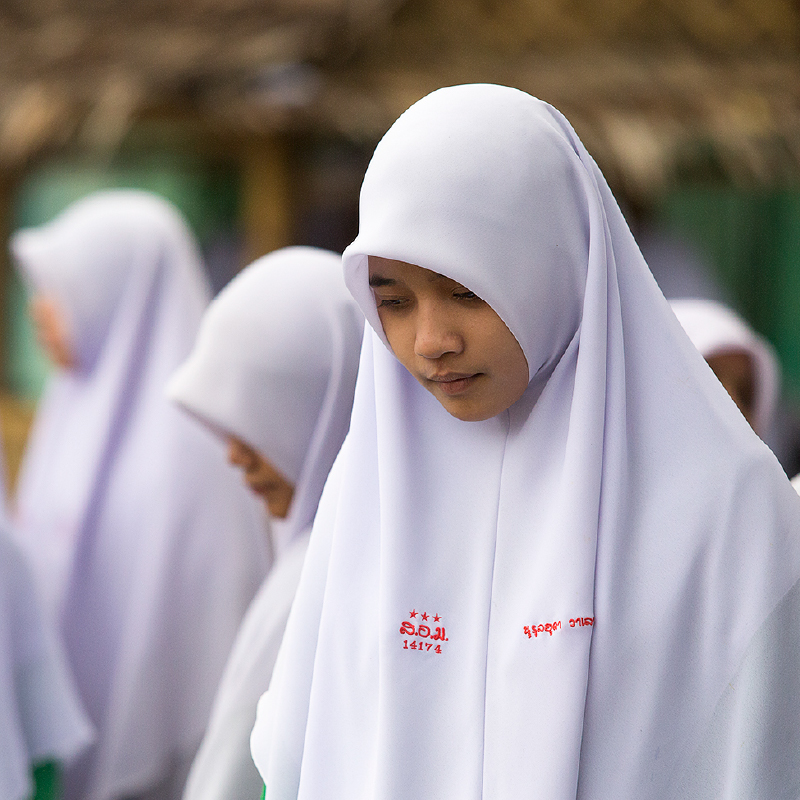
Muslim Thais are Thai people who practice Islam. Their faith has been passed down through generations, some through intermarriage, others through later conversion. Some Muslim Thais trace their origins to the Cham people of Cambodia, while others are descendants of migrants from West and South Asia.

In 1786, Siam invaded the Pattani Kingdom and captured tens of thousands of Muslim prisoners, dispersing them around the outskirts of Bangkok. These communities eventually became the Muslim neighborhoods found across the capital today.

In addition to Muslim Thais, Thailand’s Muslim population includes ethnic Malays in the south. Three southern provinces—Pattani, Yala, and Narathiwat—have Muslim-majority populations. Historically, this region was the Malay Pattani Kingdom, which was annexed by Siam (modern-day Thailand) in 1902. Thailand implemented assimilation policies, including requiring Thai names and Thai-language education, in an attempt to integrate the Malay population. However, long-standing poverty, underdevelopment, unemployment, low educational attainment, and bureaucratic corruption in the south have fueled separatist movements seeking independence as a Muslim state. As a result, the region has experienced recurring violence, including terrorist attacks, assassinations, kidnappings, extortion, sabotage, and bombings.

In the three southern border provinces, as well as the smaller Satun Province, most residents are of Malay descent. They maintain close ties with Malays in northern and eastern coastal Malaysia, influencing one another through religious schools, the exchange of religious scholars, and intermarriage.

Prayer

Heavenly Father, grant Muslim Thais understanding and wisdom to encounter the Savior, comprehend the truth of Scripture, and find the true bread of life and the living water for their souls. We pray for the long-standing tensions between the southern border provinces and the government. May You bring mutual understanding and acceptance, allowing Your love to create unity amid division and peace amid conflict. Grant wisdom for listening, dialogue, and negotiation on both sides; remove prejudice and hostility; and strengthen trust and goodwill as they work together to address the challenges of assimilation policies, poverty, unemployment, education, and bureaucratic corruption. May the southern border provinces experience economic renewal, social stability, and lives marked by security and dignity. We pray in the name of our Lord Jesus Christ, Amen.

Spirit Friends

Thavung (Aheu) People

1,600 people  Buddhist  Evangelical Christians 0%

15Feb

In three villages in Si Sa Ket Province in northeastern Thailand lives a little-known people group—the Thavung. They identify themselves as Buddhists, yet in everyday life they are far more devoted to the veneration of spirits. For example, the forested land north of the village and the ancestral spirit shrine are regarded as sacred spaces belonging to the “ancestor spirits” (Phi Pu-ta) and must not be disturbed.

Within the household, they honor the “spirits of the parents” (Phi Pho, Phi Mae), believing that the souls of deceased ancestors are reincarnated as their descendants. When a child is born, an elaborate “soul-welcoming” ceremony is held, using string-tying rituals and blessings to welcome the ancestor’s return.

The Thavung also venerate nature spirits, and pray to them for successful farming and abundant harvests. These include field spirits, rice spirits, the Earth Goddess (Mae Thorani), mountain spirits, and forest spirits. They believe spirits can be either benevolent or malevolent: village guardian spirits (Phi Ban, Phi Muang) protect the community, while spirits such as Phi Pob (carnivorous spirits) or Phi Pong (night-walking spirits) are thought to harm people. Even so, the Thavung are not afraid of spirits; many are regarded as friendly and protective beings.

There are no known Christians among the Thavung. Because their population is small, village leaders tend to exclude outside influences in order to protect their way of life, which is why few people even know they exist. At present, some gospel videos in the Thavung language are available online. May the Thavung people have the opportunity to encounter them, listen, and come to faith.

Prayer

Heavenly Father, we pray that the Thavung people may come to know You, the Creator of heaven and earth, sovereign over all powers, and rich in love. You have said, “For I know the plans I have for you… plans to give you hope and a future.” May the Thavung place their trust solely in the protection and blessing of the Savior, and experience true peace under Your glorious, faithful, and loving care. We ask that You enable gospel workers to build relationships and partnerships with Thavung villages, and that You Yourself would call village heads and household leaders to become key figures in advancing the gospel. Please also use every gospel resource in the Thavung language to soften hearts and draw people toward the values of Your kingdom. We pray in the name of our Lord Jesus Christ, Amen.

Fleet-Footed of the Forest

Huay People

600 people  Buddhist  Evangelical Christians 0%

16Feb

The Huay people live in four villages in Nan Province in northeastern Thailand. Their population is very small. Ethnographer Joachim Schliesinger first documented the Huay as a distinct people group in his 2000 book Ethnic Groups of Thailand.

The name “Huay” is associated with forest streams, but the people themselves regard the term as derogatory. This is because their ancestors were Lao people in the mid-19th century who were captured by the Thai and taken as slaves or prisoners of war. Noticing their ability to move swiftly through forests and mountainous terrain, the Thai labeled them “Kha Hor,” meaning “flying slaves.”

Although the Huay identify as Buddhists, they strongly believe that all things are animated by spirits. Each year during the Thai New Year (Songkran, also known as the Water Festival), they offer rice, flowers, or chickens and pigs at shrines near Buddhist temples. However, they do not maintain ancestral altars, nor do they practice rituals dedicated to agricultural deities. In the past, they built spirit gates along the paths leading into their villages, extending all the way into the valleys.

Both foreign and Thai Christians are engaged in mission work in Nan Province, but the gospel has not yet reached Huay villages, and there are still no Christians among the Huay people.

Prayer

Heavenly Father, we ask that You guide gospel messengers and mission teams to the villages of the Huay people. Go before them and open wide the doors for the gospel, so that those who bring good news may come with beautiful feet, proclaiming the message of Your salvation. May the wind of the Holy Spirit awaken the Huay people, that they may know all life has its source in the LORD, whose name is above every name and who is head over all things. May they be drawn by Your glory, run toward You, and find rest in the arms of the Great Shepherd, receiving true peace and freedom. We also ask that You bless nearby churches, stir their concern for the Huay community, and send gospel workers and short-term mission teams to build relationships of trust and friendship with the Huay people. We pray in the name of our Lord Jesus Christ, Amen.

Master Weavers

Lao Krang People

59,000 people  Buddhist  Evangelical Christians 0.05%

17Feb

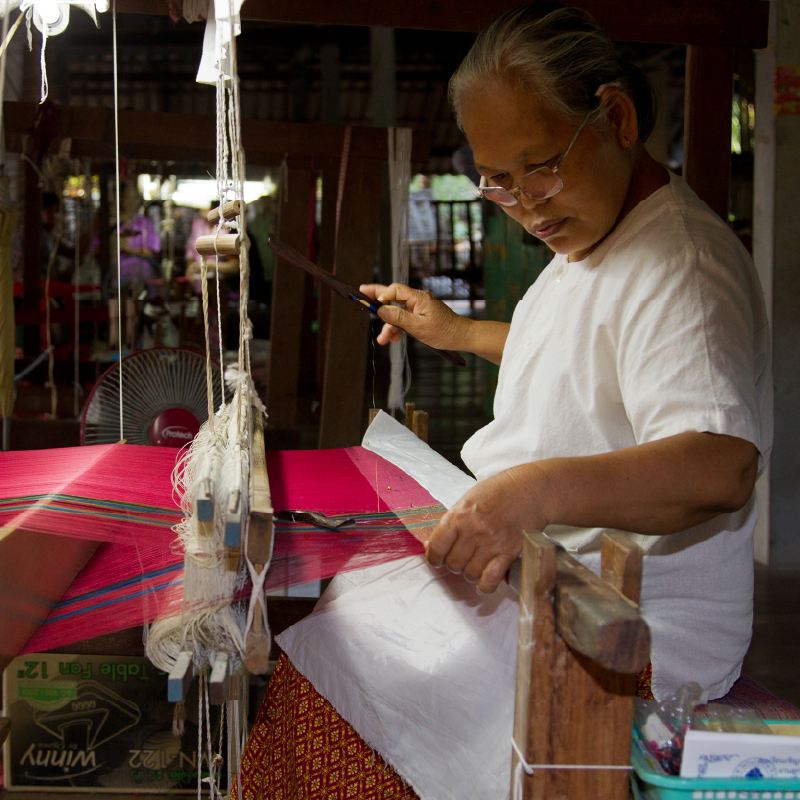
Some say the name “Krang” comes from a bell-shaped mountain near Luang Prabang in Laos. Others believe it refers to the lac insect. Lao Krang women are skilled at turning lac scale insects into dyes, coloring fabric in red, orange, and yellow hues. Their woven textiles serve many purposes: religious rituals, monks’ head coverings, cloths used to wrap Buddhist scriptures, everyday household items, sarongs, towels, small pillows, footrests, flour sacks, and more. These textiles are widely regarded as finely crafted works.

The Lao Krang are descendants of Lao people whose ancestors were taken as war captives during the Thonburi Kingdom in 1778 and the reign of Rama I in 1791. They were brought by the Thai from the Vientiane and Luang Prabang regions of Laos. For generations, the Lao Krang worked for their masters until the early 20th century, when King Chulalongkorn granted them amnesty and freedom. Today, they live mainly in the central-northern provinces of Nakhon Pathom, Suphan Buri, Chai Nat, and Uthai Thani.

The Lao Krang language is distinct from other Lao dialects and has gradually incorporated more and more vocabulary from Central Thai. Younger Lao Krang living near Bangkok have adopted new lifestyles, received modern education, entered contemporary professions, and intermarried with other ethnic groups. These changes differ significantly from traditional Lao Krang life and culture.

Lao Krang handwoven textiles
Prayer

Heavenly Father, You created all nations and peoples, gifting humanity with diverse talents that give rise to unique cultural traditions. We marvel at the Lao Krang people’s patience, aesthetic sensibility, and skill in weaving. May Christian designers, entrepreneurs, marketers, and community development workers have opportunities to reflect with the Lao Krang through traditional crafts, pointing to You as the Lord who weaves life itself—turning ordinary threads into extraordinary stories, as You untangle and order the knotted strands of our lives. May the Lao Krang long to discover the blueprint You have designed for their lives and learn to trust and submit to Your wise and beautiful weaving. Grant Lao Krang artisans creativity and fresh insight, enabling them to use diverse products and platforms to bring traditional craftsmanship into modern life. We pray in the name of our Lord Jesus Christ, Amen.

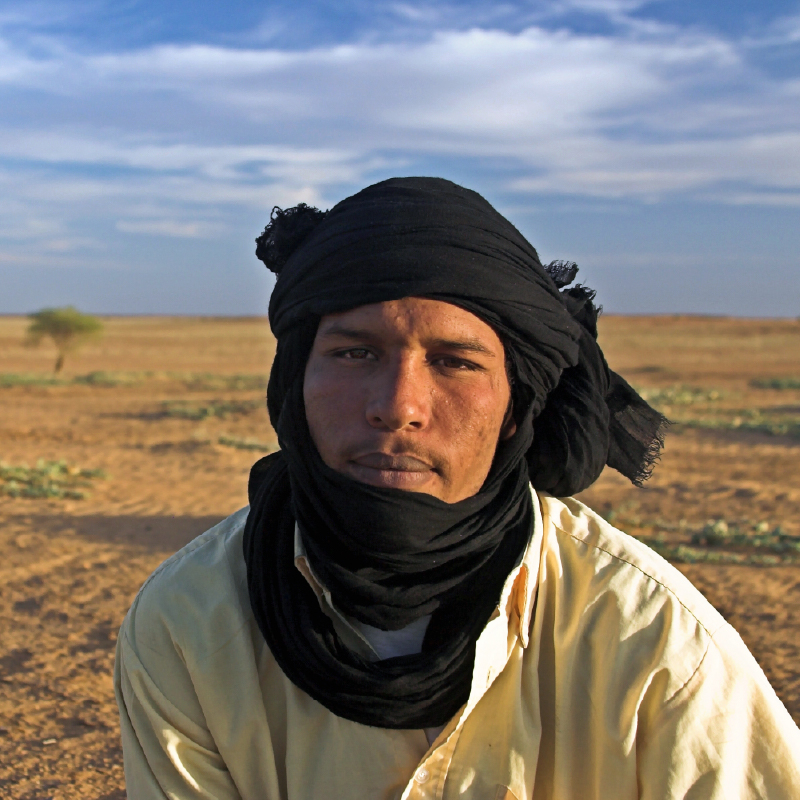
The Tuareg Of West Africa

18Feb

Lee grew up in a typical Tuareg community where, left to mind the family herds and farm, he never had opportunity to attend school. He dreamt of one day learning to read.

One evening as a young man, he finished work in the onion fields and came to the nearest town where he found a gospel worker selling books and tracts. He purchased several books, commenting that he wished he knew how to read them. The worker asked, “You just spent money buying books that you can’t read?” Lee replied, “That is my next question. Would you be able to help me learn to read? It has been my dream almost my whole life.”

Together they spent months learning to read materials produced in Tamajaq, one of the languages of the Tuareg. They started with words, then sentences and eventually progressed to a book of animal tales. As Lee’s reading got stronger, they went on to read the first twelve chapters of Genesis. From Genesis, they went on to read the gospel of Luke.

One evening, Lee said to his friend, “I have something to tell you. I have decided to follow Jesus like you.” The worker asked, “Lee, who is Jesus for you?” His response was unforgettable. Lee said, “Do you remember when Abraham was asked to sacrifice his son, Isaac, but at the last minute the angel stopped Abraham and there was a ram in the thicket that took Isaac’s place? As we have been reading in this book of Luke, I can see that Jesus is my Ram!”

Prayer

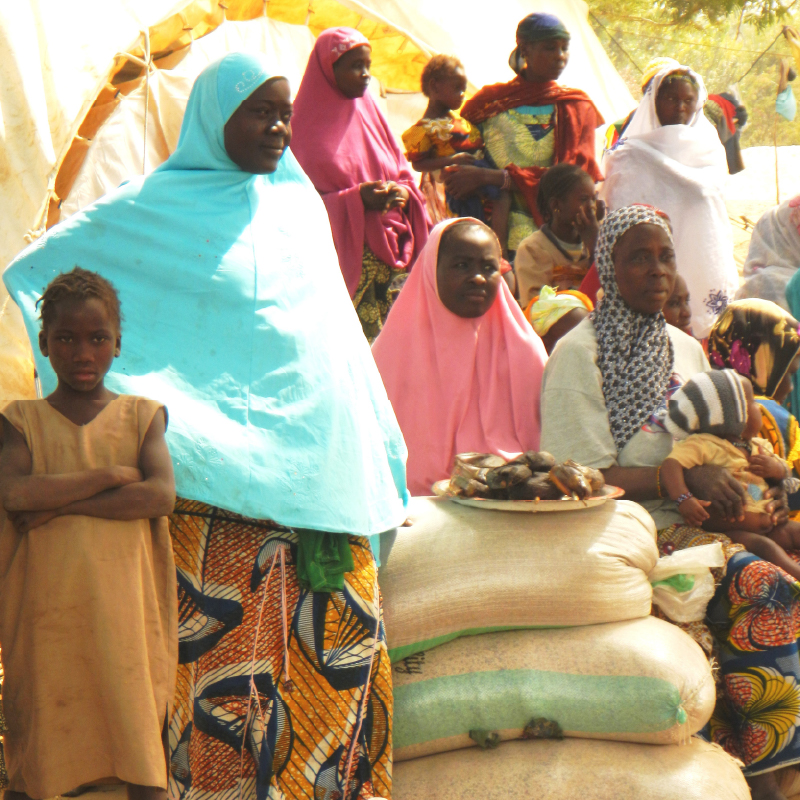
Heavenly Father, we pray that Your Holy Spirit would move the hearts of the Tuareg people, enabling them to see God’s love and mercy and to receive Jesus as their substitute Lamb. May they experience the grace of ‘repentance and turning to God, so that their sins may be wiped out, that times of refreshing may come from the Lord.’ We ask that You would help missionaries and Bible distribution efforts to move forward smoothly, so that every Tuareg person who longs to hear God’s word may receive the Scriptures and have believers walk alongside them to read the Bible and understand the truth. Raise up many believers like Amastan[1.1] to become church leaders within their own communities. We pray in the name of our Lord Jesus Christ, Amen.

The Turks In The Earthquake Zone

19Feb

In February 2023, two strong earthquakes destroyed the biblical city of Antioch, affecting over 9 million people in the region. But God prompted the leaders of one church to remain in the devastation to serve their fellow survivors. While providing food, clothing, tents and other emergency accommodation, they continued to hold services each Sunday that grew to over 100 people.

At one point, God moved the leader’s wife to suggest to two Muslim women that they might consider copying the New Testament (NT). They both agreed and were provided with the supplies they needed. Then two people became three, four, five, and now close to 600 Muslims are copying the New Testament!

One young man who had just finished copying had questions and asked what he should do about the sacrifices his family were preparing. He explained he had become a Christian from what he had read, without talking to anyone.

One person wanted to understand the NT better, so having finished, is copying it all out again. Another said, “I am so glad I took a package for my grandchildren. We are really enjoying copying, as a family!” Having finished copying the whole NT, one couple has begun copying the entire Bible. They have come to faith.

One young woman after copying the whole NT was asked what she had understood from what she had copied. She answered, “You know, I used to only like people who liked me. I had no use for anyone who was not interested in me. Now I am trying to love them! I used to be jealous of everyone. But now I’m trying to not be jealous.”

Prayer

Heavenly Father, we thank You for drawing people to Yourself through the copying of Scripture. “The unfolding of Your words gives light; it gives understanding to the simple.” May many more Muslims encounter the Bible through various means, and through reading Your Word, recognize that You are the true and living God who brings real hope. We pray that more discipleship and spiritual resources would be provided for new Turkish believers, so that their faith may be nourished, strengthened, and firmly rooted as they follow Jesus Christ. May You use the Turkish church to be salt and light, guiding seekers to Christ. We pray in the name of our Lord Jesus Christ, Amen.

The Pashtuns

20Feb

Pashtuns (Pukhtuns, Pathans) are a 60+ million tribal group living in Pakistan and Afghanistan, and in the Middle East as contract workers. Pashtuns are warrior-romantics; fierce in defence of their honour, but enjoying music, poetry, and flowers. Linguistic and cultural differences separate the Pashtuns of Pakistan from those of Afghanistan and also distinguish one tribe from another. However, Pashtuns agree that adherence to orthodox Sunni Islam, and strict observance of Pashto religio-cultural codes are common to all. A strong sense of religious purity separates Pashtuns from other religions, including Christianity. Yet there are an un-numbered few who follow Christ in their homelands. Among them are those who are reaching out with the Word of God to their own people.

Believing Pashtuns translate and distribute the Word in print, audio, and video. For this generation, the Bible in Pakistani Pashto was published in 2019, and the New Testament in Afghan Pashto in 2023. Those with a laptop or smartphone can access the Scriptures in four major dialects of Pashto through Pashtozeray.org, afghanbibles.org and the Prophets Stories App. The Pashtun love of poetry makes the Psalms and Proverbs especially popular.

As religious extremism prevents most believers from meeting in person, connection online for a Discovery Bible Study is an important way by which Pashtuns can interact with God’s Word. Recently, several believers met online to talk about charity, fasting and prayer—the traditional means of earning treasure in heaven. On hearing what the Bible teaches, one man responded, “Our hearts have been enlightened by hearing God’s word! We believe in this holy Word.”

Prayer

Heavenly Father, we ask that You help Pashtun believers who are isolated within their communities. Comfort and guide them through the Holy Spirit, and nourish their spiritual lives through Your Word, for “every word of God is pure; He is a shield to those who take refuge in Him.” We bless Pashtun believers with the abundant life that Jesus has promised, that through them many of their own people may be drawn to receive the gospel. We ask You, Father, to provide discipleship and to raise up godly leaders among them, and to watch over the work of Bible translation and distribution, that it may continue unhindered. We pray in the name of our Lord Jesus Christ, Amen.

The Kazakhs From China

21Feb

Tolkyn grew up in a big city in eastern China, though his people consider the northwest of the country to be their home area. Despite not being especially religious or traditional, he considers himself a Muslim. Like many younger-generation Kazakhs, he’s living abroad. Work, study, family connections, and immigration are common reasons for this phenomenon.

Kazakhs who travel out of China tend to be ambitious and prize worldly wisdom. Having escaped many limitations by coming out of their country, they recognize the relative freedom they’re enjoying. At least some of their dreams are coming true, though their happiness is often mixed with heartache over separation from relatives still in China.

Tolkyn is pursuing advanced studies and thinking seriously about marriage to his girlfriend, Saule. Through Saule, he met some Jesus-followers in the city where he lives. He had read some of John’s gospel in Chinese years ago, but it didn’t make much of an impression on him. Saule’s friends, however, in a conversation about how a husband and wife relate to each other in marriage, brought up the passage in Ephesians 5 where it says, “Husbands, love your wives...” This really made Tolkyn think. The fact that this scripture was in Kazakh, and not some other language, also got his attention— so much so that he got a copy of the Bible in Kazakh for himself.

Prayer

Heavenly Father, we lift up the Kazakh people living abroad. As they focus on the demands of daily life, we ask that You would not allow them to be satisfied with these things alone, but awaken in them a deeper longing to know their Creator above all else. For “the young lions suffer want and hunger, but those who seek the Lord lack no good thing.” May they encounter faithful Christians along their journey, who will lead them into the presence of the living God and open their eyes to the glory of His eternal kingdom. We pray that many Kazakhs would have both the opportunity and the desire to read the Scriptures, and that the Spirit of truth would help them understand Your Word. We pray in the name of our Lord Jesus Christ, Amen.

Zanzibar

22Feb

Fantastic beaches, picturesque sunsets and a natural paradise attract thousands upon thousands of tourists to the popular island archipelago of Zanzibar every year. They make a stark contrast to the local Zanzibaris, who are 99 % Muslim. Deeply entangled in folk Islam and occultism, they try to distance themselves from the influence of the Western world through their religion and traditions. Jesus speaks into this bondage and conflict and calls Zanzibaris to follow Him.

Mansour experienced that through Isa al-Masih (Jesus, the Messiah) he was set free from evil spirits and demonic burdens. Curious, he and his family watched LUMO films about the life of Jesus, and they began reading the Injil (New Testament). They decided to follow Jesus into a life of light and freedom. Mansour’s father-in-law in the south of the island heard that his daughter had been set free by Jesus - something that all magicians had failed to do so far. A group of seekers are now meeting there, too, to learn more about Jesus in the Injil. The first life changes through the Holy Spirit can be seen, and some are ready to be baptized.

Prayer

Heavenly Father, believers in the Zanzibar Islands are facing increasing injustice and persecution. We ask that You strengthen them personally and grant them faith and joy that rise above suffering. May the young believers there stand firm and not stumble because of false rumors and negative reports about the gospel. As the believers in Zanzibar pray in the name of the Lord for the sick and for those in need, we ask that You would grant supernatural protection and care, so that the people may come to know the power of Jesus. “Let those who go down to the sea, and all that is in it, the coastlands and their inhabitants, sing a new song to the Lord, and praise Him from the ends of the earth.” May the people of the Zanzibar Islands come to worship the one true and almighty God. We pray in the name of our Lord Jesus Christ, Amen.

Albania

23Feb

Hamit was born into an Albanian Muslim family. He thought that by fasting and doing good deeds he could find salvation, but these were things he practiced only out of obligation to his parents. He felt nothing in his heart but instead wondered, ‘why we are here in this world and what is the purpose of life?’

One day when he was 17 years old, he left school hungry and went to buy himself a sandwich. It was wrapped in paper which he looked at curiously…it was a page from the Bible. The man who sold the sandwich was an old Communist who invited him to his house for a coffee. Hamit went to his home, and the man started to speak against the faith. When Hamit asked to use the toilet, he found that instead of toilet paper, the man had placed the Bible. The boy felt scared to use the Bible and hid it under his clothes, so the man wouldn’t notice.

When Hamit began to read the Bible, he began to understand that God loves him. John 3:16 became his favourite verse. He decided to believe this love and take it into his heart. He began to search for other people who could believe the same as the Bible. He found a church where the pastor there led him in a prayer. Hamit beams: “As soon as I finished praying, I felt that a heavy stone had moved from my heart and I felt joy.”

Prayer

Heavenly Father, we thank You for Your wondrous works, for allowing Hamit to encounter the Scriptures in the most unexpected place. Your power always surpasses human imagination, and Your Word is mightier than all else, able to pierce the heart and bring hope and the light of life. We ask that many more Albanians would come to see the Bible, be drawn to Your Word, and meditate on it day and night, receiving spiritual nourishment and the blessing of new life. Lord, we ask that You prepare churches and faithful shepherds for those who put their trust in You, so that they may take root in the truth and grow strong. May believers love one another, so that all may recognize them as belonging to Jesus, and may their love become a pathway through which others come to know You. We pray in the name of our Lord Jesus Christ, Amen.

The Dendi Of Northern Benin

24Feb

Benin in West Africa is not a Muslim country, but the Dendi in the north of the country are 99.93 % Muslim. They number about 310,000 people. Among them are only very few Christians. There is no church where Dendi is spoken.

Most Dendi follow a form of folk Islam, mixing elements of orthodox Islam with their traditional rites and religious practices. The Marabouts, religious teachers or holy men, teach Islam as well as ancient customs and are healers and contact persons to the spirit world.

The rural steppe areas of Northern Benin are home for most Dendi. The structures of families and villages are very fundamental for their life in this region, making it unthinkable for seekers to break out of this system in order to follow Christ. That’s why finding ways to spread the Gospel and establish fellowships of believers within these structures is so important.

The New Testament and some audio and video materials are available in the Dendi language, but most are unaware of their availability. In the summer of 2024, 140 evangelists swarmed the city of Djougou, where tens of thousands of Dendi live. With many of them from neighbouring people groups, they worked in different quarters of the city every day for three weeks. They wanted to find houses of peace, preach Christ to the people there and leave one of 2,000 SD-cards with audio files of Biblical books.

Prayer

Heavenly Father, we pray that many among the Dendi people would have the opportunity to hear Your Word and come to know Your faithfulness and goodness, for “the word that goes out from [Your] mouth shall not return to [You] empty, but shall accomplish what [You] desire and achieve the purpose for which [You] sent it.” May those who receive the Bible SD cards listen again and again, submit to the work of the Holy Spirit, and come to know that Jesus is the only Savior, the Son of God, and willingly receive the salvation of His cross. Lord, revive the Dendi people and raise them up as disciples filled with life. May a movement of turning to Christ arise among them, with flourishing house churches and fellowships that disciple many and send them to make disciples of all nations. We pray in the name of our Lord Jesus Christ, Amen.

Sandžak Of The Balkans

25Feb

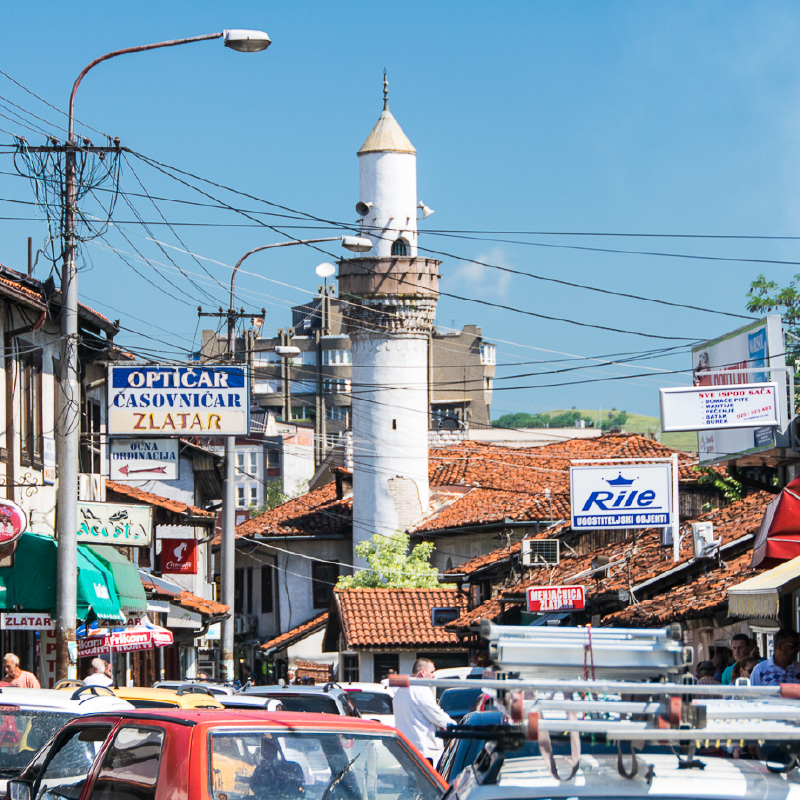
Hamza is sitting in one of the most famous ćevapi restaurants in the Serbian city of Novi Pazar with his foreign friend. People come here to drink coffee and to enjoy the best sausages and a good view of the pedestrian zone. Hamza, however, is here to learn from the Bible. On their mobile phones they read John 8:32 together: “You will know the truth and the truth will set you free.”

After a moment of silence, Hamza says: “That is what my people need. They should recognize Jesus as truth and as light. And then he will free them from the many dark powers and the slavery of money.” And he continues: “God sent you here for me! Without you, I would no longer follow Jesus.”

As the only known follower of Jesus in the entire region with around 250,000 Muslim residents, Hamza knows life in Sandzak. It is not easy for him to live his faith, but he always draws strength from the Bible. The Muslims in Sandzak are a significant majority locally, but overall, they are a minority in Serbia and Montenegro. Thirty years after the war, they are still discriminated against. This is one of the reasons why many Muslims here are very religious and devout. In the city of Novi Pazar alone, there are over 60 mosques, three Koran schools and an Islamic university for future religious teachers and imams.

The wonderful thing about praying is that you leave a worldof not being able to do something, and enter God’s realm where everything is possible. He specializes in the impossible. Nothing is too great for His almighty power. Nothing is too small for His love. ~ Corrie Ten Boom (I Stand at the Door and Knock: Meditations by the Author of The Hiding Place)

Prayer

Heavenly Father, we ask that You help the small number of believers in the Sandžak region by providing companions to read the Scriptures with them, so that in difficult circumstances they may experience Your grace all the more and grow strong and steadfast in faith. May many Muslims in Sandžak come to know that “Jesus is the way, the truth, and the life,” and see that the light of Jesus is greater than the powers of darkness they have known, so that they may be willing to pay the cost to follow Him. Father, send many gospel workers who will share the good news with the people of Sandžak in creative and culturally fitting ways. We declare that the believers in Sandžak will receive faith like a mustard seed, small at first, yet in the end growing into something great. We pray in the name of our Lord Jesus Christ, Amen.

Comoros Archipelago

26Feb

Because vanilla, cloves and spices grow here, the Comoros archipelago is also known as the Perfume Islands, with frangipani, jasmine and lemon grass also lending a delightful fragrance. Almost one million people live on the four main islands, which are located between Madagascar and Mozambique. One of them, Mayotte, is a French overseas territory, which is why many Comorians try to reach France via this island. This has led to unrest and conflict. The population lives in poor conditions and is almost exclusively Muslim.

Said is one of the only Christians on the island. Only a few people around him and in his family know Jesus. He wants the Comoros people to get to have the opportunity to read the Word of God and to believe. Together with other believers and missionary societies, he is working on a Bible translation in the local language. This will give people access to the Word of God in their mother tongue, which is crucial to spreading the gospel and enabling a deeper connection to faith.

The unity and dedication behind this collaboration is impressive. The indigenous believers and mission agencies bring their resources, talents and passions to serve God’s mission together.

Prayer

Heavenly Father, may the fragrance of Christ spread throughout the Perfume Islands, drawing the hearts of the people to You. May the small community of believers in the Comoros be “the aroma of Christ among those who are being saved and those who are perishing.” We ask that You graciously provide for the needs of the local Christians in every way, granting them safety and stability in their daily lives, so that they may bear witness to Your abundant provision before those who do not yet believe. We bless the Bible translation teams with wisdom and strength as they carry out their work. May they continue to walk in unity and enjoy rich fellowship together. We pray in the name of our Lord Jesus Christ, Amen.

The Aimaqs Of Afghanistan

27Feb

Zai was transfixed by verses from the Gospels shared with him by a Christian worker. Tears came to his eyes as they read John 1:12 together: “Sometimes when I read this book I get goosebumps!” he said. Zai sensed God calling him to repent and surrender his life to Jesus, but he was serious about counting the cost. He also struggled to know if he understood the gospel well enough. He said that sometimes at night, he sensed God’s presence so strongly that it almost scared him, not understanding what God wanted from him.

Zai is Aimaq and his people live in the central and western highlands of Afghanistan. Numbering half a million, they live a full or semi-nomadic lifestyle. Their language is considered ‘lost’ so they speak Dari or Pashto, depending on their location.

Zai’s friend told him to speak to God and ask for faith. Reading together Revelation 3:20, he showed him that Jesus was patiently and lovingly knocking on the door of his heart and desiring a personal relationship with him. Zai was deeply moved and asked, “What must I do?” The two men reviewed the verses in Romans regarding the human condition and Romans 10:9-10 which describe a sinner’s response. Zai pondered and asked, “Is it ok if I just take tonight to think about it?” Zai later confessed that “I was afraid if I waited, Jesus might stop knocking.” Soon after this, God gave Zai a dream and he woke up knowing that he was ready to surrender his life to Christ.

Prayer

Heavenly Father, there are still no believers or missionaries in the regions where the Aimaq people live, for this is among the poorest areas of Afghanistan. Yet Jesus said that the good news is to be proclaimed to the poor. We therefore ask You to send workers to bring the gospel to the Aimaq, so that they may come to know the God who loves them and cares for them. Many young Aimaq men travel abroad for work. We pray that You would provide churches in those places to welcome them and share the gospel with them. Holy Spirit, we ask that You move powerfully among the Aimaq people, preparing their hearts to receive the good news. We pray in the name of our Lord Jesus Christ, Amen.

Libya

28Feb

Libya is a country rich in natural resources but devasted by civil war and various armed conflicts. These have caused massive emigration as well as economic hardship and suffering for those remaining in country. There is also spiritual hardship in that deciding to follow Christ in this strict Muslim country carries with it the threat of being punished with death.

Aatiq is one of those who has received a legally disputed death sentence. He came to know Christ through reading the Word some years ago and then wandered away from his faith. A sub-Saharan believer met him and prayed that he would have a vision of the risen Christ. A few days later he had that vision and since then has clung to the Lord in the midst of adversity caused by the boldness of his proclamation. He, somewhat like Joseph in Genesis, has been esteemed by some of those in charge of the prison because of his helpful attitude and good work.

Prayer

Heavenly Father, we cry out to You on behalf of the people of Libya, who are caught in war and violence. May they soon hear the gospel that brings eternal hope and find peace under the sheltering wings of the Prince of Peace, a peace the world cannot take away. We ask that You heal the people of Libya in body, mind, and spirit, and deliver them from the wounds left by years of unrest and turmoil. Holy Spirit, comfort those who have lost their loved ones, and grant them strength and courage to face the days ahead. We also pray for those forced to flee Libya for other lands. Prepare believers to welcome and care for them, and to lead them to know Jesus. Send messengers of the gospel into Libya, and let Your Word shine as a light on their path, drawing many to turn to You. We pray in the name of our Lord Jesus Christ, Amen.