





JAN 2026

S M T W T F S
< DEC  
28 29 30 31 1 2 3
4 5 6 7 8 9 10
11 12 13 14 15 16 17
18 19 20 21 22 23 24
25 26 27 28 29 30 31

Sahel Region of Africa

Though Covered in Wounds, She Still Lifts Her Head to Sing

JAN
1-31

Though Covered in Wounds,
She Still Lifts Her Head to Sing


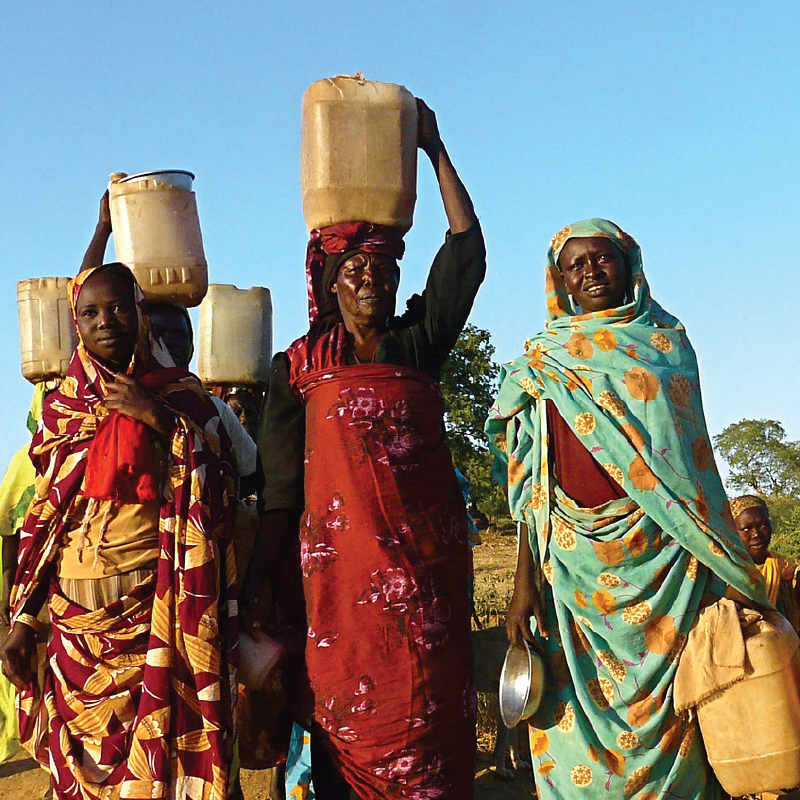
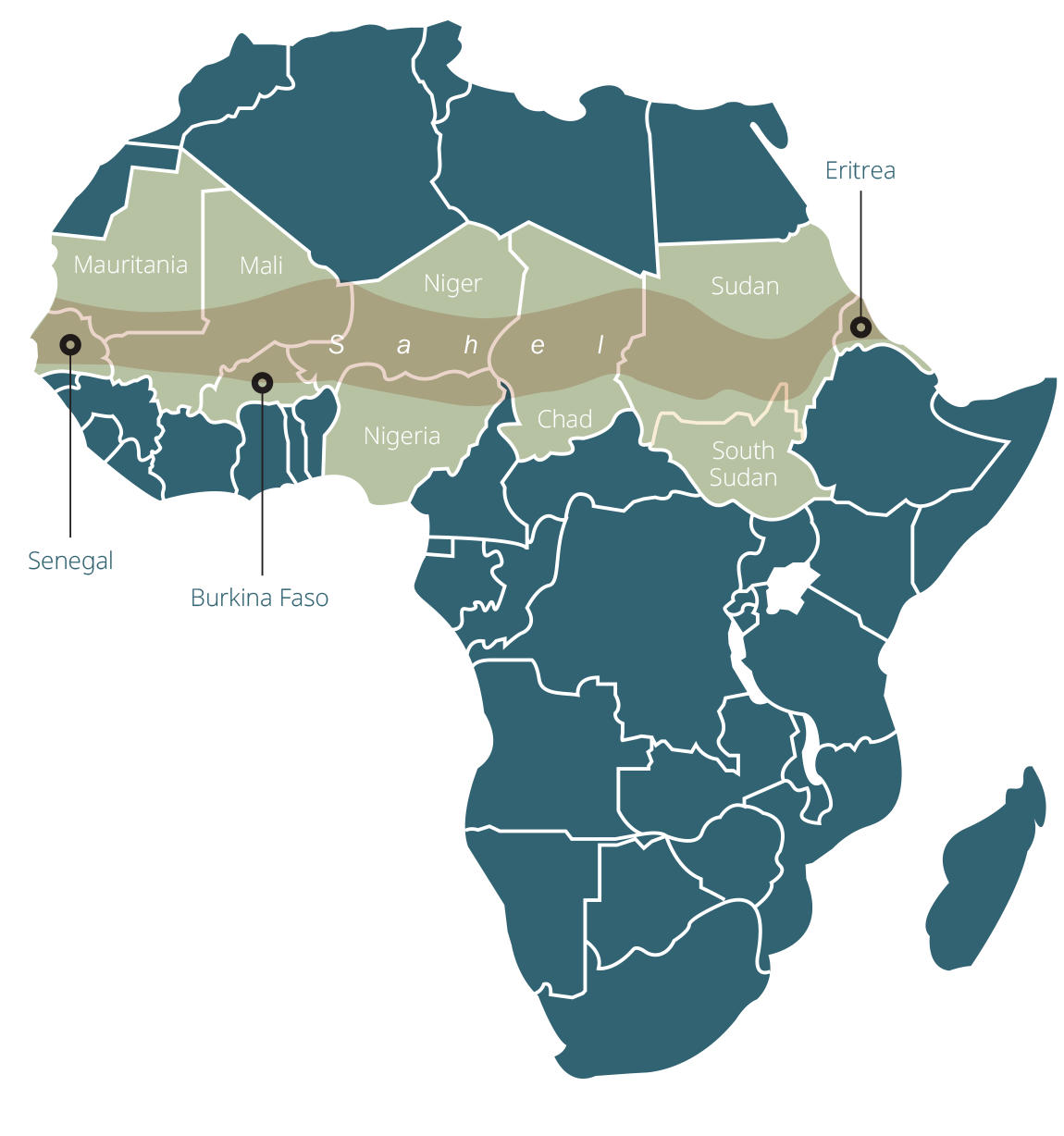
At the edge of the Sahara, the rainy season passes like a traveler in haste. Grasses and shrubs cling tightly to the few fleeting drops of water. This is the Sahel—a narrow belt of land stretching from Senegal on the Atlantic coast of West Africa to Eritrea in the east, crossing ten countries in between.

At dawn, Fulani herders drive their cattle in search of water. At midday, Hausa traders call out their wares in the markets. By dusk, Tuareg men in indigo robes lead camels through swirling dust. For generations, different peoples have lived side by side on this land, forming a cultural mosaic that is diverse, complex, and rich.

When Harmony Begins to Fracture

Yet this once-peaceful picture has begun to crack and peel under the heavy blows of climate change. The Sahel is among the world’s most climate-vulnerable regions. At times the sky is stingy, offering only a few drops of rain; at others it turns brutal, unleashing floods.

Between 2016 and 2020, more than 20 million people lost food security due to extreme drought. Floods now displace some 250,000 people each year. Recurrent droughts, erratic rainfall, and advancing desertification have cut off traditional grazing routes for nomads and stripped farmers of their fields and crops. Peoples who once lived in relative balance are now forced to compete for dwindling resources, and conflict follows.


Glory and Suffering

The Sahel carries both splendor and sorrow. It was once home to powerful African empires—Ghana, Mali, Benin, Songhai—eras of remarkable civilization. Arab scholars passed through, leaving behind Islam and the Arabic script. But the rise of the Atlantic slave trade and the expansion of Western colonialism inflicted deep wounds on the region. Colonial borders, redrawn without regard for land or people, severed long-held ties between communities and their territories.

Today, the Sahel appears in headlines linked to “terrorism,” “refugees,” and “humanitarian crises.” Climate change reduces harvests even as populations grow rapidly. Military and civilian governments alternate in power, yet none bring lasting stability. Political independence has not freed these nations from economic dependence; poverty and hunger persist. To survive, many exhaust every ounce of strength, boarding fragile boats to cross the Mediterranean—hoping to knock on Europe’s door of freedom.


The Need of a Frail Young Girl

The Sahel is like a frail young girl—her face marked by the scars of colonial history, her lower body paralyzed by new forms of economic colonialism. Yet when we draw near, we meet eyes that still shine with life.

Afrofuturism, the Dogon Dama rituals and fishing festivals, the Fulani pulaaku code, Lobi stools, Yoruba literature and philosophy, Tuareg silverwork—all testify to a society rich in creativity, cultural confidence, and vitality.

Perhaps what the Sahel truly needs is not our tears, but our willingness to learn how to read this land with respect and appreciation.


Countries of the Sahel Region — Overview

Senegal
Population: approx. 16.85 million
Religion: Islam
Major ethnic groups: Wolof, Fulani (Peul), Serer
Official language: French

Mauritania
Population: approx. 4.17 million
Religion: Islam
Major ethnic groups: White Moors, Haratin
Official language: Arabic

Mali
Population: approx. 19.52 million
Religion: Islam
Major ethnic group: Bambara
Languages: Bambara, Bomu, and others

Burkina Faso
Population: approx. 20.06 million
Religion: Islam, Catholicism
Major ethnic group: Mossi
Languages: Mooré, Bissa, and others

Niger
Population: approx. 26.34 million
Religion: Islam
Major ethnic groups: Hausa, Zarma–Songhai
Primary language: Hausa

Nigeria
Population: approx. 211.4 million
Religion: Islam, Christianity
Major ethnic groups: Fulani, Yoruba, Igbo
Official language: English

Chad
Population: approx. 15.75 million
Religion: Islam, Catholicism
Major ethnic groups: Sara, Arab
Official languages: Arabic, French

Sudan
Population: approx. 43.38 million
Religion: Islam
Major ethnic group: Arab
Official languages: Arabic, English

South Sudan
Population: approx. 14.25 million
Major ethnic groups: Dinka, Nuer
Religion: Christianity, traditional beliefs
Official language: English

Eritrea
Population: approx. 3.54 million
Religion: Islam, Christianity
Major groups: Highland Christians, lowland Muslims
Official language: None


About 35–40% of Nigeria’s total land area is under threat of desertification.


Causes of desertification are complex…


Climate Change

Declining rainfall and longer drought seasons prevent vegetation from recovering. Rising temperatures intensify evaporation, accelerating the loss of water resources.

Population Crisis

Arid regions have limited land resources but relatively high population density.

Overgrazing and Intensive Farming

Excessive grazing by cattle and goats strips the land of vegetation. Farmers clear forests to expand farmland, disrupting soil structure and reducing fertility.

Energy Demand

Rural households rely heavily on firewood and charcoal for energy, leading to widespread deforestation.

Poor Water Management

Over-extraction of groundwater contributes to soil salinization and cracking.


Consequences of Desertification

Declining Food Production

Farmland becomes sandy and nutrient-poor, resulting in reduced crop yields.

Decline in Livelihood

Farmers and pastoralists lose productive resources, deepening poverty.

Social Conflict

Competition over shrinking land and water resources fuels conflict between herders and farmers.

Migration and Urban Pressure

Many people are forced to migrate, placing growing strain on already overcrowded cities.

Loss of Biodiversity

Habitat degradation leads to sharp declines in plant and animal populations.

The Great Green Wall

Since 2007, eleven countries across Africa’s Sahel region have worked to build a 15-kilometer-wide, 8,000-kilometer-long belt of vegetation, known as the Great Green Wall, aimed at restoring degraded land and slowing desertification. As of 2020, only 4 million hectares had been successfully restored—about 4% of the project’s original target.


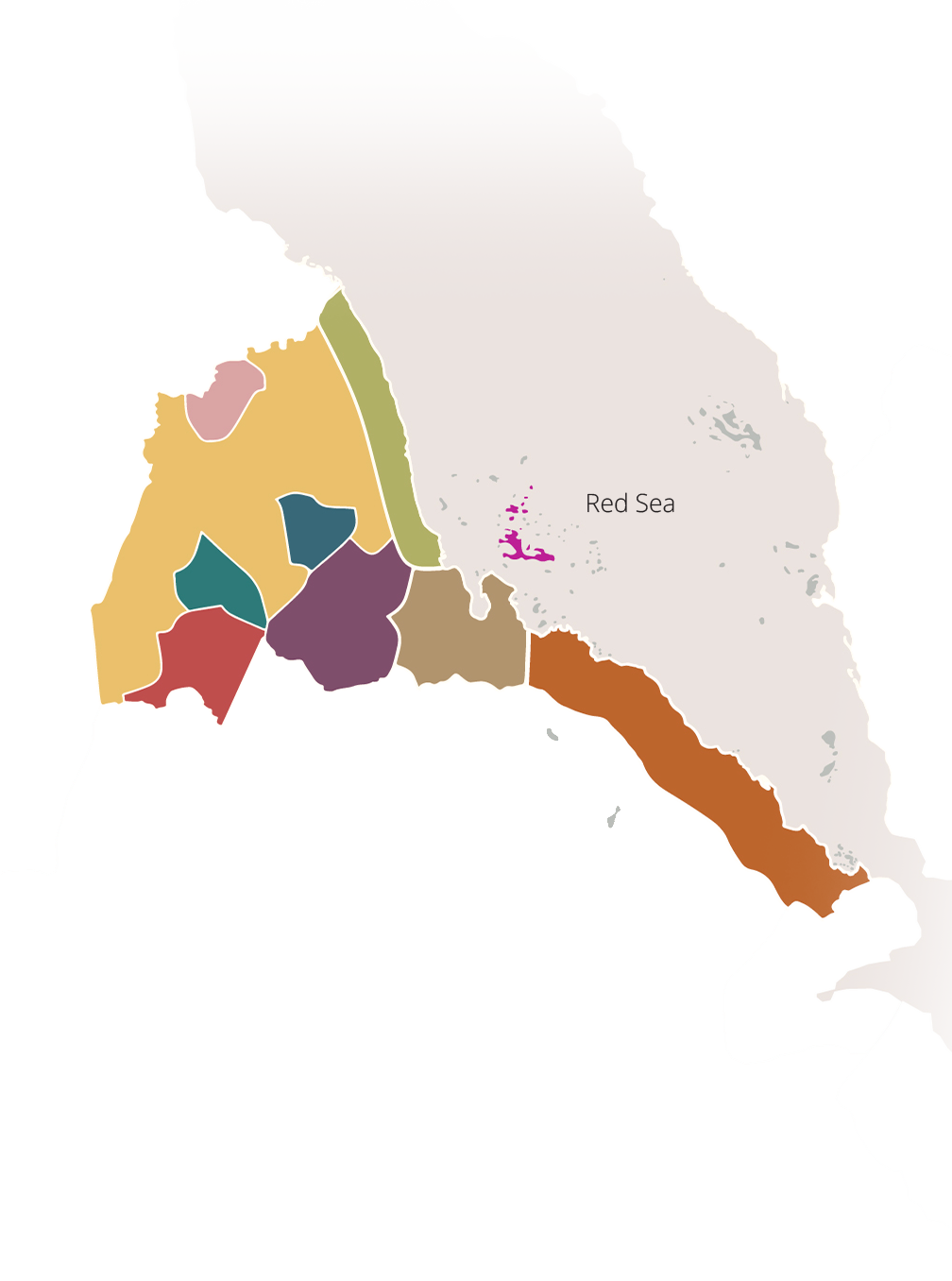
Ethnic Composition of Eritrea


    Tigrinya People


    👥 ~3.3 million 🌍 Orthodox Christianity

    The largest ethnic group in Eritrea, with the greatest political and cultural influence. Most Tigrinya people are adherents of Eastern Orthodox Christianity and live primarily in the central highland region.

    Rashaida People


    👥 ~190,000 🌍 Sunni Islam

    Descendants of Arab nomadic tribes from the Hejaz and Najd regions. They are considered one of the most culturally closed communities in Eritrea. In the early 19th century, tribal conflicts and drought drove them to cross the Red Sea and settle along Eritrea’s coast.

    Tigre People


    👥 ~1.8 million 🌍 Sunni Islam

    The second-largest ethnic group in Eritrea and one that lives under close government surveillance. Tigre and Tigrinya belong to the same language family and share common ancestry, yet the two groups occupy very different positions within Eritrean society.

    Afar People


    👥 ~300,000 🌍 Sunni Islam

    Historically camel herders along the Red Sea coast, migrating with the monsoon seasons. Today, commercial farms have blocked their traditional grazing lands. Recurrent drought has left hunger and disease lurking among Afar communities.

    Saho People


    👥 ~250,000 🌍 Sunni Islam

    Saho society is organized around clans and everyday life. Land is held communally by clans; individuals have rights of use but not ownership or sale. Although Eritrea has a modern legal system, the Saho still rely heavily on customary law to resolve disputes.

    Bilen People


    👥 ~100,000 🌍 Muslim + Christian

    In the town of Keren, home to many Bilen people, the call to prayer from mosques intertwines with the ringing of church bells. About 60% of the Bilen are Muslim and 40% are Christian (Catholic and Orthodox), making them a rare example of long-standing, peaceful religious coexistence.

    Beja People


    👥 ~120,000 🌍 Sunni Islam

    Known as the “warrior people of East Africa,” the Beja are often described as holding a sword in one hand and a camel’s reins in the other. In the 19th century, they actively resisted colonial expansion. Some Beja families straddle national borders and maintain close ties with Beja communities in Sudan.

    Kunama People


    👥 ~250,000 🌍 Traditional animist beliefs

    One of Eritrea’s Indigenous peoples, the Kunama historically welcomed many migrant groups. Today, their language is close to extinction, their land has been steadily fragmented, and many Kunama have gone into exile.

    Nara People


    👥 ~100,000 🌍 Sunni Islam

    Also an Indigenous people, the Nara face challenges similar to those of the Kunama. In contrast, however, Nara society is patrilineal: land, family identity, stories, and responsibilities are passed down through the male line from generation to generation.

    Dahlik People


    👥 ~3,000 🌍 Sunni Islam

    The most mysterious of Eritrea’s ethnic groups, the Dahlik live on the Dahlak Archipelago in the Red Sea and depend mainly on fishing. The islands lack basic infrastructure but are home to clear waters, vibrant coral reefs, and freely swimming sea turtles.

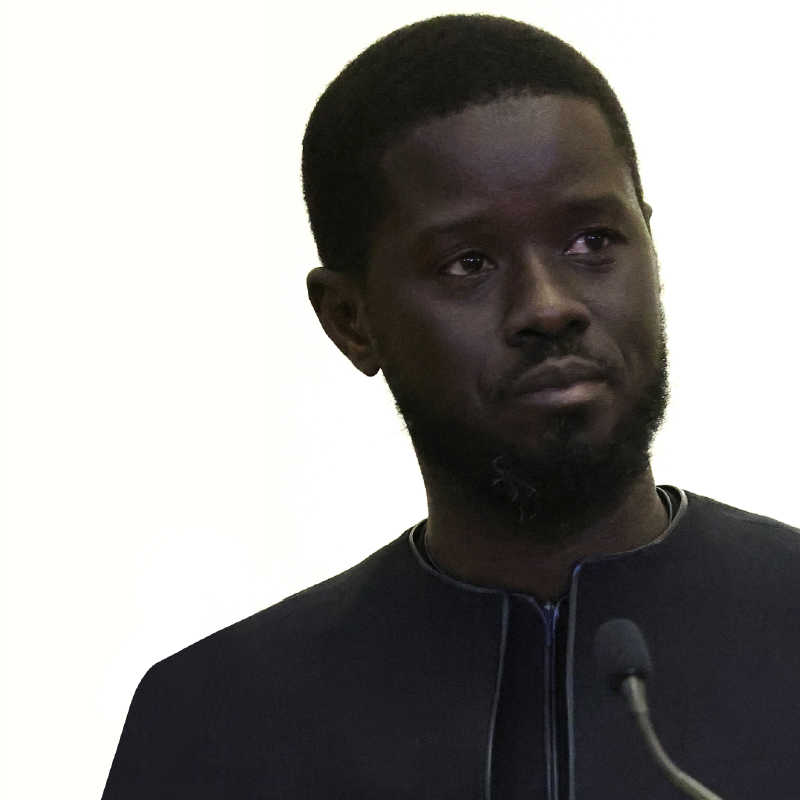
President Bassirou Diomaye Faye of Senegal

A Man’s Paradise?

Polygamy

01Jan

In 2024, Senegal welcomed a new president—Bassirou Diomaye Faye—who stepped onto the public stage accompanied by his two wives, instantly drawing international attention. Characterizations of the president as openly polygamous, along with portrayals of Senegal as a “man’s paradise,” quickly circulated in global media and stirred controversy.

Polygamy is a long-standing tradition in West Africa. In Senegal, more than 30 percent of households still practice polygamous marriage, particularly among rural communities such as the Wolof and Fulani.

In the past, there was no limit on the number of wives a man could take. Multiple marriages expanded family influence and strengthened alliances between clans. Within traditional animist belief systems, having many wives symbolized status, power, and blessing. With the arrival of Islam in the eleventh century, marriage practices came under religious regulation. The Maliki school of Islamic law—widely followed in Senegal—teaches that a man may marry no more than four wives, and that he must treat each with fairness, both emotionally and materially.

Beyond religious and cultural factors, polygamy has also served a social function. In rural areas, women often lack the economic means to support themselves independently, and marriage provides a form of social and material security.

From the perspective of monogamous societies, polygamy may be difficult to understand. Yet in the context of mission work in West Africa, it is a lived reality that cannot be ignored—deeply intertwined with faith, tradition, and economic structures.

PRAYER

Heavenly Father, we ask that the Holy Spirit grant missionaries wisdom and discernment as they encounter the local tradition of polygamy. Help them not to judge through the lens of their own culture, but to see every soul through Your eyes, making decisions that reflect Your heart—decisions that neither weaken the power of the gospel nor neglect the wisdom of contextual mission. May they sincerely seek to understand and respect the historical, religious, social, and economic dimensions of polygamy among Senegal’s peoples. We pray that the Holy Spirit would work in human hearts, so that within their own cultural contexts, the peoples of Senegal may encounter You and experience Your love and salvation. In the name of Jesus Christ we pray, Amen.

The Answer Is in the Music

Afrofuturism

02Jan

Senegal’s Electrafrique is one of the most influential electronic music platforms on the African continent. More than a space for musical creation, it has become a laboratory for identity. By weaving complex African rhythms into contemporary electronic sounds*, Electrafrique gives rise to a distinctive voice—one deeply rooted in African soil, yet oriented toward the world. For its creators, the goal is not innovation for its own sake. What they are practicing, in essence, is Afrofuturism.

As a cultural movement, Afrofuturism brings technology into conversation with African tradition, seeking to rethink a fundamental question: after histories of slavery, colonial rule, and racial discrimination, what does it mean to be Black?

For many young people in Senegal, the answer is found in music. At night in Dakar, Afrofuturist electronic beats fill the air as bodies move freely to the rhythm. When traditional African drumming locks into the same pulse as synthesizers, Africa presents itself anew to the world—not as the shorthand for poverty, conflict, and instability so often portrayed in Western media, but as a society marked by creativity, cultural confidence, and vitality.

* e.g. house, techno, Afrobeat-electronic

Electrafrique music
PRAYER

Heavenly Father, You have given music to the world, and You have entrusted human beings with the gift of creating it. May the people of Senegal not only express their rich and distinctive musical creativity and rearticulate their cultural identity, but also encounter You through music, offering praise to the Creator.

We pray especially for the peoples of the Sahel, shaped by histories of slavery, colonial domination, and racial discrimination. As they seek identity and work through historical wounds, may they discover—perhaps to their surprise—that Christ is the Lord who dwells with the suffering, for He deeply understands the pain of the oppressed. In the name of Jesus Christ we pray, Amen.
The National Dish Everyone Argues Over

Wolof People

03Jan

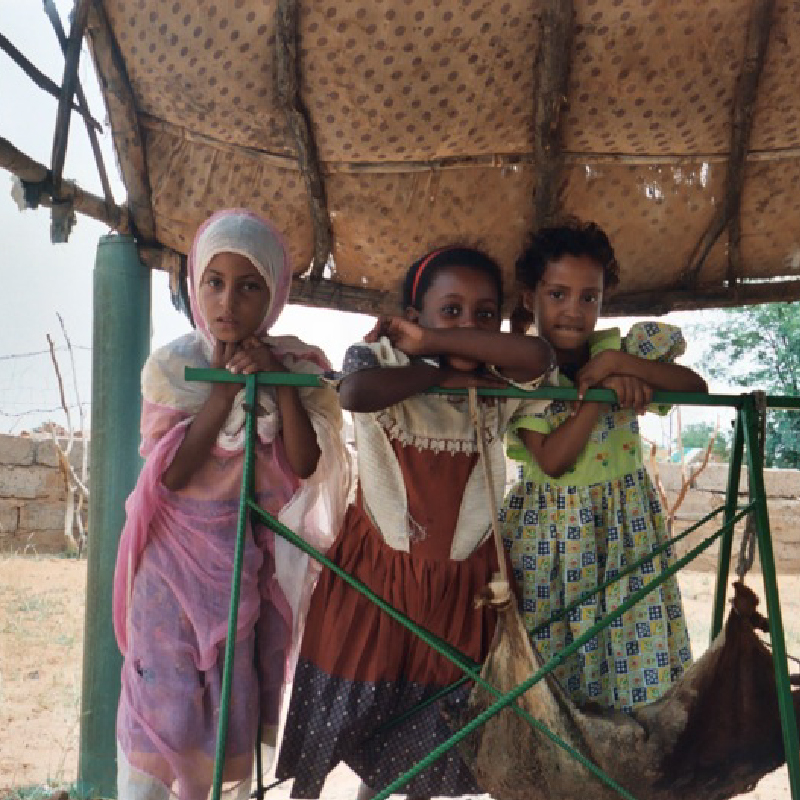
In West Africa, you can criticize Nigeria’s government or poke fun at Ghanaian English accents—but never comment on whose jollof rice tastes best. Do that, and you are guaranteed to start a heated argument.

Jollof rice traces its origins to the Wolof people of Senegal and a dish known as thieboudienne—rice cooked with fish. In the fourteenth century, the Wolof established a powerful empire that dominated parts of West Africa for centuries. As regional trade routes expanded—and later as European colonial shipping lines took shape—the recipe traveled across West Africa. Through oral transmission, adaptation, and the difficulty of sourcing original ingredients, jollof rice gradually evolved into countless regional styles and variations.

A classic jollof begins with tomatoes and onions, combined with spices and meats distinctive to each West African country. The meat is usually simmered slowly in spiced stock until tender, then lightly fried before being returned to the pot. There it cooks together with rice and seasonings, until each grain absorbs the sauce, taking on its fragrant aroma and rich orange-red color.

From family gatherings and birthdays to coming-of-age ceremonies, parties, and weddings, jollof rice remains the centerpiece of the table. It carries not only the history of the Wolof people and the creativity of each household cook, but also—for millions across West Africa—the enduring taste of home.

PRAYER

Heavenly Father, we thank You for the rich culinary heritage You have given to the people of Senegal—jollof rice, a gift that brings communities across West Africa together. May You use every shared meal not only to preserve the taste of home, but also to open spaces for reconciliation and forgiveness. Where historical wounds, ethnic differences, or economic divides have created distance, may healing take place in the warmth of shared food. May these moments around the table become opportunities for the Holy Spirit to call hearts—inviting many to the banquet of God’s kingdom, to receive the redemption and grace of Jesus Christ. And may those who encounter You learn to follow Jesus, who ate with tax collectors and sinners, welcoming those on the margins with generous love. Through the simple act of sharing food, may Your love touch every heart. In the name of Jesus Christ we pray, Amen.
When Fatness Is Beauty

The Leblouh Tradition

04Jan

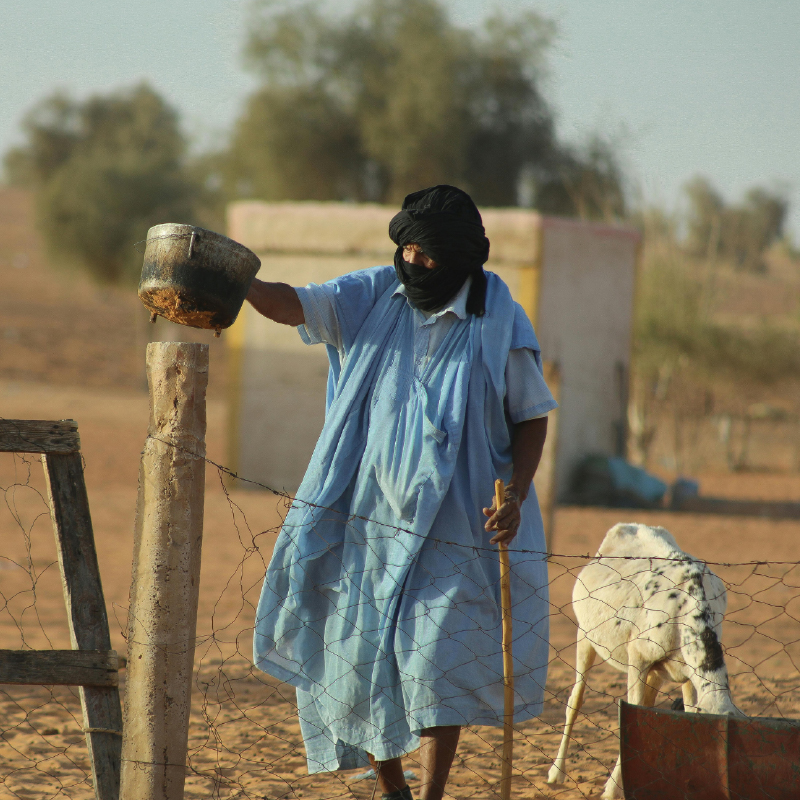
In Mauritania, obesity is widely associated with wealth and beauty. To attract suitors and improve their prospects for marriage, many girls are sent to fattening camps as early as the age of five, where they undergo a practice known as leblouh—a system of forced feeding.

Girls subjected to leblouh may spend two to three hours each morning eating breakfast. This meal normally consists of high-fat camel’s milk alongside large bowls of couscous, amounting to roughly 3,000 calories in a single sitting. During seasons of agricultural abundance, daily intake can reach as high as 16,000 calories, all in the pursuit of rapid weight gain.

If a girl refuses to eat or fails to meet weight targets, older female relatives may resort to zayar, a form of physical punishment that includes pinching toes or even breaking fingers, along with isolating the girl from her friends.

An estimated one quarter of Mauritanian women have experienced leblouh; in rural areas, the figure rises to as high as three quarters. Leblouh is not simply an act of cruelty, but a complex practice embedded within cultural norms, social expectations, and economic realities. In many cases, women’s financial security depends on marriage, and investing in a daughter’s “fattening education” is seen as a way to secure her future stability.

“I hope my daughter will marry and have children before she turns fifteen,” one mother explains. “Only fat girls are attractive and can please a husband.” To speed up weight gain, she purchases various substances from the market—including steroids, livestock hormones, and contraceptive pills—without understanding their proper use or potential side effects.

Leblouh tradition
PRAYER

Heavenly Father, girls in Mauritania bear heavy physical and emotional costs under the tradition of leblouh. We ask that You work through nonprofit organizations and digital resources to raise awareness of the serious health risks associated with obesity—diabetes, heart disease, stroke, and joint disorders. Grant wisdom to strengthen systems of medical regulation, so that people may understand safe and responsible use of medications. Raise up doctors, social workers, and counselors to provide holistic care—physical, emotional, and spiritual—for girls who have endured leblouh. Through education, transform societal views of women’s bodies, and reshape standards of beauty so they may grow with dignity, freedom, and health. May they come to know that in Your eyes, every body—thin or fat—is declared “very good” (Genesis 1:31). In the name of Jesus Christ we pray, Amen.
A Blind Community in the Desert

Dali Koumbe People

05Jan

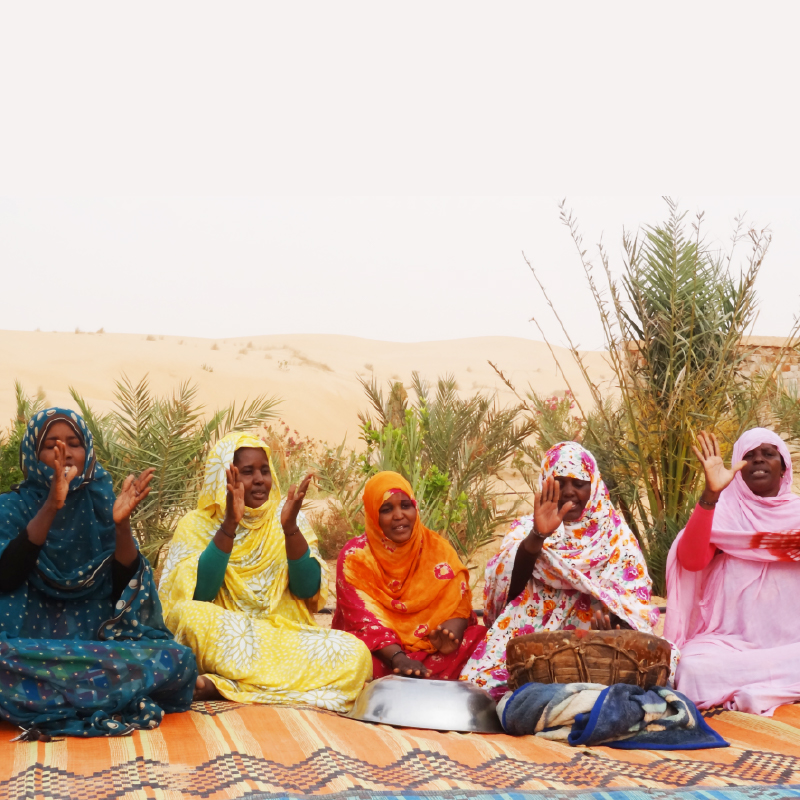
In southeastern Mauritania, near the border with Mali, lives a little-known community often described as a “blind village”—the Dali Koumbé. Here, as many as one in every two residents is born with congenital blindness.

According to village chief Mahmoud, the story can be traced back ten generations. A woman is said to have dreamed that she would give birth to a man of great virtue who would be blind from birth. From that time on, congenital blindness has been passed down through the community. “Praise be to Allah—the prophecy continues to be fulfilled,” Mahmoud says. He also serves as the village imam and teaches children to recite the Qur’an.

Though the people of Dali Koumbé have never seen the world with their eyes, they possess a remarkable sense of direction and are able to move freely around the village. They depend on one another, offering mutual care and support as they survive the harsh conditions of the Sahara.

The community numbers about two thousand people. Most rely on subsistence farming and begging to survive. Some villagers are even able to locate underground water by smell, distinguishing between fresh and saline sources, and advising neighboring villages where wells should be dug.

To date, there has been no in-depth scientific study of the high rate of congenital blindness in Dali Koumbé. Because of its remote location, the village lacks medical facilities, schools, and social welfare services, and has long been neglected by the Mauritanian government.

Dali Koumbé Community
PRAYER

Heavenly Father, You have said that all You have made is “very good.” Transform our vision, that we may see the people of Dali Koumbé as Your “very good” creation—vessels in Your hands—and serve them as we would serve Christ Himself (Matthew 25:40). We ask that You call journalists to tell their story, and stir the hearts of the Mauritanian government, international bodies, and nonprofit organizations to work together in building infrastructure, education, vocational training, and social services that truly meet the needs of this community. May these efforts help them move beyond poverty toward sustainable and dignified livelihoods. Guide the Christian theological community to develop a robust theology of disability, equipping missionaries and workers to see persons with disabilities through the eyes of Christ and to respond with love and humility. In the name of Jesus Christ we pray, Amen.

An Invisible Iron Cage

Haratin People

06Jan

On May 16, 2015, a Mauritanian court convicted and sentenced a slave owner for the first time in the country’s history. For the Haratin, a people enslaved for generations, it was a moment worth celebrating. Yet the question remains: can a single ruling truly shake a system of slavery that has endured for centuries?

In Mauritania, slavery has primarily taken the form of Arab–Amazigh Bidan (White Moor) elites enslaving Black populations of the western Sahara—most notably the Haratin. Although the government formally abolished slavery in 1981, and criminalized it further in 2007 and 2015, these measures have largely been symbolic. Local authorities, the judicial system, and slave-owning interests are deeply entangled, resulting in minimal enforcement. As of 2021, an estimated 150,000 people were still living in slavery, working without pay in White Moor households as domestic servants, child laborers, or even reduced to tools of reproduction.*

Many Haratin are raised with the belief that obedience to one’s master is a virtue. They grow up unaware that they have the right to legal identity, land ownership, or education. Even when freedom is nominally granted, those who possess nothing often choose to remain dependent on their former masters, who continue to provide basic subsistence.

A Mauritanian proverb captures this reality: “Paradise lies beneath your master’s feet.” In other words, submission to one’s master is equated with salvation. Because religious authority largely rests with White Moor elites (who are themselves beneficiaries of the system) Islamic texts are selectively interpreted to emphasize obedience while ignoring teachings on liberation and equality. In this way, slavery is reinforced not only socially and economically, but theologically, becoming an invisible iron cage that confines the Haratin.

*Enslaved women are often subjected to forced marriages; any children they bear, regardless of whether the father is the slave owner, legally belong to the master and are treated as part of his labor property.

PRAYER

Heavenly Father, may the Haratin come to know You as their refuge, their stronghold, and the Lord of their lives. Long ago, You led the people of Israel out of slavery in Egypt. Today, we ask You to reveal that same saving power, to free the Haratin from the chains of slavery in Mauritania. May they rebuild their sense of identity within the household of God, knowing that in Your eyes there is “neither Jew nor Greek, slave nor free, male nor female,” but equal dignity for all Your people. Break, Lord, the structures of sin that bind together government institutions, White Moor elites, and religious authorities. Stir hearts to speak out for the Haratin, to confront injustice, and to call the state to uphold the rights and humanity of every people. In the name of Jesus Christ we pray, Amen.
When Darkness Falls

Interethnic Conflict

07Jan

In 2019, a brutal darkness descended on central Mali, engulfing villages of both the Fulani and the Dogon peoples.

Traditionally, the Fulani are nomadic pastoralists who follow water and pasture, while the Dogon are settled farming communities. For centuries, the two groups lived side by side, each keeping to its own way of life.

Over the past decade, however, repeated droughts have dried up grazing lands and depleted water sources. Fulani herders, forced to search for survival, began driving their cattle and sheep deeper into agricultural areas. Crops were damaged, village order disrupted, and tensions with Dogon farmers steadily escalated.

These long-simmering grievances reached a breaking point in March 2019. Dogon attackers struck the Fulani village of Ogossagou, killing 160 herders. Three months later, Fulani fighters destroyed the Dogon village of Sobane Da, leaving 300 villagers missing.

With Mali’s political instability creating a vacuum in law enforcement and justice, communities were left to fend for themselves. Retaliation became the only form of justice people believed remained. The Dogon organized a self-defense militia known as Dan Na Ambassagou (“Hunters Who Trust in God”), taking up hunting rifles to protect their villages. At the same time, the withdrawal of UN peacekeepers and French forces opened space for the Islamist extremist group Jama’at Nusrat al-Islam wal-Muslimin (JNIM) to expand its influence, drawing in Fulani youth.

Darkness tightened its grip on both the Fulani and the Dogon. As climate change worsens, political stability remains elusive, and extremist groups grow stronger, peace feels increasingly distant.

PRAYER

Heavenly Father, we confess before You the harm done to the earth. We acknowledge that overdevelopment, excessive consumption, and carbon emissions in wealthy nations have intensified drought in Mali, stripping the Fulani and Dogon peoples of the resources they need to live. Grant grace, Lord, that both peoples may see that they are fellow victims of an extreme climate, not enemies by nature. Heal the broken hearts of those who have lost loved ones. Break the cycle of vengeance, and transform hatred into courage to face environmental challenges together. Raise up capable political leaders to guide Mali toward a just and stable state, and restore the people’s trust in the rule of law. And Lord, do not allow our faith to stop at personal salvation alone—teach us to continue speaking out and acting against the suffering and injustice of this world. In the name of Jesus Christ we pray, Amen.
Sacred and Secular, Life and Death

Dogon People

08Jan

In Dogon belief, the soul does not perish after death. To prevent the spirits of the deceased from lingering among the living and disturbing social order, the Dogon hold a Dama ceremony months or even years after a person’s death, guiding the departed into the realm of the ancestors. A Dama is usually conducted collectively for several families and dozens of deceased at once. Its purpose is not mourning, but transformation: helping the dead shed their former identities as someone’s father, mother, or child and enter the ancestral community (Wagem).

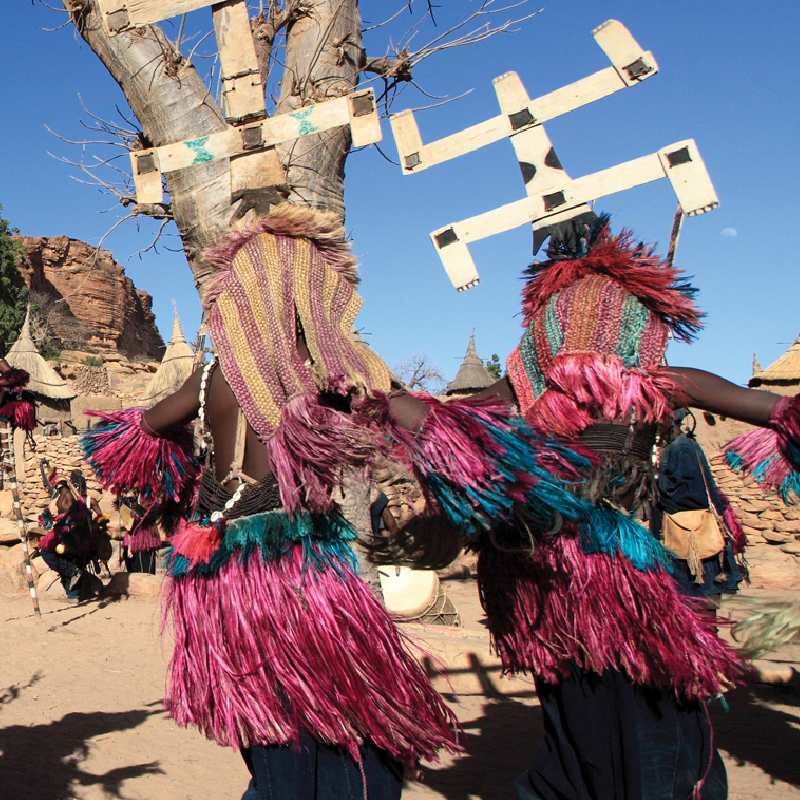
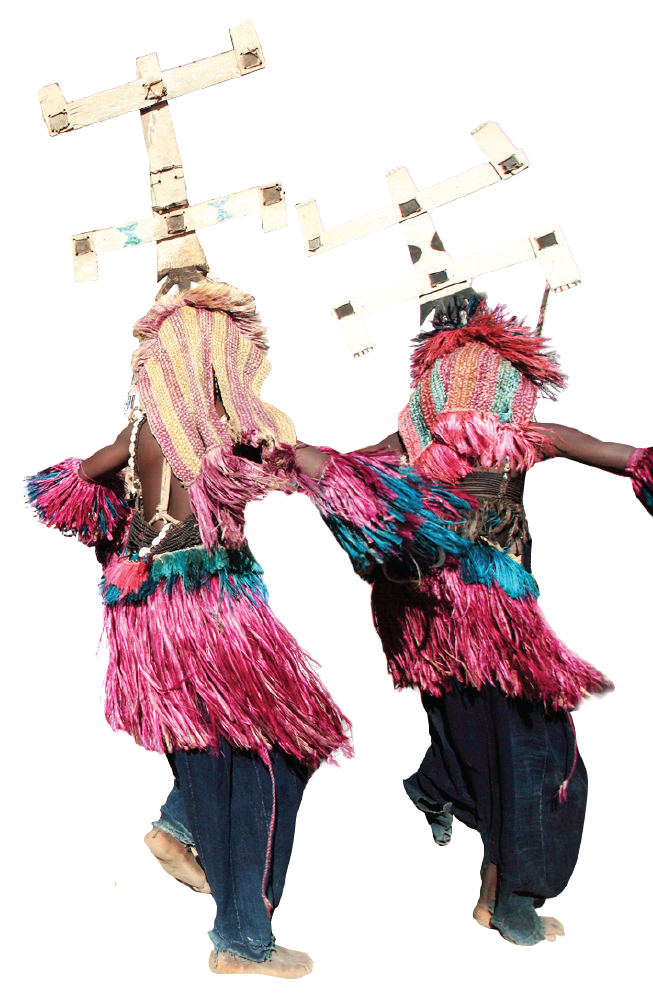
Mask dances are the centerpiece of the Dama. Dancers wear distinct masks, grass skirts, and painted garments, gathering in the village clearing to dance. Through their movements, they build a bridge between the living and the dead, the visible world and the spiritual one. The dancers also embody warriors, sent forth on behalf of the village to confront the powers of death. The Dama symbolizes the restoration of social order, the rebalancing of the cosmos, and the release of Dogon society from the shadow of death, allowing life to return to calm.

Dama ceremony

Masks of the Dogon People

Masks of the Dogon People

The Dogon have dozens of different masks, each embodying a rich cosmology and cultural meaning.


▼ Kanaga

The cross-shaped structure symbolizes the connection between heaven and earth, and represents the bond between humans and the divine, as well as between life and death.

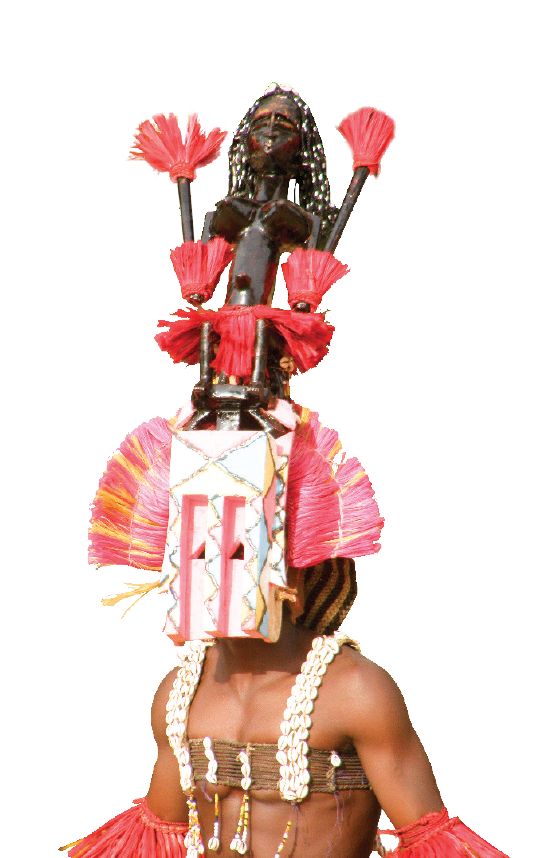
▲ Satimbe

The Satimbe mask represents the mythic female figure Yasigine. Within Dogon male ritual society, it holds a unique status and serves as an important link to female ancestral spirits.

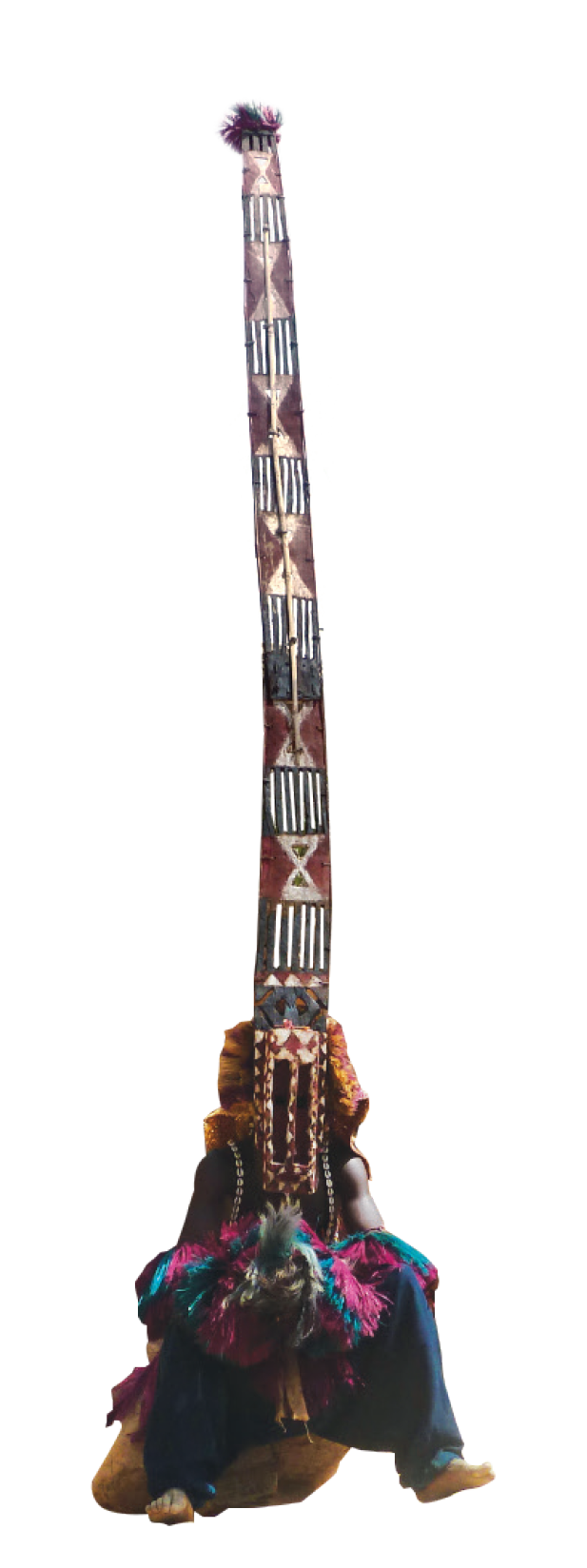
▲ Sirige

Often towering over five meters tall, the Sirige mask features a rectangular human face at its base, with two deep-set eye openings, symbolizing the watchful gaze of the ancestors.

Close

The Antogo Fishing Festival

The Antogo Fishing Festival

In May, during the dry season when the sun scorches the land like open flame, Dogon people from across Mali begin weaving bamboo baskets in preparation for Antogo, their annual fishing festival. They travel north to the Dogon village of Bamba, where the ceremony is held.

Bamba was once lush and green. Its lake, rich with fish, sustained the Dogon people for generations. But with climate change and advancing desertification, this oasis has gradually turned dry and barren. The cracked earth spreads outward like aged leather. Even so, the lake remains. It is a precious resource for the Dogon, regarded as a sacred space—home to benevolent spirits.

On the day of Antogo, people of all ages gather at the water’s edge, baskets in hand, poised with anticipation. After the village chief finishes reciting ritual prayers and declares the festival open, hundreds of Dogon men surge forward, plunging into the lake. Covered in mud, they race against time to catch as many fish as possible.

Thirty minutes later, a gunshot signals the end of the ritual. All the fish caught are collected and handed to the elders of Bamba, who distribute them fairly, ensuring that every household has fish to eat that evening.

*In Dogon culture, women are considered ritually impure during menstruation and are therefore excluded from all ceremonial activities.

Antogo Festival
PRAYER

Heavenly Father, You established the Sabbath year so the land might rest, and the Year of Jubilee to prevent the concentration of wealth and to protect the vulnerable. The Dogon people’s reverence for the land and their insistence on just distribution reflect an order that delights Your heart. May they come to know the source of goodness and justice, and find hope for life in Your word. In the name of Jesus Christ we pray, Amen.
Close


PRAYER

Heavenly Father, in the Dama ceremony, the Dogon long for souls to enter rest, for society to be restored, and for death to be overcome. All that they seek has been fully accomplished in the cross and resurrection of Christ. May they come to know You, the Lord of life, and find the true path to eternal life in Christ. May the mask dance itself be offered one day as an act of worship to You. In the name of Jesus Christ we pray, Amen.
The Tip of the Iceberg

Fulani people

09Jan

When do you use the phrase “the tip of the iceberg”? Have you actually seen an iceberg?

In English, “the tip of the iceberg” refers to a surface phenomenon that hints at a much larger reality beneath. Linguists call this a metaphor—language that goes beyond its literal meaning to convey deeper, more abstract truths. Understanding a metaphor requires attention to context and an ear for what is left unsaid.

Metaphors permeate everyday life, shaping how humans perceive and interpret the world. They are not unique to the English language. In Fulani language and culture, too, moral values are expressed through a rich system of metaphor known as pulaaku*, the ethical code that guides how Fulani people relate to others. These values are often conveyed through proverbs.

“Dignity is like oil—once spilled, it cannot be gathered again.” This proverb speaks of how dignity, once lost, is difficult to restore. Oil serves as a metaphor for dignity’s fragility and worth. Fulani people are deeply sensitive to disrespect, shame, and humiliation. They would rather endure hardship than ask others for help.

“When the nose is hurt, the eyes ache as well.” Here, physical proximity becomes a metaphor for human bonds. When a family member or close companion suffers, one ought to share in both their sorrow and their joy. Through the proximity of the nose and eyes, the Fulani express the depth of kinship and communal connection.

These two proverbs are just the “tip of the iceberg” of the Fulani worldview.

*Pulaaku centers on five core values: Semteende (a sense of shame / modesty), Munyal (patience, endurance, self-control), Enɗam (compassion and care for others), Ngorgu (courage and moral strength), and Neɗɗaaku (dignity and self-respect)

PRAYER

Heavenly Father, the cultures You have created are rich and varied—different, yet often resonant with one another. We praise You for the gift of metaphor in human language. We thank You that through Fulani proverbs, we are given a glimpse into the depth of pulaaku. The Fulani treasure dignity as something precious and fragile as oil, and they place great value on communal bonds. Through the Psalms, You speak of lifting the poor from the dust; through the New Testament, You reveal the mystery of becoming one body in Christ. Grant wisdom to those who serve among the Fulani. Teach them to speak the gospel through metaphors the Fulani know and trust, proclaiming Your truth in ways that are deeply rooted in local meaning. May the love and welcome of Jesus Christ draw the Fulani into a close and living relationship with You. We pray in the name of our Lord Jesus Christ, Amen.

A Living Stool

Lobi people

10Jan

“I am a stool. I once belonged to a Lobi warrior. When he rested, he sat on me. When danger came, I became a weapon in his hand. I was never just a stool. I accompanied him for decades, until the day he closed his eyes. Then I became his embodiment. Later, I was taken away by colonizers. They admired my ‘primitive’ form. Now I lie quietly in the Musée du quai Branly in Paris. No one has sat on me for more than a hundred years.”

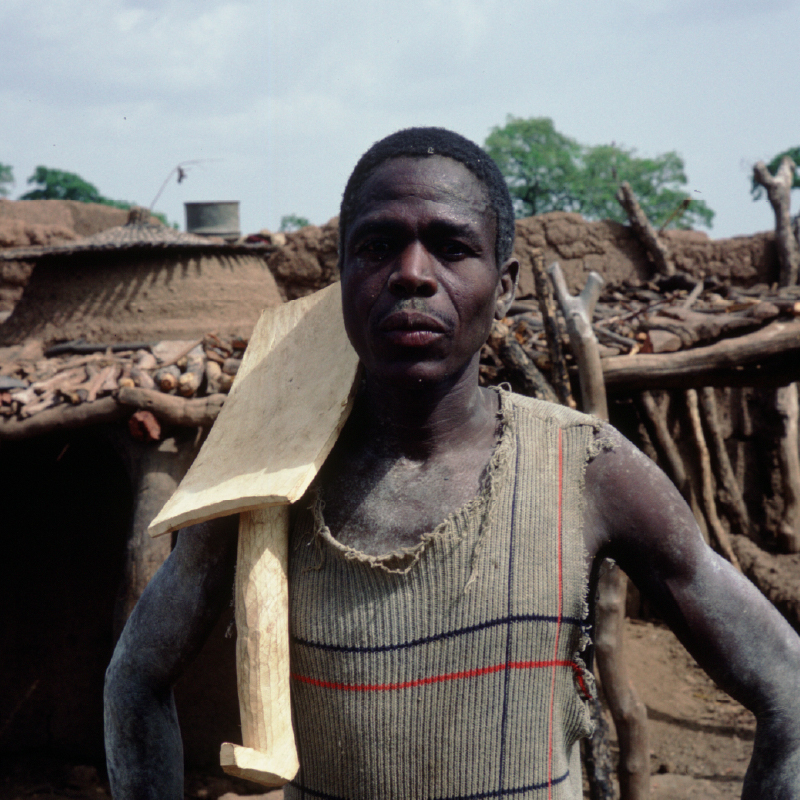
Stools are the most iconic craft of the Lobi people of Burkina Faso. They are not merely furniture, but an indispensable part of life. When Lobi men travel, they carry their stools on their shoulders; when danger arises, the stool can also serve as a weapon.

Each Lobi stool belongs to a specific individual. The stool held by the Quai Branly Museum is carved with a warrior’s head and legs shaped like male genitalia. It signals the former owner’s exceptional social status, masculinity, and strength.

After the owner’s death, the stool is never discarded. It is placed in an ancestral shrine space (Thilduu), where it stands as tangible proof of the owner’s continued presence, extending the life of the soul in physical form. It also becomes a medium through which descendants communicate with the ancestors. Sacred and inviolable, it may be touched only by a designated heir.

A Lobi stool is not an inert object. It is considered a living thing, one that participates in Lobi society, in life and death, memory and belief.


A Lobi stool at the Musée du quai Branly


PRAYER

Heavenly Father, all creation is the work of Your masterful hands. May the Lobi people, gifted with skilled craftsmanship and artistic vision, come before Your throne and know You—the God who surpasses all art. May they understand that You not only created them in Your image, but entrusted them with the cultural calling to steward and shape the world through creativity. The question of where Lobi stools belong is not merely a legal or museum-ethics debate; it is a theological issue bound up with colonialism and oppression, justice and reconciliation. We pray for the relationship between France and Burkina Faso. May the return of cultural artifacts begin without delay, helping rebuild trust, heal historical wounds, and restore the Lobi people’s connection to their cultural heritage. In the name of Jesus Christ we pray, Amen.

Ritual Dance-Off

Senufo People

11Jan

Do you enjoy street dance battles? In southwestern Burkina Faso, the Senufo people practice a ritual that may look like a dance-off—the Panther Dance (Boloye). But this is no display of flair or entertainment alone. It is a sacred contest bound up with ancestral power.

Wearing animal-eared headdresses, leopard-patterned garments, and carrying wooden staffs, dancers move freely to the driving rhythms of African drums, executing demanding flips and acrobatic turns. The Panther Dance is most often performed at Senufo funerals. The panther symbolizes the ancestors appearing among the living. In other words, each dancer is not merely a human performer, but a vessel through whom ancestral spirits are believed to be present. The dancers’ face-offs express the power and rivalry of the ancestors themselves.

Not everyone is permitted to perform the Panther Dance. Dancers must belong to the Poro brotherhood, an institution that holds supreme authority within Senufo society. Poro is responsible for preserving ancestral wisdom, religious knowledge, and the governance of communal life. Most boys enter between the ages of seven and fifteen, undergoing long periods of seclusion and training in order to become “real men.”

Although some Senufo practice Islam, the Panther Dance remains central to community life. For them, faith is pragmatic: Islam addresses matters of the afterlife, while ancestors and nature spirits are entrusted with crops, fertility, and life-cycle rituals. Islam and animist beliefs are not seen as contradictory, but complementary.

The Leopard Dance
PRAYER

Heavenly Father, Your Son Jesus Christ entered a particular culture and people, bringing the good news of the Kingdom into the world. Today, we ask that You also make Yourself known among the Senufo in ways they can understand. May they see that You do not come to replace their ancestors, but that You stand above all ancestral spirits as the ultimate source of all creation. We pray for missionaries serving among the Senufo. Grant them wisdom to honor Senufo culture and communal identity, to find language and images that communicate salvation, and to build bridges for meaningful dialogue. May the Senufo come to know that in Christ, they can remain fully Senufo. In every Panther Dance, may the Holy Spirit speak to them through visions and encounters, leading them to know the one true and almighty God. In the name of Jesus Christ we pray, Amen.

Deep in the Desert

Talibe Children

12Jan

The word talibé comes from Arabic, meaning “student” or “seeker of knowledge.” In West Africa, it commonly refers to boys sent by their parents to Qur’anic schools. Motivated by religious conviction and long-held tradition, families often believe that separation from home and a life of hardship help cultivate discipline and moral character.

In these schools, marabouts are responsible for teaching Islamic knowledge and providing basic food and shelter. Yet the schools receive little financial support from society, institutions, or the state, and have historically relied on student begging to sustain daily operations.

Begging was once understood as a spiritual exercise in humility and trust in Allah. After Niger’s economic crisis in the 1980s, however, increasing numbers of marabouts began forcing students to beg on the streets for seven to twelve hours a day. Some abandoned teaching altogether and became involved in child trafficking.

Estimates suggest that Niger may have more than 160,000 talibé children. Many live in harsh conditions, lacking access to healthcare, adequate nutrition, and basic education, and some suffer physical and psychological abuse.

The talibé system is deeply embedded in Niger’s religious traditions and cultural values and cannot be explained by poverty alone. In a country marked by political instability and weak governance, these children quietly disappear into the desert, unseen and largely unprotected.

PRAYER

Heavenly Father, protect the talibé children as the apple of Your eye. Hide them under the shadow of Your wings, and surround their wounded bodies and spirits with Your love. May Your Spirit confront those marabouts who abuse power, who force children to beg or engage in human trafficking, and lead them to repentance from greed and exploitation. Grant marabouts hearts of gentleness and humility, that they may truly care for the formation of their students and develop new ways of sustaining their schools without relying on child labor. We ask You to raise up scholars, practitioners, and advocates to work with the government of Niger and non-profit organizations to improve education, infrastructure, and comprehensive financial systems, so that this land may become a place where families can live in dignity and children can grow in safety and hope. In the name of Jesus Christ we pray, Amen.
A Vicious Cycle

Recurring Coups

13Jan

Detaining the president, sealing the borders, suspending public institutions…in 2023, Niger changed overnight.

Since gaining independence from France in 1960, Niger has never fully escaped the shadow of military coups. Military regimes and civilian governments have taken turns in power, yet none has delivered lasting stability.

The frequency of coups in Niger is not the result of a single cause, but of a tightly interlocking systemic cycle: a long tradition of military intervention in politics, fragile democratic institutions, deteriorating security conditions, foreign interference, and deep imbalances of power among ethnic groups. These forces reinforce one another.

Niger possesses some of the world’s most important uranium reserves, a key resource for nuclear energy and nuclear weapons. By all accounts, it should be wealthy. Yet the country remains among the poorest in the world. For decades, uranium extraction has been dominated by French companies, with little benefit flowing to the local population.

At the same time, Niger’s military has long viewed itself as the “arbiter of national stability.” Repeated coups have left democratic institutions weak and slow to develop. Civilian governments have struggled to contain armed groups along the borders and, because of their close ties with France, have been labeled agents of neo-colonial influence, making it difficult for them to gain public trust.*

Even deeper is the imbalance of power among ethnic groups. Political and military authority in Niger is concentrated in the hands of a few groups, turning coups into one of the few ways marginalized communities feel they can make their voices heard.

*After the 2023 coup, French influence receded, while Russia’s presence began to grow.

PRAYER

Heavenly Father, “You judge the world with righteousness; You govern the peoples with equity.” We cry out to You for mercy on Niger, a nation shaped by decades of colonial rule and the ongoing extraction of its resources by foreign powers. “You do not forget the cry of the afflicted.” We ask You to deliver the people of Niger from the fear and suffering brought by coups and terrorism. Break political systems that concentrate power in the hands of a few, and let the voices of all people be heard. Raise up leaders who are honest and upright, humble and open, courageous and discerning—leaders who will guide Niger out of cycles of domination and into true self-determination. May the nation’s uranium resources be stewarded for the good of all its people. In the name of Jesus Christ we pray, Amen.

Gradually Losing Its Breath

A World Natural Heritage Site

14Jan

When people think of Niger, images of fragility, terrorism, and poverty often come to mind. Yet in the country’s northern desert lies a landscape of breathtaking beauty: the Aïr and Ténéré Natural Reserves.

Covering 7.7 million hectares, the Aïr and Ténéré Natural Reserves are designated a UNESCO World Natural Heritage site. They are home to rare wildlife such as the addax antelope, dama gazelle, Saharan cheetah, and striped hyena. Across orange-red dunes, these animals once moved freely, leaving behind the purest signs of life and breath.

Today, that life is steadily fading. The reserve’s vast size and sparse population make effective protection difficult, and limited national patrol resources have failed to curb illegal poaching. Addax antelope and gazelles are now critically endangered. At the same time, climate change has accelerated desertification across the Sahara. Nomadic groups (such as the Tuareg) have been forced to bring their livestock into the reserve, spreading disease and placing additional strain on fragile ecosystems. Water sources within the reserve are shrinking, oases are disappearing, and wildlife can no longer find sufficient grazing land or water. As ecosystems deteriorate, biodiversity declines at an alarming pace.

In recent years, the rise of armed extremist groups has forced the Nigerien government to withdraw rangers from the reserve altogether. The influx of illegal weapons has further fueled poaching and wildlife trafficking, bringing conservation efforts to a standstill. This once-vibrant landscape is slowly falling silent.

PRAYER

Heavenly Father, humanity’s unchecked exploitation of the earth has brought about ecological destruction on an unprecedented scale. Teach us, and the peoples of Niger, to humble ourselves, to recognize our dependence on the rest of creation, and to rightly understand the stewardship You have entrusted to us. Restore harmony between humanity, creation, and Yourself. Lord, You are a God of abundance who delights in providing. We ask You to open Your heavenly storehouses for Niger’s nomadic peoples, that they may have enough and not live in want, and that their flocks may find sufficient pasture and water. Grant wisdom, knowledge, and discernment to government leaders as they confront the challenges of terrorism and environmental protection. May they enact policies that seek the good of the people and effectively safeguard the ecological diversity of the Aïr and Ténéré Natural Reserves. In the name of Jesus Christ we pray, Amen.

Silver Art in the Desert

Tuareg People

15Jan

Do you wear silver jewelry? Then Tuareg silver is something you shouldn’t miss!

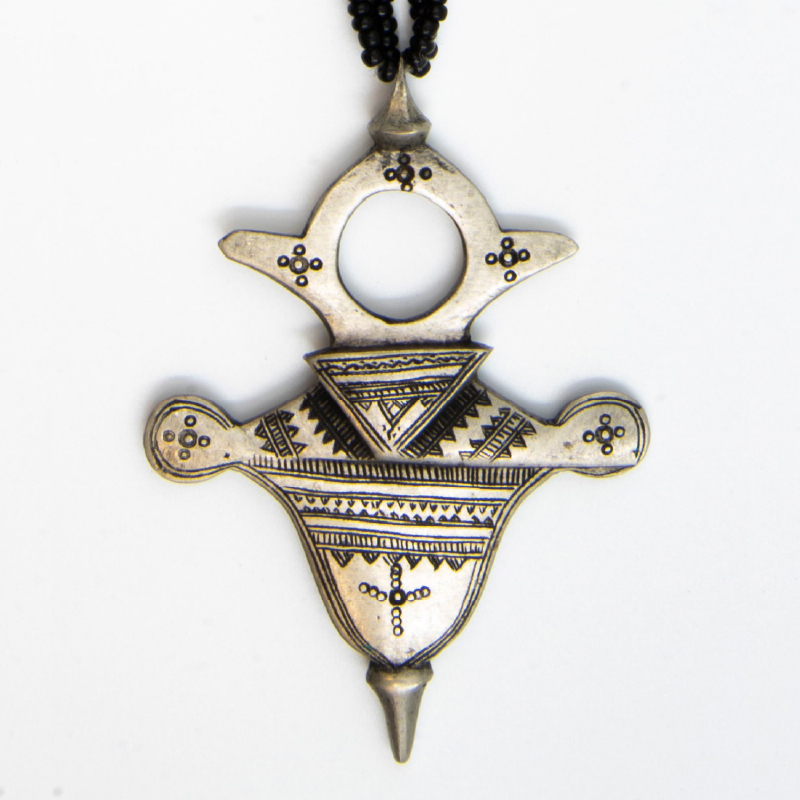
Tuareg silver jewelry is renowned for its symmetrical geometric beauty and refined proportions, prized by designers and collectors alike. Yet it is more than an ornament. Each piece carries the historical memory and cultural symbolism of the Tuareg people.

According to legend, a young Tuareg nobleman fell in love with the daughter of a tribal chief. Hoping to win her hand, he commissioned an artisan to create a one-of-a-kind necklace. The craftsman skillfully combined the symbols “+” and “○,” representing love and union, into a cross-shaped pendant. Moved by the young man’s devotion, the chief eventually consented to the marriage.

Today, this cross-shaped pendant has stepped out of legend and into everyday life, becoming the most iconic form of Tuareg silver jewelry. In Tuareg society, silver adornments carry meanings far beyond decoration. They signify social status and are believed to possess protective power—warding off evil spirits and offering guidance across the desert.

Tuareg silverwork is traditionally crafted by the artisan caste known as the Inadane, who have passed down metalworking skills for generations. Historically, they lived on the margins of society, dependent on noble patrons. In the twenty-first century, however, these artisans have become central figures in cultural preservation. Collaborating with designers and artists, they have brought Tuareg silver into wider public view—into museums, galleries, and jewelry shops around the world.

PRAYER

Heavenly Father, may Your Spirit lead the Tuareg people to know You—the ultimate Artist, Creator of heaven and earth, who has entrusted them with extraordinary skill in silverwork. Help them see that art is not only personal expression or cultural heritage, but also a response to the Creator, an offering of praise. May the Tuareg dedicate their artistic gifts to You, using silver jewelry to tell the stories of Scripture and to share their own testimonies of salvation. Silver draws us closer to the Tuareg people; may it also remind us, in our daily lives, to remember them in prayer—for their livelihoods, their challenges, and their need to know You—until their people come to worship in the name of the Lord. In the name of Jesus Christ we pray, Amen.

The World’s Second-Largest Film Industry

Nollywood

16Jan

The United States has Hollywood. India has Bollywood. But did you know that Nigeria has Nollywood?

In a country where electricity is unreliable, darkness falls early, driving feels like a roller coaster, and potholes dominate the roads, how did a film industry rise—let alone thrive?

Nollywood began not with film schools or major studios, but with a group of video cassette vendors. In the 1990s, Nigeria was emerging from coups and civil war. The country was struggling to rebuild, and vendors needed a way to survive. To boost demand for VCRs, they took a bold step: they made their own films.

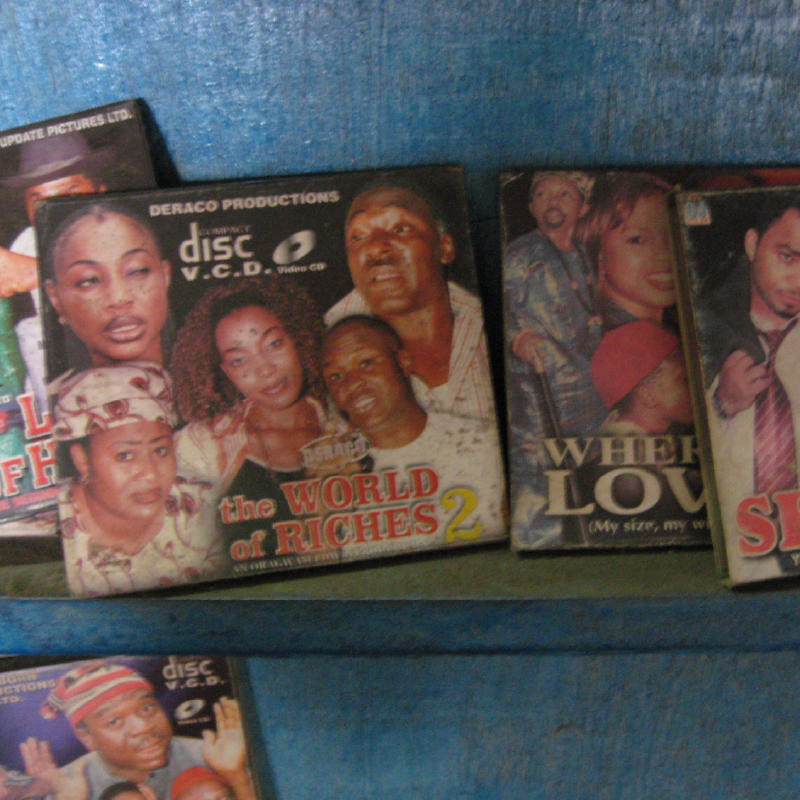
Using the most basic equipment and casting friends and relatives as actors, they began telling stories. The production quality was rough, but the stories were unmistakably Nigerian—drawn from everyday life in the streets and neighborhoods. People recognized themselves in these films, and audiences responded.

As profits grew, filmmakers reinvested—making more movies, improving equipment, and drawing in new talent. Nollywood expanded rapidly. Today, it has become the world’s second-largest film industry, producing around 2,500 films a year, surpassing both Hollywood and Bollywood in output. (To cope with unstable electricity, film crews routinely bring their own generators—now a defining feature of Nollywood productions.)

On Nigerian streets, movie posters don’t advertise Mission: Impossible or The Dark Knight. Instead, they showcase stories rooted in African soil. Politics, economic hardship, terrorism, ethnic conflict, and the legacy of colonialism—all unresolved—become an endless source of cinematic material. Life in Nigeria is hard, but stories are never in short supply.

PRAYER

Heavenly Father, film is a creative gift You have given to humanity. The imagination, empathy, and artistic vision displayed by Nollywood filmmakers reflect Your intention in creating people in Your image. May You use Nollywood to stir ultimate questions—about time, life, love, and transcendence—among both filmmakers and audiences, awakening a longing to seek You. We ask the Holy Spirit to draw thirsty souls into the house of God, to drink deeply from the living water of life. Bless Nollywood as it continues to grow, reaching streaming platforms and international audiences, so that people around the world may encounter Nigeria, the Sahel, and Africa through its films—crossing geographical distance through shared stories. In the name of Jesus Christ we pray, Amen.

What Skin Tone Is Beautiful?

What Skin Tone Is Beautiful?

17Jan

Do you prefer sun-kissed skin with a natural glow—or a fair complexion?

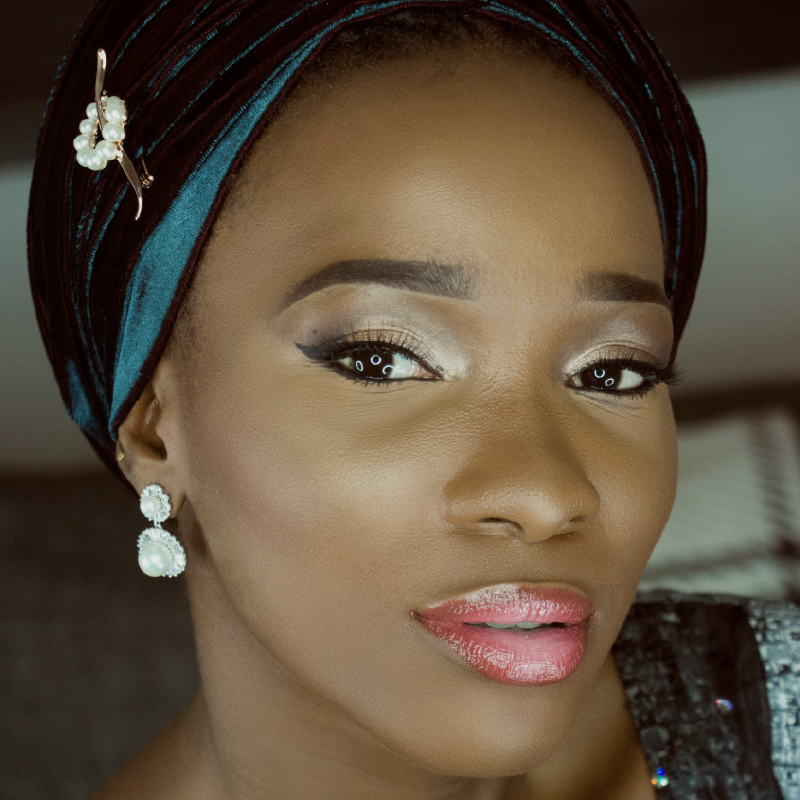
Nigeria is one of the world’s largest consumers of skin-lightening products. According to the World Health Organization, as many as 77 percent of Nigerian women have used skin-lightening products at some point in their lives.

The preference for lighter skin in Nigeria is closely tied to colonial history. Although the country gained independence decades ago, colonial beauty standards remain deeply ingrained—associating light skin with beauty, wealth, and success. Male preference for lighter skin has further reinforced women’s pursuit of skin lightening.

These values are constantly amplified through global media and advertising. For years, international brands have relied on white celebrities as spokespeople, exporting the message that “white is beautiful” to audiences around the world. Today, social media has taken over this role. Nigerian influencers and beauty brands collaborate to promote skin-lightening products to millions of followers.

Yet in the absence of strict regulation, advertising often conceals serious health risks. Many skin-lightening products sold in Nigeria—creams, soaps, and even injectable treatments—contain hydroquinone, mercury, and corticosteroids. These substances can damage the skin, disrupt hormones, harm the nervous system and liver, and may even lead to cancer and mental health problems. Although laws exist to regulate such products, enforcement remains difficult. Corruption, limited resources, and low public awareness continue to worsen the problem.


Is There Any Advantage to Dark Skin?

Melanin is the skin’s natural shield. It absorbs and disperses ultraviolet radiation, protecting skin cells from damage and reducing the risk of skin cancer.


PRAYER

Heavenly Father, set the people of Nigeria free from shame over their skin tone, hair texture, or facial features, and help them rejoice in the beauty of who You created them to be. In Your eyes, every skin color and every people group is precious and honored. Raise up grassroots movements and nonprofit organizations to educate communities about the health risks of skin-lightening products, so that Nigerian women may understand the true cost of using them. We pray that You would call forth wise, upright, and incorruptible leaders—leaders who will confront corruption and enforce regulations that protect the health and dignity of the people. Bless the people of Nigeria to be reconciled with themselves through knowing You, to give thanks for the diversity of skin tones You have created, and to discover true beauty and confidence in Your love. In the name of Jesus Christ we pray, Amen.
Literature, Aesthetics, and Philosophy

Yoruba People

18Jan

When people think of the Sahel, images of extremist violence, parched landscapes, and political instability often come to mind. Yet this vast belt stretching across Africa from west to east is also home to rich and enduring cultures. Among them are the Yoruba of Nigeria, whose traditions of literature, aesthetics, and philosophy reveal the vitality and depth of African civilization.

The most internationally renowned figure in modern Yoruba literature is Wole Soyinka, Africa’s first Nobel laureate in Literature. His celebrated play The Lion and the Jewel portrays a rivalry between Baroka, a village chief, and Lakunle, a Western-educated schoolteacher, over a young woman named Sidi. Through this story, Soyinka explores the tension between tradition and modernity, critiques the social control of female purity, and offers a penetrating reflection on Western colonial influence.

To glimpse the philosophical imagination of the Yoruba, one can turn to their veneration of Ogun, the god of iron. In Yoruba mythology, Ogun is the deity of blacksmiths and the embodiment of technological beginnings. He forges tools, weapons, and roads—ushering in social order—yet he also brings destruction, war, and death. Yoruba philosophers often observe: Human beings are like Ogun—capable of both creation and destruction; and it is only through destruction that a new order can emerge.

PRAYER

Heavenly Father, in their traditional wisdom, the Yoruba have grasped a profound truth: that human beings possess the power to build societies and create order, yet are also marked by sin and the capacity for destruction. This reflects the mystery of humanity—created in Your image, yet weakened by the Fall. But You sent the second Adam, Jesus Christ, who suffered and died on the cross to bring forth a new and lasting order. In Him, the demands of perfect justice were fulfilled, and the power of sin was broken. We pray that the thoughtful and philosophically minded Yoruba people would not stop at discerning the duality of human nature. May the Holy Spirit reveal to them the mystery of redemption in Christ, that they may truly know You, be reconciled to You, and receive the promise of resurrection and the eternal hope of the new heaven and the new earth. In the name of Jesus Christ we pray, Amen.
Ere ìbejì

Twin Veneration

Ibarapa People

19Jan

The Ibarapa are a subgroup of the Yoruba, known for having the highest twin birth rate in the world. On average, for every 1,000 births, there are about 50 sets of twins—roughly five times the global average.

Why are twins so common among the Ibarapa? One explanation suggests that Ibarapa women may carry genetic traits that make multiple ovulation more likely. Other studies point to dietary factors: the locally grown yams that form a staple of the Ibarapa diet contain natural plant compounds with estrogen-like properties, which may stimulate ovulation. To date, however, scholars have reached no definitive consensus.

In Ibarapa belief, twins bring spiritual power, good fortune, and prosperity to the family. In more traditional households, when a twin dies in infancy, the family commissions a carved wooden figure known as an Ere ìbejì, which is placed on the household shrine as a sign of the child’s continuing presence. Mothers treat these figures as living beings—feeding them, bathing them, combing their hair, dressing them, and holding elaborate birthday ceremonies at regular intervals.

Some Ibarapa families who have embraced Christianity continue to keep Ere ìbejì figures at home, not as objects of worship but as memorials to deceased children. Ritual offerings are replaced by prayer, blessing, or song on the twins’ birthdays or anniversaries of death. The figures no longer represent divine beings. Instead, they become extensions of family memory and love.

PRAYER

Heavenly Father, the contextualized practices of Ibarapa Christians remind us that the gospel can take root within diverse cultural forms and find expressions that are both faithful and meaningful. In this, we glimpse Your delight in cultural diversity and see how the global Church’s understanding of Your Word is enriched. We ask the Holy Spirit to work alongside the Ibarapa people, so that the gospel proclaimed and embodied by local believers may take deep root in the soil of Nigeria and bear compelling, indigenous witness. Bless Ibarapa Christians to live out lives marked by holiness and love, clothed with compassion, kindness, humility, gentleness, and patience; bearing with one another and forgiving one another, as You have forgiven us. (Colossians 3:12–13) In the name of Jesus Christ we pray, Amen.
Are the Fulani Naturally Hot-Tempered?

Fulani People

20Jan

Najid, a Fulani herder, stands on ground stripped bare of grass. Hot, dry winds sweep past as he gazes into the distance and says quietly, “Every piece of land belongs to Allah—not to you.”

For generations, Fulani pastoralists and Hausa farmers maintained a mutually beneficial relationship. They exchanged dairy products, crops, and livestock manure. But toward the end of the twentieth century, population growth and the privatization of land altered this balance. Farmers began purchasing land, cutting across traditional grazing routes, and the once-reciprocal relationship gradually unraveled.

In the twenty-first century, climate change has further fractured Nigeria’s landscape. Desertification now claims more than two thousand square kilometers of land each year. Fulani communities have been forced southward, pushed toward urban settlement, or driven, at times, into violent conflict, as they are drawn into an increasingly desperate struggle for resources and survival.

These upheavals have disrupted the Fulani’s intimate relationship with the land. Seasonal rhythms once marked clearly by rains and drought have lost their meaning. Water sources dry up, grasslands vanish, and even the cattle seem hesitant in their steps.

“Is being a herder still something to be proud of?” Najid murmurs.

Cattle are not only the Fulani’s economic livelihood but also a marker of social status and identity. Yet desertification and modernization together have eroded a value system centered on livestock. When herders can no longer herd, when pastures become battlegrounds, can they still be Fulani?

What may be lost is not only land—but identity and dignity as well.

PRAYER

Heavenly Father, the Fulani understand land as a shared and mobile ecological resource, not a commodity to be bought, sold, and possessed at will. When their traditional understanding of land collides with modern systems of privatization, we ask that You reveal Your heart and grant wisdom. Guide Fulani elders, leaders of different ethnic communities, and government officials to work together to seek policies that respect diverse ways of life and acknowledge that all land ultimately belongs to You. May the Fulani, through their nomadic heritage, come to understand more deeply what it means to live as sojourners and pilgrims on the earth, and to discover that their true and lasting identity is found in You, as beloved children of God. In the name of Jesus Christ we pray, Amen.

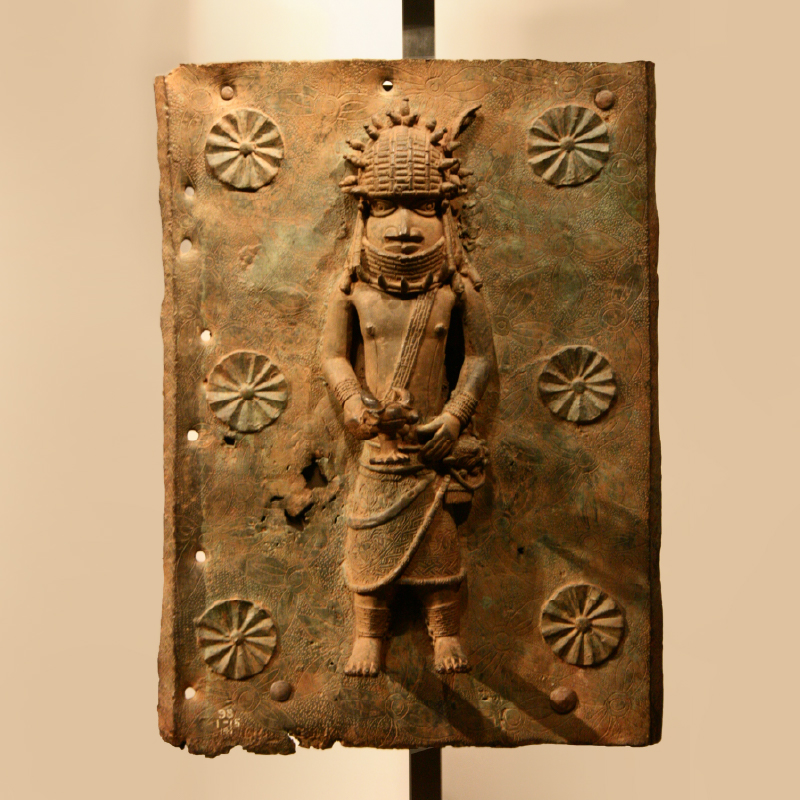
Benin bronze plaques on display at the British Museum

Ancestral Treasures Far from Home

Edo People

21Jan

The Edo people of Nigeria once knew a time of great splendor. For nearly seven centuries, they built and sustained the powerful Kingdom of Benin. In 1897, British forces brought that kingdom to an end—and carried off its cultural legacy. Today, a young Edo Nigerian who wishes to see the Benin Bronzes created by his ancestors must first apply for a British visa, spend thousands of dollars, and travel to London to visit the British Museum.

Does the British Museum hold Nigerian property unlawfully? Should these artifacts be returned to the Edo people? As calls to confront colonial history grow louder, supporters of restitution argue that many African artifacts were removed during colonial invasions and wartime plunder, not acquired under equal or consensual conditions. Their return, they contend, is a matter of historical justice and moral responsibility.

Beyond this, the way European and North American museums curate such objects often strips them from their original contexts and overlays them with a Western lens. What were once part of specific rituals, collective memory, and communal identity are reframed as “exotic curiosities” or “primitive art,” serving the Western imagination rather than the cultures from which they came.

Perhaps, then, the heart of the issue is not simply whether objects should be returned. The deeper question is how the Edo people might reclaim interpretive authority, how the Benin Bronzes can be restored to their cultural meaning, with the Edo themselves becoming the storytellers of Benin history. Restitution, after all, is only the beginning of repairing colonial injustice.

PRAYER

Heavenly Father, colonialism has stripped countless African peoples of their land, languages, and cultures, leaving this beautiful Sahel region deeply scarred. May Your Spirit guide us beyond the long shadow of colonial history, and lead us toward restored relationships, with one another and with all creation. Help us to see that every life You have created, and every cultural tradition You have nurtured among the nations, carries its own unique meaning and worth. Grant us wisdom to stand with the oppressed Edo people, to seek justice on their behalf, to repair the injustices of colonial history, to restore their dignity, and to return to them their right to speak for themselves. May our world become more just and open, learning to listen humbly to many voices, so that every people may become the tellers of their own history, and, in doing so, bear witness to the richness and glory of God. We pray all this in the name of our Lord Jesus Christ. Amen

The Last Straw in the Darkness

Boko Haram

22Jan

In the late nineteenth century, British colonial forces defeated the Sokoto Caliphate and incorporated Nigeria into the British Empire. Western-style education was introduced, and the development of Islamic social and political order was abruptly disrupted. After independence in the twentieth century, Nigeria, despite its vast oil wealth, became mired in corruption and chronic governance failure. The state struggled to function, and in the northern regions especially, infrastructure lagged far behind. An entire generation of young people found themselves trapped in a futureless present.

Out of this convergence of historical trauma, state failure, and social despair, Boko Haram emerged. It constructed a parallel world—one that cast Western civilization as an evil force, rejected democratic systems, and disregarded national borders in favor of cross-border movement. For its followers, “fighting for God” offered not only spiritual purpose, but also the promise of martyrdom and paradise, an imagined escape from present suffering.

Boko Haram has relied on violence: attacking villages, looting property, abducting children, and forcibly replenishing its ranks. Yet in communities marked by extreme poverty, the group also filled the void left by a failed state. By providing financial assistance, it transformed young people from those with nothing to rely on into participants in a so-called holy struggle restoring, at least temporarily, a sense of dignity and meaning.

For some, joining Boko Haram became both a protest against the failure of the modern nation-state and a response to a shattered world. Terrorist violence, for them, was the only straw left to grasp in the darkness.

PRAYER

Heavenly Father, many intertwined forces have shaped Nigeria’s fragile political, economic, and social realities, trapping people in cycles of violence and poverty. We cry out for Your intervention, to break the web of structural sin and to turn governments toward serving their people rather than protecting elite interests alone. We pray especially for young people who have been forgotten by the state and left to live in despair. We ask that You raise up economists, political leaders, and social thinkers to work alongside the Nigerian government, international bodies, and non-profit organizations. Grant them wisdom to strengthen northern infrastructure, reduce youth unemployment, and craft social welfare policies that serve the common good. In the name of Jesus Christ we pray, Amen.

Male Aesthetics

Wodaabe People

23Jan

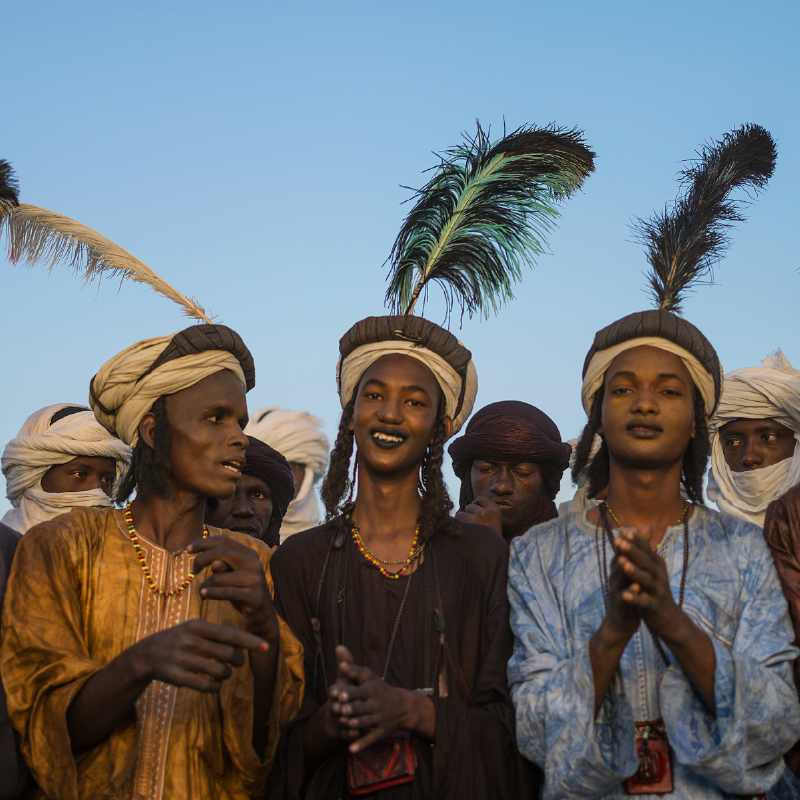
For Wodaabe men, beauty is not vanity but responsibility. From a young age, they are taught how to care for their appearance and project confidence. This understanding subverts the common assumption in both Western and Eastern societies that the pursuit of beauty belongs naturally to women.

Each year, the Gerewol Festival becomes a public arena for courtship. Wodaabe men spend hours preparing themselves: applying ochre and yellow pigments, accentuating their eyes and lips, adorning themselves with feathers and beads, and repeatedly checking their reflections, striving for flawless presentation.

Women’s ideals of male beauty emphasize height, a slender build, smooth skin, bright eyes, and white teeth. During the festival, men line up shoulder to shoulder, rhythmically exaggerating their smiles and widening their eyes. A gentle double tap from a woman signals selection, a moment of triumph. Notably, women, whether married or not, are free to choose a man they desire and to pursue an intimate relationship.

Marriage among the Wodaabe is marked by remarkable flexibility. Changing partners during the Gerewol is not stigmatized but socially accepted and considered normal. On the one hand, this provides women with a legitimate way to step outside marriages arranged in infancy.* On the other hand, nomadic life is fraught with danger—disease, drought, and intergroup conflict are constant threats. Flexible marital ties help distribute risk, ensure the continuation of the community, and maintain population stability.

*Wodaabe parents often arrange marriages for their children during infancy, a practice known as Koobgal. A second marriage initiated through the Gerewol is called Teegal.

Gerewol Festival
PRAYER

Heavenly Father, what may appear to be casual marital relationships are, in fact, expressions of the Wodaabe people’s survival wisdom and their respect for women, granting them real agency and choice. Lord, You are the source of all wisdom and the Creator of life. We ask that You reveal Yourself to the Wodaabe, that they may come to see that true wisdom flows not only from adapting to the environment or honoring women, but ultimately from relationship with You, the Creator. We pray especially for Wodaabe men. May the Holy Spirit fill them with the assurance of God’s unconditional love and acceptance, freeing them from the pressure of social expectations, from anxiety over appearance and the need to perform for others. May they find in Christ a deeper confidence and lasting peace, and live lives marked by inner wholeness and psychological well-being. In the name of Jesus Christ we pray, Amen.
Lake Chad refugees

One of the Most Complex Humanitarian Crises

Buduma People

24Jan

I was traveling on a United Nations patrol boat near Lake Chad when I met Musa.

“I was born in 1949,” he said. “When I was a child, we never went hungry. There was plenty of milk, lush vegetation, deep waters, and so many fish you could catch them with your hands.” His voice grew heavy. “Now this place has endured severe drought, famine, disease, and conflict. The lake has shrunk by hundreds of feet.”*

During the colonial period, French administrators drew national borders for their own convenience. The peoples around Lake Chad were left disoriented. Pastoralists who followed water and grass no longer knew which country they belonged to. These borders also severed Buduma herders from the Baga market in Nigeria, once central to their livelihood.

“The suffering wasn’t over,” Musa continued, his thin shoulders trembling slightly. “In 2015, Boko Haram attacked our village. We fled, leaving behind our livestock and everything we owned.”

The state feels like an illusion. The Chadian government has largely failed its people. After coming to power, strongman Idriss Déby secured international backing by positioning himself as a bulwark against terrorism. Long reliant on U.S. and French support, he possessed advanced weaponry and used it not only in counterterrorism, but also to escort political prisoners, suppress dissent, and even forcibly recruit children into the military.Western governments, while providing humanitarian aid, simultaneously deepened military cooperation, treating “counterterrorism” as the sole solution for stabilizing the Sahel.

Misplaced borders, collapsed governance, Western short-sightedness, extreme climate stress, and competition over dwindling resources, the humanitarian crisis around Lake Chad is not a single tragedy, but a structural disaster.

*Over the past fifty years, Lake Chad has lost approximately 95 percent of its surface area.

PRAYER

Heavenly Father, we ask that Your Spirit soften the hearts of those who rule Chad, turning them away from greed and the pursuit of power, and leading them to repentance before You. May unjust governance come to an end, and may You raise up leaders marked by love, wisdom, and competence in both diplomacy and domestic affairs—leaders who can guide Chad toward stability and peace, so that its people may live secure and peaceful lives. We lift up the Buduma people who live along Lake Chad. May You provide for their physical needs and restore their dignity. May their souls find true satisfaction in Christ. As extreme climate change confronts the entire world, we also pray for meaningful international cooperation. We pray for breakthroughs in technology, shared resources, and coordinated policies, so that humanity may faithfully carry out the responsibility You have entrusted to us as stewards of the earth. In the name of Jesus Christ we pray, Amen.
Why Was Sudan Divided in Two?

A Brief History of Sudan

25Jan

Before the eighteenth century, the region known today as Sudan was home to more than five hundred ethnic groups and over a hundred languages. Kingdoms and tribal societies coexisted, forming a complex and diverse human landscape. That world was fundamentally reshaped by the arrival of external conquerors.

Sudan experienced two major periods of colonial rule. Under Turkish and Egyptian domination, colonial authorities collaborated with northern Sudanese elites to expand the slave trade. An estimated two million people from the south (among them Dinka, Nuer, and Shilluk communities) were captured and sold to Arab lands, Egypt, and Europe. This history of violence and exploitation planted deep seeds of resentment between north and south.

During the subsequent Anglo-Egyptian Condominium, colonial rulers adopted a deliberate policy of “divide and rule.” Arabic-language education and Islamization were promoted in the north, alongside concentrated investment in railways, schools, telegraph systems, and commercial agriculture. The south, by contrast, was systematically neglected. Economic inequality widened, while linguistic, cultural, and religious differences hardened into structural divisions.

These colonial legacies persist. Many in northern Sudan came to view the south as a peripheral, uncivilized frontier. When oil was later discovered in the south, the Sudanese government attempted to redraw internal boundaries to secure control over the resources, intensifying southern grievances and deepening hostility.

Under sustained political exclusion and economic exploitation, southerners gradually lost any sense of belonging to a unified Sudan. Once they ceased to see themselves as Sudanese and began to identify instead as “South Sudanese,” armed conflict became all but inevitable.

PRAYER

Heavenly Father, we ask for Your mercy upon Sudan and South Sudan. Heal the deep wounds left by colonialism, and restore justice where inequality and division have long prevailed, economically, linguistically, and culturally. May You stir the hearts of Your people across many fields to offer their gifts and expertise in the work of peace, so that the peoples of both nations may live in stability, no longer consumed by the struggle for survival or driven from their homes by war. We pray that the international community would act with responsibility and integrity—supporting reconstruction, job creation, and the fair distribution of resources. Grant wisdom to international organizations, that aid may be monitored and administered effectively, while fully respecting local agency and self-determination. In the name of Jesus Christ we pray, Amen.

South Sudanese refugees

Fleeing a Blood-Stained Homeland

South Sudanese Refugees

26Jan

“South Sudan used to be a beautiful place. But now they kill people, rape women, like slaughtering animals,” Sadia said, her voice heavy with grief.

South Sudan broke free from nearly forty years of civil war with Sudan, but before it had time to breathe, internal armed conflict erupted. The world’s youngest nation was plunged once again into chaos.

Sadia and her family abandoned everything and fled into the forest. Her mother was repeatedly subjected to sexual violence and later died from her injuries. Only Sadia, her husband, and their children survived the terrifying escape. “We kept running and running,” she recalled through tears. “We stepped over bodies everywhere just to stay alive.”

Sadia’s family eventually reached the Imvepi Refugee Settlement in Uganda, where they began a new life. But food is scarce, water is limited, and an average of a thousand new arrivals enter the camp each day, making the strain on resources even more severe.

“South Sudan is my country,” Sadia said quietly. “But I lost my home, my friends, and my future there. There is nothing left for me to return to. I want to stay in Uganda.” She forced a faint smile. “I want to learn tailoring. I want to do something for myself. But in the refugee camp, it feels like nothing is possible.”

Note: Uganda hosts around one million South Sudanese refugees, the vast majority of them women and children.

PRAYER

Heavenly Father, You are our Shepherd, and You are also the Shepherd of South Sudanese refugees. We ask that You would abundantly provide for their daily needs of food, clothing, shelter, and safety so that they no longer live in constant fear of hunger or survival. Lord, may Your face shine upon those still living in the refugee camps. Watch over them as they come and go; guard and protect their lives. Raise up and send brothers and sisters to walk alongside South Sudanese refugees, providing access to vocational training, legal assistance, and psychological care. Deliver them from the cycle of poverty, restore their dignity as human beings, and remind them that they are made in the image of God, beloved sons and daughters, precious in Your sight. We pray in the name of Jesus Christ, Amen.
Behind the Glitter

Illegal Artisanal Gold Mining

27Jan

In recent years, global instability has driven many to seek safety in gold, pushing prices sharply upward. The surge has drawn not only legitimate investors, but also fueled Africa’s gray-zone artisanal gold mining. From Sudanese armed groups and Russia’s Wagner Group¹ to ordinary civilians, they all participate in this enterprise trying to survive.

Unlike the industrial mining operations people often imagine, artisanal gold mining is usually carried out by small groups with little more than shovels and metal pans, sifting for gold along riverbanks. Most miners operate without official permits, using mercury, one of the oldest and most dangerous methods, to separate gold from river sediment. Miners face a high risk of mercury poisoning, and so do communities living downstream. Drawing water day after day for drinking, cooking, washing clothes, and bathing, residents are forced into a slow, invisible cycle of chronic poisoning.

Each year, Sudan and South Sudan are estimated to smuggle around 50 metric tons of gold. It typically flows first to the United Arab Emirates, Turkey, India, or China, before being re-exported to Switzerland, where its origin is effectively erased. From there, it enters global markets and is eventually sold to Europe and North America, transformed into consumer goods.

When people wear gold jewelry or use electronic devices², few realize that the gleaming metal in their hands carries with it the suffering and injustice of Sudan.

¹ A well-known Russian private military company active in armed conflicts around the world.

² Common electronic devices such as mobile phones and computers contain small amounts of gold.

PRAYER

Heavenly Father, we pray that the governments of Sudan and South Sudan would provide their people with lawful and sustainable livelihoods, reducing dependence on illegal mining. Grant wisdom to government leaders to implement policies that protect the environment and public health, and to safeguard communities living along gold-mining rivers so they may have access to clean and safe water. We pray for the international community to work together to combat gold smuggling effectively. May governments establish strong cross-border cooperation, trace the origins of gold, impose real consequences on armed groups that profit from illicit trade, and strengthen border controls to prevent illegal gold from entering global markets. Lord, as consumers, help us to be patient and attentive—to learn where the gold in our products comes from, to reckon with its human and environmental costs, and to speak courageously in calling companies to greater transparency in their supply chains. We pray in the name of Jesus Christ, Amen.

Luol Deng

Against the Odds

South Sudan Basketball

28Jan

On the eve of the 2024 Paris Olympics, the United States narrowly defeated underdog South Sudan by just one point in a warm-up game—an outcome that forced the world to take a second look at the youngest nation on earth.

Luol Deng, a two-time NBA All-Star, is the soul of South Sudanese basketball. Born in South Sudan, he and his family were forced to flee during the Second Sudanese Civil War. He later built his professional basketball career in the United States. After retiring in 2019, Deng returned to his war-scarred homeland, personally funding the training of the national team and gathering South Sudanese players from across the diaspora.

Beyond the court, South Sudan remains entangled in ethnic conflict, political instability, and humanitarian crisis. But on the basketball court, ethnicity dissolves, everyone is equal, everyone is a teammate. Deng intentionally recruits players from different ethnic groups, shaping the national team into a living model of ethnic reconciliation and embodied unity.

A single basketball has given unemployed South Sudanese youth hope and a way forward. It has become something the nation can cheer for together, a source of shared pride, and a force that reconnects South Sudanese scattered across the world.

In the past, South Sudan was known primarily for famine, war, and refugees. Today, it can also represent speed, skill, and the precision of a three-point shot, an emerging African powerhouse producing NBA prospects and qualifying for the Olympics on its very first attempt.

PRAYER

Heavenly Father, we ask that You bless Luol Deng and provide him with every resource he needs, so that South Sudan basketball may grow stronger and more resilient. May basketball open pathways for children and families recovering from war to earn a sustainable living. May South Sudan’s national team achieve greater success on the court, lifting the country’s international image through excellence and drawing the attention of partners and investors who can contribute to the nation’s development. Lord, a bruised reed You will not break, and a smoldering wick You will not snuff out. Wrap Your people in healing. Restore the bodies and spirits of South Sudanese men and women, and lead them out of the shadows of ethnic conflict, political instability, and humanitarian crisis into a future marked by stability, safety, and abundance. We pray in the name of Jesus Christ, Amen.

Highland Orthodox Christians

Sanctified Suffering

A Nation That Exports Refugees

29Jan

With silver hair framing her face, Mariam gazes at the yellowed family photographs on the wall. From her father being conscripted as forced labor by colonial rulers, to her brother dying in the war of independence, to her son fleeing decades of compulsory military service—three generations of one family mirror a century of this land’s history.

The Ottomans, the Italians, and the British each carved colonial scars into Eritrea. Later, the United Nations treated her like a commodity, transferring her to Ethiopia. This humiliation—being passed from hand to hand—drove Eritrea into desperation and ignited a bloody struggle for independence.

In 1993, Eritrea finally saw the dawn of freedom. Yet Isaias Afwerki, once hailed as a hero of independence, placed a new set of shackles on the nation. He concentrated power in the hands of highland Orthodox Christians (primarily the Tigrinya) constructed an extensive state surveillance system, and tolerated no dissent. At the same time, he expelled international NGOs, rejected Western democratic models, and reacted with extreme sensitivity to foreign intervention, perhaps a reflex shaped by Eritrea’s repeated experiences of colonization.

Martyrs who die for the nation are likened to saints who die for the faith. The Eritrean state skillfully fuses nationalism with Orthodox Christianity, sanctifying endurance, obedience, sacrifice, and suffering. This narrative, born from colonial trauma, has erased Eritrea’s ethnic diversity. Many young people now choose to leave a homeland marked by poverty and repression. Along border escape routes, there are countless more children like Mariam’s.

PRAYER

Heavenly Father, may highland Christians remember Your first love, be moved by grace, and respond to the calling to be salt and light—preserving, illuminating, and giving flavor to society. Grant them courage to speak for the oppressed, to bear witness to Your justice, mercy, and steadfast love, and to lead others to know You. May You raise up a new generation of highland Christians who contend earnestly for the truth, so that the gospel is no longer subordinated to nationalism. May they cross ethnic boundaries, display the beauty of the diversity You created, preserve the richness of each culture, and help build a society where all peoples can participate equally in public life. May Eritrea become a nation marked by fairness, shared flourishing, justice, and freedom. We pray in the name of Jesus Christ, Amen.

Sharp Divides

Lowland Muslims

30Jan

The sharp divide between Eritrea’s highland Christians and lowland Muslims began under Italian rule.

Italian colonial authorities imposed a system of religious classification that granted relative educational and political advantage to Orthodox Christian Tigrinya communities living in the highlands, while marginalizing Muslim groups in the lowland plains—such as the Bilen, Saho, Afar, and Rashaida. This imbalance of power became an invisible fault line that has run through Eritrean society ever since.

Even though lowland Muslims made significant contributions to the struggle for independence, the highland Christian elite who came to hold state power excluded them from the nation-building narrative (see yesterday’s entry). Instead, they were diminished as suspect and disloyal citizens. The Eritrean government concentrated most public resources in the highlands, leaving the lowlands chronically underdeveloped. This deepened economic inequality, intensified ethnic resentment, and further entrenched the social fractures inherited from colonial rule.

Yet surprisingly, the rigid boundary between Christians and Muslims quietly dissolves in the presence of food. Injera is the staple of every household. Shared with stews and eaten communally, it appears at both Muslim iftar meals and Christian Easter celebrations. Injera is indispensable—part of a shared culinary culture that belongs to all Eritreans.

PRAYER

Heavenly Father, Your Son Jesus Christ became flesh and entered this world to bring peace. Through His body on the cross, He tore down the dividing wall of hostility between Jews and Gentiles, making them one. Today, we pray that the gospel of Christ’s peace would also come to Eritrea—reconciling highland Christians and lowland Muslims to You, and dismantling the hostility and estrangement between them. Lord, You once shared meals with sinners, tax collectors, and women; in those table gatherings, we glimpse the power of welcome, reconciliation, and restored relationships. We pray that injera would be more than a shared national dish—that it might become an occasion for reconciliation between highland Christians and lowland Muslims, a table where peace can begin. In the name of our Lord Jesus Christ, Amen.

On this day, write down your prayer for the African Sahel region as the Spirit leads.

31Jan

Heavenly Father,

In the name of our Lord Jesus Christ, Amen!