










PART I

The Produce of the Ends of the Earth

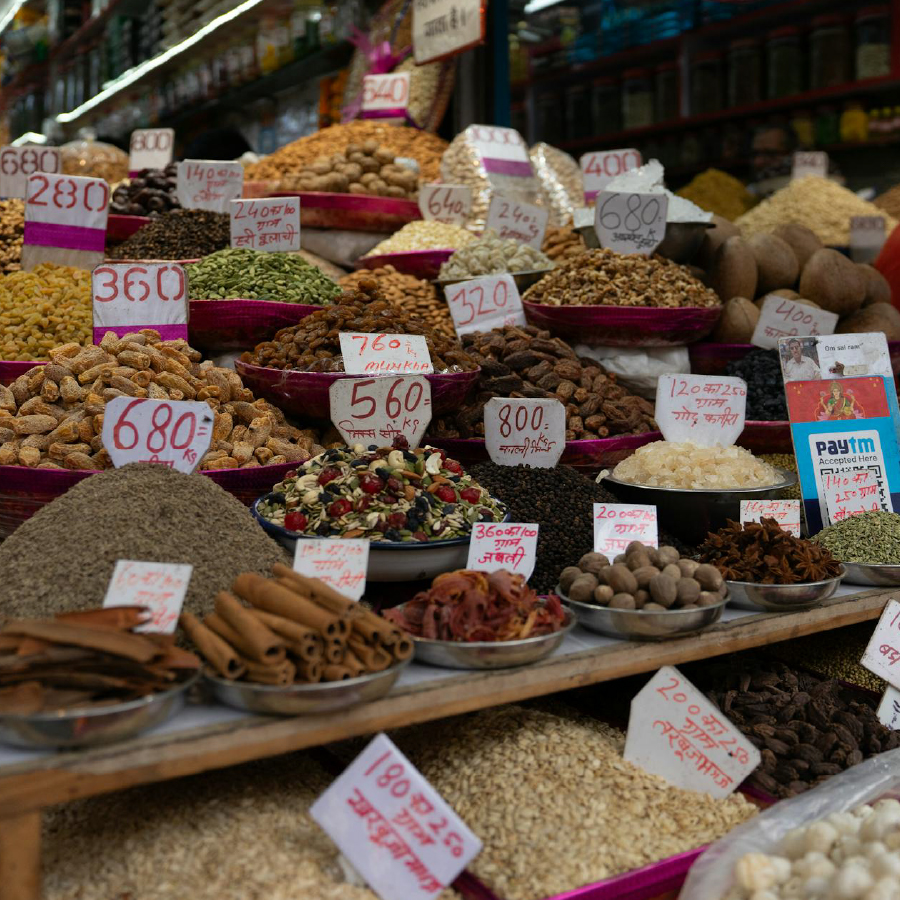
The Spice & Provisions Shop

APR1-30

If the Ancients Had Social Media

If medieval nobles had social media, they wouldn’t have flaunted designer handbags or jeweled ornaments. Instead, at banquets they would have drawn out a silver grater with studied elegance, pinched a whole nutmeg between their fingers, and slowly shaved it into fine powder before sprinkling it into their wine and dishes with the same theatrical flair as a modern-day “Salt Bae.”

Nutmeg, cloves, and mace brought from the distant Maluku Islands were among the hardest luxuries in the world to obtain, Europe’s most coveted trio of rarities. Carrying a grater and nutmeg was an unspoken language of status among the elite: a form of culinary ostentation performed on the tip of the tongue.


Best Compliment in The Song of Songs’: “You Smell Wonderful”?

Open to the Song of Songs, the Bible’s love poetry, and you encounter a fragrance code that feels almost enigmatic to modern readers. Why is the beloved compared to nard and saffron, to a garden overflowing with myrrh and aloes?

We struggle to feel the weight of these metaphors perhaps because we no longer grasp their ancient value. In their original context, these were treasures beyond price, rarities that wealth alone could not easily secure.

Spices that sound commonplace to us today were, three or four millennia ago, sacred offerings to the gods and luxuries reserved for royalty. Only when we recognize their worth can we begin to decipher the language of divine love. When the bridegroom likens his bride to precious spices, he is declaring that her worth surpasses every treasure.


What Do Prayer and Spices Have in Common?

This month’s prayer theme began, oddly enough, with my obsession with an online role-playing game called Uncharted Waters. On weekends I would sail for hours on end, again and again running out of food, watching fresh water dwindle, sailors collapsing from scurvy, my nerves stretched tight as if held over a flame.

As a novice captain, I crept along coastlines, praying for the outline of a town to emerge from the fog so my battered ship could dock and resupply.

Even when I barely made it ashore, it did nothing to quench my hunger for the next port. What would it look like? What rare goods would it offer? What would the women in the taverns wear? What exotic gifts might win a smile, and perhaps a piece of valuable information?

In that moment, it dawned on me that countless sailors and adventurers before me had done the same—inch by inch, through terror and scarcity, feeling out the very contours of the world.


Treasures from the Ends of the Earth—At a Cost

Whenever I loaded my ship with valuable cargo and set off boldly toward the wider world, black sails would appear the moment I left port—pirates. After the cannon fire, shattered cargo would float across the sea, my entire investment lost in an instant.

And that wasn’t all. The Indian Ocean had the foulest temper, storms would erupt without warning. The Gulf of Aden was so narrow my ship constantly ran aground, leaving me to watch helplessly as pirates stripped everything bare.

Then it struck me that in an age before global logistics, delivering goods from one end of the earth to another was a life-threatening endeavor.

This virtual experience inspired this month’s prayer theme: “From the Ends of the Earth.” And when I turned to history, the journey was nothing like the pleasant adventure I had imagined. Instead, it was marked by lies, violence, bloodshed, deception, and theft. Behind a single jar of spice often lay centuries of suffering for one people group—or the untold tears of anonymous laborers.


Who Were the Real Winners?

The ten spices and sixteen places of origin featured in this issue are only a small corner of the vast spice world. Following the Columbian Exchange and the orchestration of colonial powers, many spices were transplanted and made to flourish across the New World.

Perhaps the true adventurers—the real victors—were not Portugal, Spain, the Netherlands, France, or Britain, but the spices themselves. Uprooted from their native soil, they crossed oceans, quietly finding their way into the hands of new farmers, new cooks, and all of us who have become dependent on flavor.

And the empires and peoples who cast themselves as history’s protagonists? Many paid dearly, losing the very soul and honor they once prized.


This Month’s Focus

You might still ask: what do prayer and spices have to do with each other?

Simply this: the flavors we take for granted each day begin in distant fields, tended by hands on the far side of the earth. Many belong to unreached peoples—the ones whose labor brings fragrance to our tables and flavor to our food.

It’s time to learn their faces.

The sails are already filled—come aboard!


The Five Maritime
Powers of the Age of Exploration


Portugal

Pioneers of the Sea Routes

 Early 15th–16th Century 

  • Discovered the sea route linking Europe to Asia
  • Controlled the spice trade of the Indian Ocean, as well as West African gold and ivory
  • Established slave-trading posts along the West African coast
  • Discovered Brazil, developing sugar plantations and exporting sugar and coffee

Decline ✦ Annexed by Spain in 1580


Spain

Architects of the Columbian Exchange

 Late 15th–Early 17th Cent. 

  • Reached and claimed the American continents
  • Conquered the Aztec and Inca Empires
  • Introduced potatoes, maize, cacao, and tobacco to Europe, transforming European diets
  • Spanish language and Catholicism became foundational to Latin American culture

Decline ✦ Defeat of the Spanish Armada by England (1588); wave Latin American independence movements in the 19th century


The Netherlands

Weavers of a Global Trade Network

 17th Century 

  • Founded the Dutch East India Company (VOC), the world’s first multinational corporation, chartered by the Dutch government
  • Seized Portugal’s dominance in the Asian spice trade
  • Built trade networks in North American furs, Caribbean sugar, and coffee
  • Amsterdam rose as the world’s financial and commercial hub

Decline ✦ Prolonged naval wars with England and France; gradual loss of colonies


Britain

The Empire on Which the Sun Never Set

 18th–Early 20th Century 

  • Completed global circumnavigation and defeated the Spanish Armada
  • Captain Cook explored Australia, New Zealand, and Pacific islands; George Vancouver charted Canada’s west coast
  • Imports of Chinese tea and porcelain shaped British tea culture and sparked European trends
  • Imports of Indian cotton fueled the textile industry and helped drive the Industrial Revolution

Decline ✦ Large-scale decolonization following World Wars I and II


France

Exporters of Culture

 17th–Mid-20th Century 

  • Explored inland Canada and established Quebec
  • Developed trade in North American furs, Caribbean sugar and coffee, and Indian Ocean spices
  • Introduced American crops that enriched French cuisine
  • Exported the French language, Catholicism, and architectural culture

Decline ✦ Losses in the Seven Years’ War; post–World War II decolonization

400 Years of Maritime Rivalry


1419PortugalDiscovery of Madeira
1427PortugalDiscovery of the Azores
1488PortugalBartolomeu Dias rounds the Cape of Good Hope, opening a sea route toward the East
1492SpainChristopher Columbus reaches the Americas
1498PortugalVasco da Gama arrives in India, establishing the Europe–Asia sea route
1500PortugalPedro Álvares Cabral reaches Brazil
1522SpainThe Magellan expedition completes the first circumnavigation of the globe
1521SpainConquest of the Aztec Empire
1533SpainConquest of the Inca Empire
1534FranceJacques Cartier explores the St. Lawrence River in North America
1580EnglandFrancis Drake completes the second circumnavigation of the globe
1588EnglandEngland defeats the Spanish Armada
1602NetherlandsFounding of the Dutch East India Company (VOC)
1608FranceSamuel de Champlain establishes Quebec
1609NetherlandsExploration of the Hudson River; foundations laid for New Amsterdam (later New York City)
1642NetherlandsAbel Tasman reaches Tasmania and New Zealand
1682FranceLa Salle explores the lower Mississippi River
1768EnglandJames Cook begins three major Pacific voyages
1791EnglandGeorge Vancouver surveys the west coast of Canada
1839EnglandJames Clark Ross leads an Antarctic expedition

The Opium War of the 21st Century

THE FENTANYL STORM


Before it became this century’s deadliest drug, fentanyl was a legal, tightly regulated opioid. In hospital wards, it functioned like a switch for pain—allowing cancer patients wracked with agony to finally sleep. How did this gentle nightlight in a patient’s room become one of the sharpest blades tearing through American society?


Easy to Manufacture

It requires only chemical ingredients and a small laboratory setup.

Extremely Cheap

A dose can cost around one dollar, making it easily accessible.

Highly Lethal

An amount no heavier than a few grains of sesame can be fatal.

Profoundly Addictive

One user, Campbell, described switching from heroin to fentanyl. What had once been two uses a day became hourly consumption—otherwise the withdrawal was unbearable.

Each year, approximately 75,000 Americans die from fentanyl overdoses—more than the total number of U.S. soldiers killed during the Vietnam War.


The Opioid Crisis: Where the System Began to Unravel


The Rise of Pharmaceutical Marketing

In the 1990s, Purdue Pharma identified a lucrative opportunity in “pain management.” It launched OxyContin, promoting it aggressively through lavish conferences, financial incentives, and lobbying efforts. Physicians’ caution was gradually worn down, and regulatory oversight weakened. The drug was widely portrayed as safe, with an addiction risk of less than 1 percent.


Prescription-Driven Addiction

When doctors and patients reported that the medication’s effects did not last the promised 12 hours, Purdue advised increasing the dosage. Countless chronic pain patients were pulled into a spiral of dependency.


Turning to the Black Market

As prescription access tightened and dependence deepened, many patients turned to the black market. Cheaply produced fentanyl flooded illicit drug supplies and was mixed into a wide range of other drugs. On the streets of San Francisco, Philadelphia, and other cities in Pennsylvania, heartbreaking scenes emerged—people in the grip of fentanyl staggering, frozen in unnatural postures, limbs contorted, resembling figures from a dystopian film.

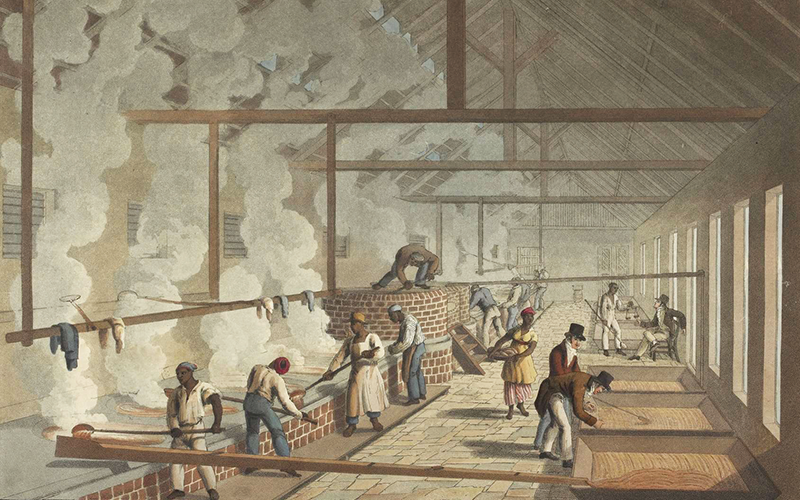

Barefoot in the Boilery

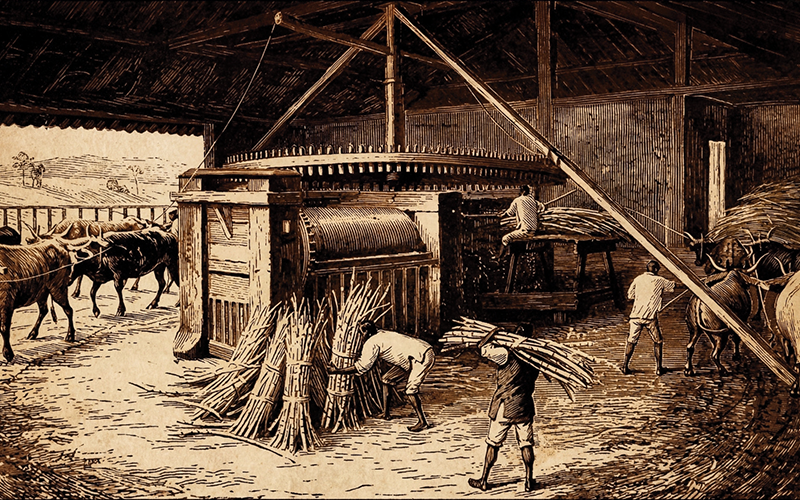
SEVENTEENTH-CENTURY SUGAR PLANTATION


When the signal came that the cane was ready, day and night no longer mattered. Across the island, the enslaved were driven to keep pace with the relentless rhythm of the sugar clock. Once cut, the cane began losing its sweetness by the minute, then quickly rotted—it had to be crushed at once.


The Mill Spares No One

Oxen and mules drove the grinding machines at full force as workers fed stalk after stalk into the rollers. In their exhaustion, it was common for fingers—or even whole arms—to be pulled into the gears. A short axe was always kept nearby for what followed. Many of the plantation guards were maimed; they had lost something here before.


The Boilery: Fire Without Rest

Six or seven great vats roared day and night. Heat, noise, and endless labor pushed anyone to the edge. Fire tenders fed crushed cane into the flames without pause. Enslaved workers stood barefoot beside the vats, or were made to hang over them, stirring heavy paddles and skimming the surface until the cloudy juice boiled down into clear syrup. They could not sit. They could not leave. Their legs failed, and their burns never healed.


Planting schedules, harvest crews, mills, and boiling houses had to move in perfect sequence—no delays, no mistakes. During the harvest, the fields and workyards rang with shouting and the crack of whips. Workers were not allowed to sleep. Colonial sugar pushed both body and time to their limits.


The Wind-Driven Spice Trade

Kerala, India

01Apr

How did tropical spices cross the seas to reach Europe and Africa in the ancient world? The only surviving Roman maritime trade text, the Periplus of the Erythraean Sea, offers a remarkably clear answer.

As early as the 5th century BC, Arab merchants controlled the spice routes. It was not until around 40 BC, when a Roman sailor survived a shipwreck, that the Romans discovered the secret of the monsoon winds and traced the source of pepper to India’s Malabar Coast—today’s Kerala.*

Thereafter, each July, when the strong monsoon winds filled their sails, roughly 120 Roman merchant ships would drift toward the port of Muziris in Kerala. When the northeast monsoon rose in November, they would return home laden with spices and silk. Long before the Romans arrived, Kerala and the Arab world had already forged centuries-long ties through this wind-driven trade, ties marked by commerce, intermarriage, and migration.

Today, Kerala’s harbors are no longer crowded with sails. Yet the region stands near the forefront of India’s development, boasting a high GDP, a literacy rate of 95 percent, strong healthcare infrastructure, and roughly US$7 billion in annual remittances from overseas workers. In many ways, this prosperity is the long inheritance of the winds that first carried trade to its shores thousands of years ago.

* In ancient times, Kerala functioned as a spice garden and major trading hub for spices from India and Indonesia’s Maluku Islands. Chinese merchants also rode the monsoon winds to Kerala, trading silk and porcelain for spices.


Pepper

The ancient Romans were history’s first great pepper enthusiasts, buying it in a frenzy. Pepper once functioned as a powerful form of currency so much so that it could be used to repay loans or pay taxes. Today, the two largest producers of pepper are Vietnam and Indonesia.


Prayer

Heavenly Father, You rule the monsoon winds and the course of history alike. Guide the people of Kerala onto the path that leads to finding You. In ages past, sailors crossed the seas under wind-filled sails in search of trade, creating opportunities for interaction and shared life among different peoples. We ask that You send Christians to Kerala today, men and women who will build trust and genuine friendship, bringing renewal and blessing. Millions from Kerala now travel to work in the Gulf states, living abroad as migrant workers. They send wealth back home, yet often bear the weight of loneliness and displacement. Be their safe harbor. In their seasons of wandering, may they find in You their eternal home, anchoring their souls in You and one day carrying back to their homeland a rich spiritual inheritance. In the name of Jesus Christ we pray, Amen.

From the Pepper Coast to a Diamond Empire

Gujarat, India

02Apr

Open the Roman Periplus of the Erythraean Sea, and you encounter sailors’ deep respect for the Gulf of Cambay.* Its violent tides, hidden shoals, and narrow entrance made it a formidable test for seafarers. Yet what drove them forward despite the danger was Gujarat’s fragrant pepper.

This tiny peppercorn drew the people of Gujarat into contact with merchants from across the world from an early age, and many followed the trade caravans far beyond their homeland. In the 16th century, the Portuguese explorer Tomé Pires marveled: “They are born with a genius for commerce. They judge the value of a commodity with almost artistic precision. Wherever you go in the world, you will meet a Gujarati merchant.” His writings vividly captured their shrewdness, restlessness, and instinctive grasp of the marketplace.

Gujarati merchants went on to become key trading partners of successive maritime powers—the Portuguese, Dutch, and British alike. In time, they rode the tailwinds of the British Empire, establishing shops throughout its far-flung territories.

Their success rested not only on talent, but on generations of integrity and commercial ethics. That reputation became their golden seal of trust, earning them control of roughly 90 percent of the world’s diamond cutting and polishing trade. In an industry defined by immense capital flows, their word alone often sufficed—contracts unnecessary—a testament to the extraordinary confidence diamond dealers placed in them.

Today, India’s richest individual is once again a Gujarati—an outcome that feels like a natural continuation of the Indian Ocean’s long trading tradition.

Note: The Gulf of Cambay opens westward toward the Gulf of Aden and eastward toward the Strait of Malacca, making it a vital hub in Indian Ocean trade.


The Periplus reads like the logbook of a seasoned navigator, recording perilous spice routes that stirred fear in sailors’ hearts: drifting into the Bay of Khambhat risked attack; landing at Adulis in Eritrea was ill-advised; treacherous currents and pirate arrows haunted the Bab-el-Mandeb—the “Gate of Tears.”


Prayer

Heavenly Father, the merchants of Gujarat have seen some of the world’s most dazzling diamonds. May these discerning eyes see a light even more brilliant, and recognize the most precious covenant of all—the redemption freely given through the life of the Son of God, through whom we are saved. Lord, the people of Gujarat understand the weight of a promise, and they have mastered the craft of refining raw stones. May they come to know You as the most faithful and skillful Artisan, and entrust their lives into Your hands to be shaped—becoming jewels that reflect Your glory and living stones in Your spiritual house. Raise up Christian businesspeople of integrity as witnesses among them. Stir hearts in Gujarat not only to pursue the wealth of this world, but to hunger for the One who illuminates life and grants true peace. In the name of Jesus Christ we pray, Amen.

Redrawing the World Map

The Spice Upheaval

03Apr

The Romans were the ultimate ancient big spenders. They poured staggering sums into spices and Chinese silk, provoking outrage in the Senate: “The Indians, the Seres (the Chinese), and the Arabs take one hundred million sesterces from us every year!” For perspective, the highest annual salary of a Roman soldier was only 800. Complain as they might, ship after ship still sailed into Alexandria, carrying fragrant cargo that would be redistributed across Europe.

After Rome weakened, Alexandria fell to the Islamic caliphate. As Arab power expanded, relations between Europe and the Islamic world grew increasingly strained. Jewish merchants stepped in as intermediaries, sustaining trade between the two spheres until the 10th century, when Venetian merchants gradually pushed them aside.

Following the Crusades in the 11th century, European soldiers returned home with “miraculous honey powder” (sugar) and pepper. For the first time, ordinary people tasted the mysterious flavors of the East. Yet by then the spice routes were tangled in political rivalry and religious hostility, driving risks and costs ever higher. A gold coin’s worth of spice in India became one hundred in Venice, and six hundred by the time it reached Bruges.

The Portuguese could no longer sit still. They built ships and set out to find the source of spices themselves, rounding the southern tip of Africa and arriving on India’s Malabar Coast. Not to be outdone, Spain sponsored Columbus’s westward voyage—unlocking, quite unexpectedly, the American continent.

In pursuit of flavor, humanity stumbled upon the whole world. This pinch of spice was more than a culinary luxury; it was the spark that ignited the Age of Discovery and the race for empire.

Prayer

Heavenly Father, people once set out into the unknown for a handful of spice. Raise up Your global Church to go forth with the mission of the gospel into every sphere of society, carrying the life-transforming fragrance of Jesus. We know that even the finest earthly aroma will fade. Renew our hearts to run instead after the fragrance that endures forever. Today, the world’s energy supplies and natural resources are still disrupted by war and hostile divisions. The livelihoods and daily lives of countless people are affected. Raise up peacemakers who will build bridges between opposing communities, remove barriers, and mend what has been broken. May Christian business leaders bear good witness in international trade, earning a good name that honors You and blesses others. In the name of Jesus Christ we pray, Amen.

Trading Manhattan for an Island

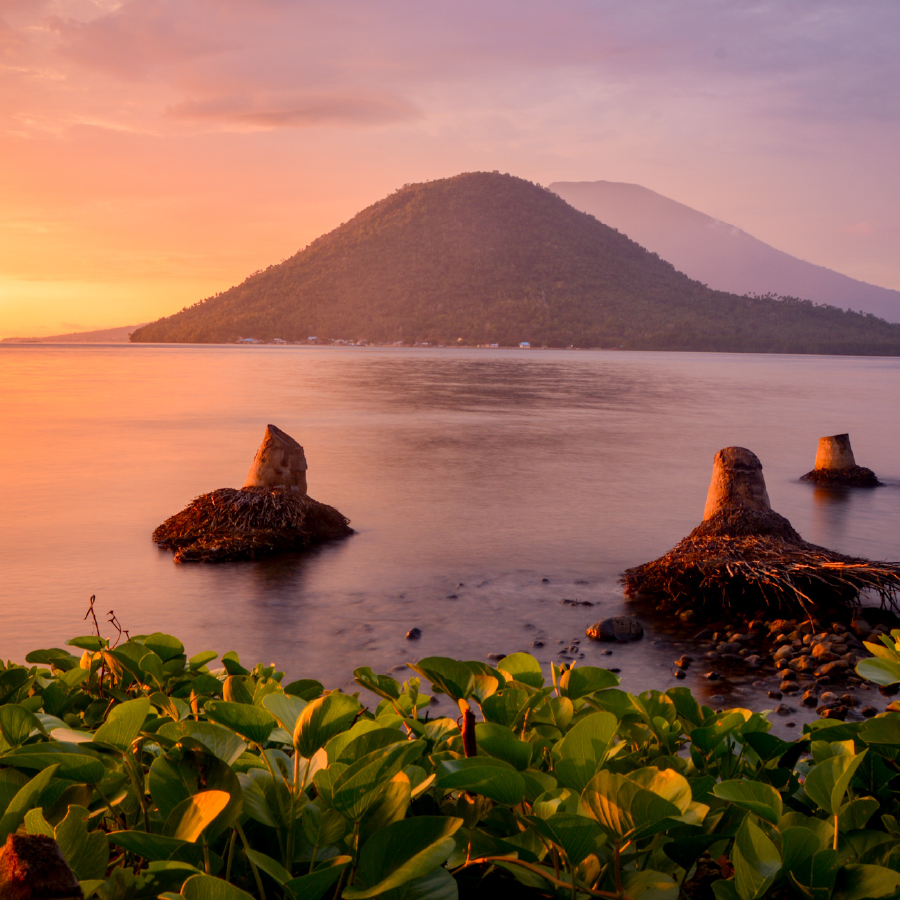
Banda Islands, Indonesia

04Apr

Sweet yet subtly spicy, nutmeg rekindled delight on the taste-weary tongues of medieval nobility. Yet even more particular than aristocratic palates was nutmeg itself—it would grow only in the humid sea winds of the Banda Islands.*

To control the nutmeg trade, the Dutch East India Company came close to controlling the entire Banda archipelago, with only the island of Run remaining outside its grasp. To secure this final prize, the Company resorted to ruthless measures. An English captain was executed and his head set upon a spike. Islanders were driven from their homes, and the spice trees themselves were cut down. These acts helped kindle the Anglo-Dutch wars. In the end, the Dutch traded a patch of marshland in North America, now Manhattan, for the British withdrawal from Banda.

When people chase what they deem most precious, they often sacrifice what is truly priceless. Even before this territorial exchange, Banda’s indigenous population had suffered grievously for resisting Dutch monopoly control. In 1621, under the orders of the Dutch governor, some 13,000 islanders were massacred; of the few survivors, around one thousand were exiled into slavery. They lived and died without seeing what would unfold a century later—when the French, without firing a single shot, smuggled out nutmeg seedlings, breaking the Dutch monopoly for good.

Today, the values have reversed. Manhattan has become a global financial capital, while the Banda Islands are little known beyond the world of diving enthusiasts. The world continues its restless calculations of value, while history stands as a quiet witness to the irony.

* The Banda Islands lie within Indonesia’s Maluku Province. The Maluku Islands, famed for cloves and nutmeg, were long known as the Spice Islands.


Nutmeg

Among medieval European elites, shaving fresh nutmeg over food before a meal was a performative display of wealth. In the pre-refrigeration era, it also helped mask the odor of spoiled meat. Today, nutmeg remains essential—from braised dishes to mulled Christmas wine and desserts. Its uses range from medicinal anesthesia to cosmetics. On Pemba Island, some women even chew nutmeg as a substitute for cannabis—earning it a reputation as a truly “magical” spice.


Prayer

Heavenly Father, may Your Spirit of wisdom continually question our hearts: What do You value? Recalibrate our vision, that we would not define success by the currents of this world or misplace our values through unchecked desire. Teach us to see people and all creation through Your eyes—recognizing that every life bears the dignity of Your creation, far surpassing worldly prestige or wealth. Raise up Christians to be faithful stewards in commerce and resource management—men and women who honor local cultures, protect the environment, and ensure that economic activity brings nurture rather than exploitation. May salvation come to the Banda Islands, and may the descendants of those enslaved and displaced there find true freedom and joy in Christ. In the name of Jesus Christ we pray, Amen.

Prometheus’s Fireseed

Indonesia’s Clove Colonial History

05Apr

Dried cloves resemble tiny rusted nails, yet they carry the commanding reputation of a fragrance that “pierces to the bone.” As early as the 1st century AD, they had already crossed the seas to conquer Roman kitchens—used in cooking, medicine, and even as an aphrodisiac.

This mysterious and potent aroma was born of volcanic islands. Ternate and Tidore in Indonesia were among the principal sources of cloves. When the Portuguese arrived in the 16th century, the two neighboring island sultanates were at war, each seeking to ally with the fully armed foreigners. The Portuguese successfully aligned themselves with the Sultan of Ternate, securing exclusive trading rights. Yet half a century later, after assassinating the sultan, they were driven out by enraged islanders.

When the Dutch replaced the Portuguese as the new maritime hegemon, they sought to monopolize supply and inflate prices by restricting clove cultivation to Ambon Island alone. To achieve this, they deceived the people of Ternate into cutting down their own clove trees—gradually claiming that Europeans no longer wanted flower buds, but instead demanded branches, bark, and roots. Believing the lie, the islanders destroyed their groves, and clove trees died one after another.

In the 19th century, the Dutch, attempting to stabilize their Indonesian colony, introduced the “Ethical Policy,” improving welfare and expanding education. Ironically, colonial textbooks began awakening questions of homeland and identity in young minds—including that of Sukarno, who would later become Indonesia’s founding president.

Cloves ignited desire; desire ignited violence and deception. Yet from the ashes of oppression, an unexpected wildfire rose in the hearts of a people—one that would eventually push back against 350 years of colonial rule.


Cloves

Once a luxury display item among European elites, cloves were also believed to ward off plague. During the Black Death, physicians stuffed them into their beaked masks. Chewing cloves could ease toothaches, aid digestion, and freshen breath. They remain a common note in perfumes today.


Prayer

Heavenly Father, may the gospel, like a fragrance that pierces to the bone, permeate Indonesian society. Let every circumstance that seems accidental become a spark You use to ignite hearts in search of truth. Your Word says that a bruised reed You will not break, and a smoldering wick You will not snuff out. Plant justice in this land that has known oppression, and let wounded lives encounter Your healing, mercy, and renewing power. We also ask that within Indonesia’s educational spaces, You would awaken students who long for truth and wrestle with life’s meaning—that they may hear the truth, find courage to pursue You, and kindle the fire of spiritual renewal across the nation. You crown ashes with beauty; may Indonesia shine with greater splendor than before. In the name of Jesus Christ we pray, Amen.

Unsung Makers of Fragrance

Indonesia’s Clove Industry Workers

06Apr

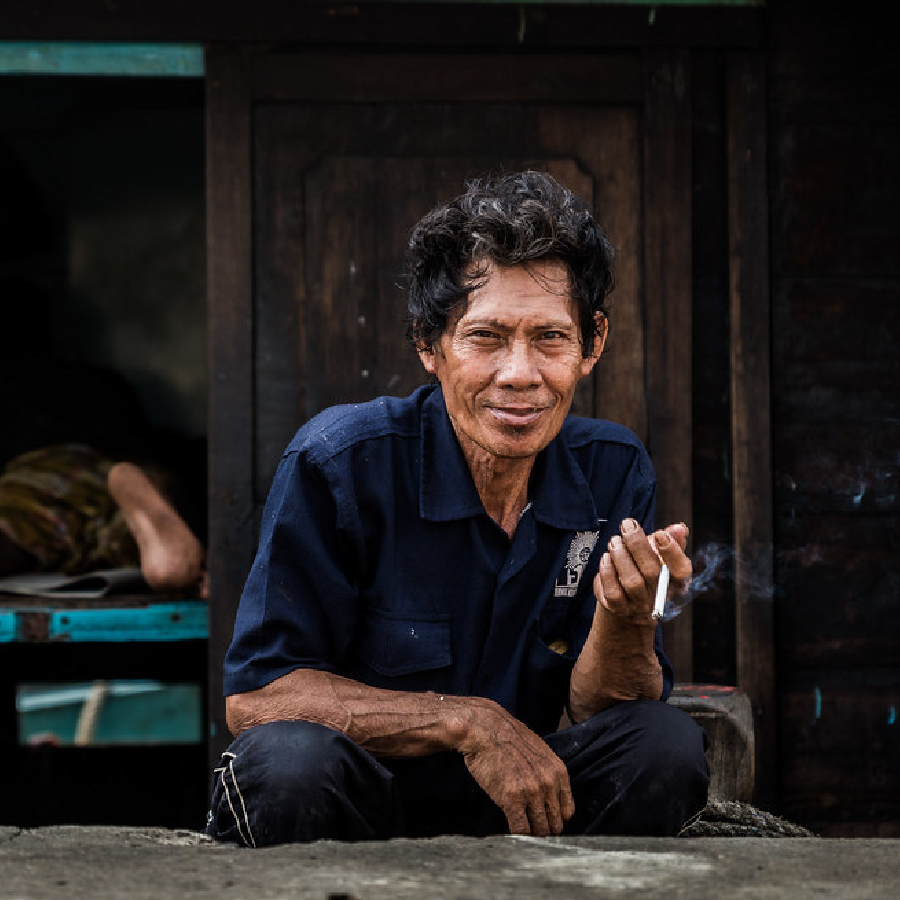
On the streets of Indonesia, the air often carries a faintly sweet, spicy haze—the crackling smoke of kretek (clove cigarettes), releasing an aroma that feels at once deeply local and quietly conflicted.

Tobacco was a colonial import; cloves, a native treasure. In the 19th century, an Indonesian man mixed cloves into tobacco in an attempt to ease his asthma. Unexpectedly, the blend became a nationwide addiction—and an irreplaceable economic lifeline.

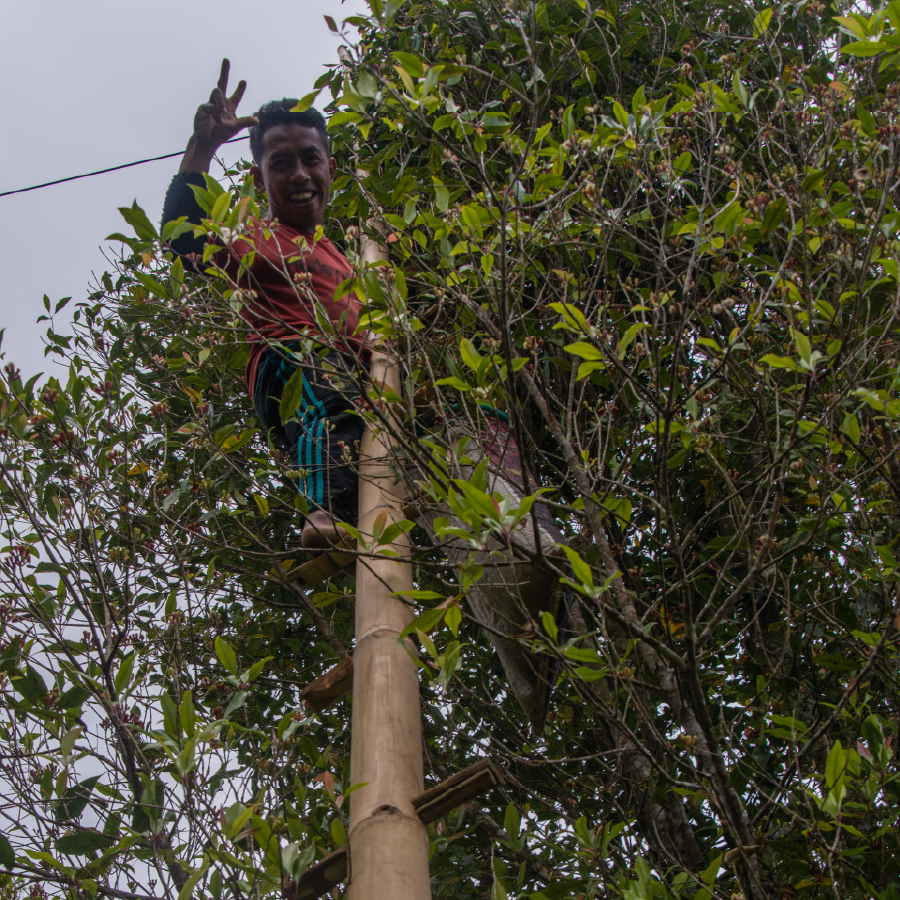
Cloves are both delicate and demanding. Harvesters often suffer falls and broken bones as they climb barefoot up 12-meter trees, racing to pluck the fragile buds before they bloom. During the harvest season, entire villages are mobilized. Men climb the trees, women sort the buds, and children spread them in the sun to dry. Inside cigarette factories, women work just as swiftly, their fingers flying as they roll cigarettes by hand—sometimes as many as 400 a day.

As early as 1978, machines were capable of replacing much of this labor. Yet the government resisted the lure of full mechanization, capping machine production at one-third. The reason was simple: the clove industry is intensely labor-dependent, sustaining the livelihoods of six million workers and supporting one million households. If machines displaced these jobs, rural poverty would only deepen.

Clove cigarettes carry another tension—public health. In recent years, the World Health Organization has repeatedly warned about Indonesia’s smoking rates, particularly the rise among minors. The government finds itself balancing tobacco control with the economic survival of millions. For many Indonesians, whether they smoke or not, clove cigarettes remain tied to daily hope and livelihood.


Recommended viewing: the Indonesian Netflix series Cigarette Girl, a period drama weaving together history, industry, and culture.


Prayer

Heavenly Father, the laborers of the clove industry have, through their toil, helped build the prosperity of their nation. Grant them fair wages and safe working conditions. Stir the hearts of clove-cigarette companies to embrace social responsibility, ensuring that their profits truly benefit rural communities and struggling families. Give the government wisdom to safeguard children and public health, while also developing diversified spice products and economic pathways that reduce dependence on clove cigarettes. By the touch of Your Spirit, awaken deeper longing for Christ. Send gospel workers into the clove villages—into the fields and the cigarette factories—to bear witness to Your grace. May the God who created the clove become the people’s true hope and their daily bread of life. In the name of Jesus Christ we pray, Amen.

Obsessed with Bark

The Colonial History of Ceylon Cinnamon

07Apr

We have all felt the pull of longing—waiting overnight for a glimpse of a favored celebrity, or standing in line for hours at a celebrated restaurant. Yet our devotion pales beside medieval Europe’s obsession with a strip of tree bark.

For the sake of cinnamon, Portuguese fleets lingered across the Indian Ocean, lying in wait for Arab merchant ships. Seizing cargo was not enough; they trailed the vessels homeward, determined to uncover the source. For centuries, Arab traders had guarded that secret, spinning elaborate myths about cinnamon’s origins to protect the spice lands from competitors and prevent eager buyers from sailing straight to the source.

Portuguese merchants searched relentlessly for cinnamon’s home, but it was a contrary wind—one that threw their routes into disarray—that carried these fervent seekers to a small island thick with fragrance: Ceylon, now Sri Lanka.

Britain proved the ultimate colonial power. It not only expelled the Dutch, but also defeated the inland Kingdom of Kandy and brought the entire island under its rule. The British reshaped Sri Lanka’s highlands into plantations of tea, coffee, and rubber, profoundly restructuring the island’s economy.

In 1948, the island finally emerged from colonial fervor—only to plunge almost immediately into ethnic conflict and civil strife. The period that might have strengthened its foundations was lost, and foreign investment gradually turned away.


Cinnamon

Harvested from the bark of the cinnamon tree, it was once a sacred luxury reserved for Egyptian gods and pharaohs, used even in mummification. It was one of the ingredients in the holy anointing oil described in Exodus. Today, it remains the soul of apple pie and the perfect companion to a cappuccino.


Prayer

Heavenly Father, in a world filled with countless fragrances, make us a rare and distinctive aroma that reflects You. Help us, like spice, to preserve and to flavor—to permeate places untouched by grace, to confront injustice, to free the oppressed, to strengthen the weak, and to repair what is broken, so that families and societies may grow more whole and secure, and people may experience the fullness of Your gospel. Guard us from harming others in the pursuit of desire, and from losing ourselves in unbridled zeal. Heal the colonial wounds of Sri Lanka. Shape its future according to Your will, restoring the beauty with which You first created it. In the name of Jesus Christ we pray, Amen.

Myth #1: A Colonial Legacy?

Who Forged Ceylon’s Wounds

08Apr

When we talk about the civil war in Sri Lanka, blame is often laid at the feet of British colonial rule: the importation of Tamil laborers from South India, and the preferential access given to Tamils in education and public service—advantages that sidelined the Sinhalese majority.

Colonial powers did, in many ways, construct the stage on which ethnic tensions would later unfold. Yet the widening of those fractures was driven by the decisions of local politicians and the tides of public sentiment.

After independence, the Sinhalese majority sought to reverse what they perceived as colonial-era imbalances. In doing so, however, they often reproduced new forms of injustice. The 1948 Citizenship Act stripped some 700,000 Indian Tamils of nationality. In 1956, Tamil was removed as an official language, forcing large numbers of Tamil-speaking civil servants out of their posts. By the 1970s, university admission standards for Tamil students were raised; medical school acceptance rates fell from 35 percent to 16 percent.

During these years, politicians and Sinhalese-Buddhist nationalists, motivated by electoral gain, chose not to mend ethnic divisions but to exploit them—amplifying narratives that language, culture, and religion were under threat. Public fear was stoked. Anti-Tamil violence multiplied. In despair, Tamil youth laid down their books, took up arms, and became the feared Liberation Tigers of Tamil Eelam.

Yet even after the Tigers fell, the cost of a 26-year civil war did not bring the island closer to peace. Nationalist forces, following a familiar script, redirected public hostility toward another minority—Muslims, who make up only about 10 percent of the population.

Prayer

Heavenly Father, history may carve deep wounds, but people are not prisoners of the past. The experiences of prior generations have trapped Sri Lanka’s communities in cycles of exclusion and retaliation. Let Your perfect love quiet the fear of being deprived again. Teach them to trust You as their provider and protector, and to find true security in You. Move both government and civil society to pursue ethnic reconciliation. Help Sinhalese, Tamil, and people of every faith to see that they are not enemies, but members of one shared household. May they recognize the island as their common home, crafting just policies that care for the needs of all communities. And may the Church, through acts of love, break down dividing walls—so that many may discover in the gospel that we are one body, co-heirs of the promise, and sharers in the same inheritance. In the name of Jesus Christ we pray, Amen.

Myth #2: Not All Are Tigers

Sri Lanka’s Tamil Communities

09Apr

Many assume that Sri Lanka’s Tamils fall into one of two categories: militants of the Tiger movement, or a privileged class elevated by colonial favor. But this overlooks a crucial reality. On this island, there are in fact two Tamil communities—one perceived as too powerful and resented, the other too vulnerable and forgotten.

The group elevated under British rule was never the Indian Tamil laborers the British themselves had imported. Rather, it was the indigenous Sri Lankan Tamils, who had lived alongside the Sinhalese for over a millennium. Having earlier experienced Portuguese colonial rule, they were already accustomed to working with foreign powers. This community would later form the backbone of the Tamil independence movement.

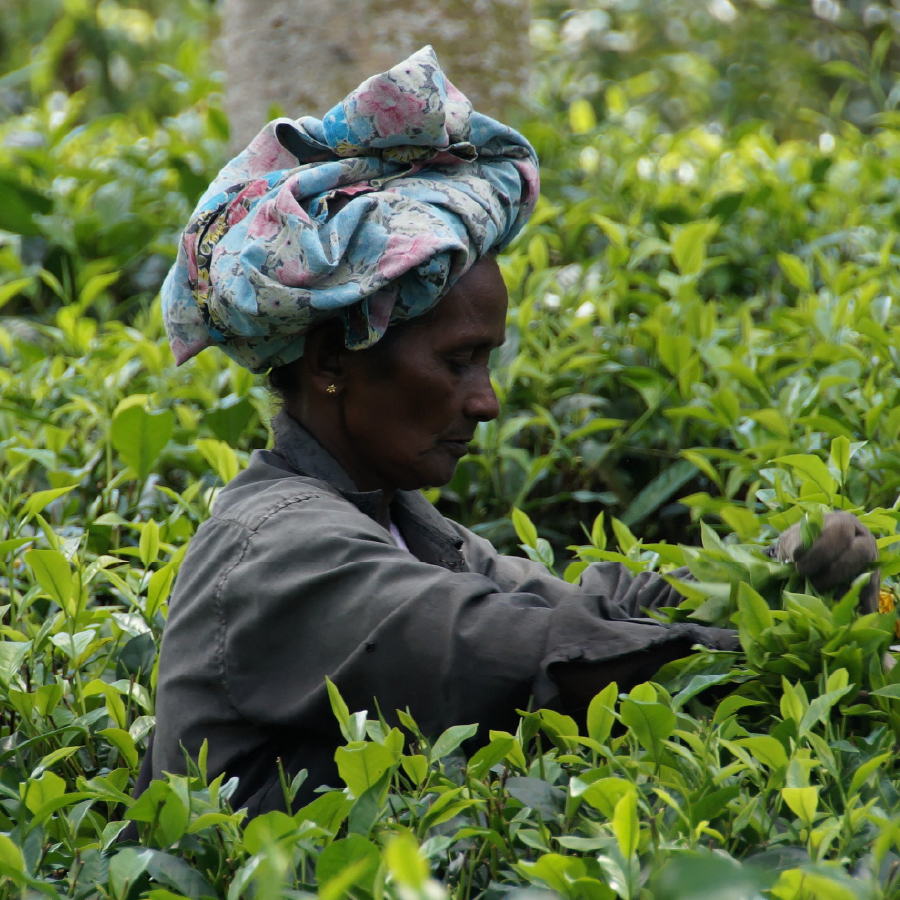
By contrast, the “Indian Tamils” brought by colonial authorities were confined to the damp, cold highlands of central and southern Sri Lanka. A typical day meant plucking 18 kilograms of tea leaves for about 500 rupees—roughly two U.S. dollars. Their per capita income remains only half the national average. Many still live in the aging “line houses” built during the colonial era, with leaking roofs that may be repaired only once every forty years.

Their newborns have the lowest birth weights in the country. The proportion of children who have never attended school is three times the national average. They played no role in the civil war, yet each year their labor generates around one billion dollars in foreign exchange for the nation—while suspicion and prejudice continue to shadow them.

One female worker put it plainly: “We’re afraid to leave the plantations. Afraid to ride the bus. Afraid to speak.” Perhaps the only thing that does not look down on them is the tea they have tended all their lives.

Editor’s note: Sri Lanka’s official census has always counted the two Tamil groups separately—Sri Lankan Tamils at 11.2% and Indian Tamils at 4.2% (2012).

Prayer

Heavenly Father, may the Indian Tamil tea workers in the highlands no longer be forgotten. Stir just policies and creative support strategies. May the light of the gospel kindle hope in their daily lives. Raise up humble missionaries, medical workers, businesspeople, and social workers to enter the plantations and factories—walking alongside Indian Tamil communities as they move out of poverty and isolation. May the government follow through on housing initiatives for tea workers, improving their education and quality of life. We also pray for the indigenous Tamils in the north, who suffered deeply through the civil war. They need acceptance and trust from the state, and compassionate action from all sectors to rebuild livelihoods and social order. May the orphans and widows left in the wake of the Tigers encounter the Lord who shows kindness, experience His faithful provision, and become small yet radiant witnesses to His love and glory. In the name of Jesus Christ we pray, Amen.

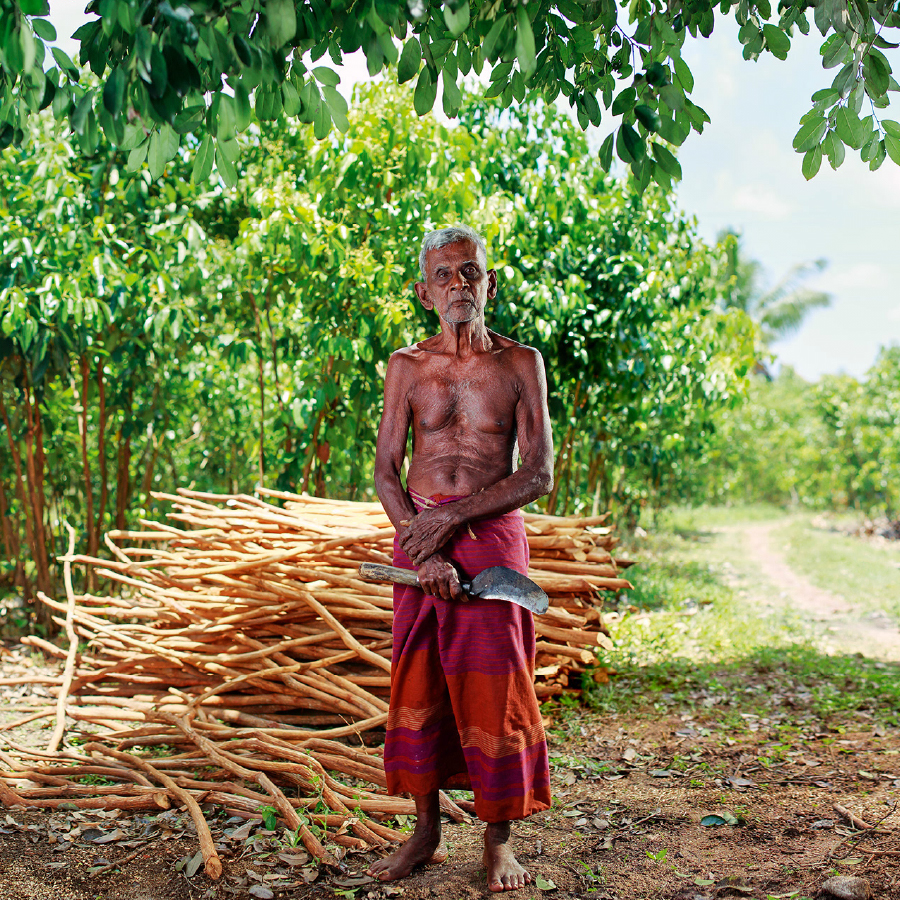
A Sri Lankan farmer cutting cinnamon branches

The Good Samaritan 2.0

When Farmers Are Priced into Despair

10Apr

In 1986, a university student named Tyrell Fernando was traveling by train. Excited, he rushed toward the locomotive to take in the view—only to witness a man placing his bicycle beside the tracks and lowering his head onto the rail.

That day, Tyrell learned a painful truth. Many of Sri Lanka’s small-scale spice farmers live in remote villages without electricity. Isolated from market information and unfamiliar with negotiation, they are often exploited by middlemen—forced to accept unfair prices and subjected to arbitrary deductions. Many labor endlessly yet cannot make ends meet, and some are driven to despair. The loan that had pushed this man toward suicide amounted to just 2,000 rupees—about 23 U.S. dollars.

Though Tyrell and fellow passengers pooled money to pay off the farmer’s debt, he knew the crushing economic structures behind such suffering would remain. He later joined a fair-trade cooperative founded by a Portuguese priest. The cooperative purchased spices from smallholders at 10–20 percent above market rates, supporting the livelihoods of 1,500 families, while reinvesting 5–6 percent of profits into rural development. Gradually, villages gained electricity, water pumps, reservoirs, scholarships for children, and even new tile flooring in their homes.

This is a modern retelling of the Good Samaritan story—not a single act of charity, but a decision to step into the very economic systems that cause suffering, building structures where the vulnerable can stand and where fairness can take root. Yet new pressures continue to emerge. In 2025, the United States imposed a 30 percent reciprocal tariff on Sri Lankan goods, a move likely to bring fresh strain upon spice-farming families.

Prayer

Heavenly Father, Your kingdom is not built on profit margins or efficiency, but on love and justice. Send Your people into markets and systems where oppression persists—so that in production, contracts, and profit-sharing, the justice of Your kingdom may be lived out and blessed by Your generous provision even amid real-world constraints. May Christians cherish the land, honor workers, and embody a kingdom economy marked by generosity—repairing the fractured relationships between people, the earth, and You that modern markets have torn apart. Awaken in today’s entrepreneurs the gleaner’s spirit: the willingness to limit profit and leave margin in the fields for the vulnerable, so they may sustain themselves with dignity—not merely as recipients of charity, but as partners in labor. May every worker whose value has been diminished be seen anew through the love of Christ, and there rediscover their God-given dignity. In the name of Jesus Christ we pray, Amen.

A Young Slave and the Queen of Spices

Réunion Island

11Apr

In the 1820s, the French transported vanilla from Mexico to their colonies, hoping to reproduce its elegant sweetness elsewhere. But though the vines flourished and bloomed, they bore no pods. Only a tiny bee native to Mexico knew how to pollinate the flower. The French experiment seemed doomed.

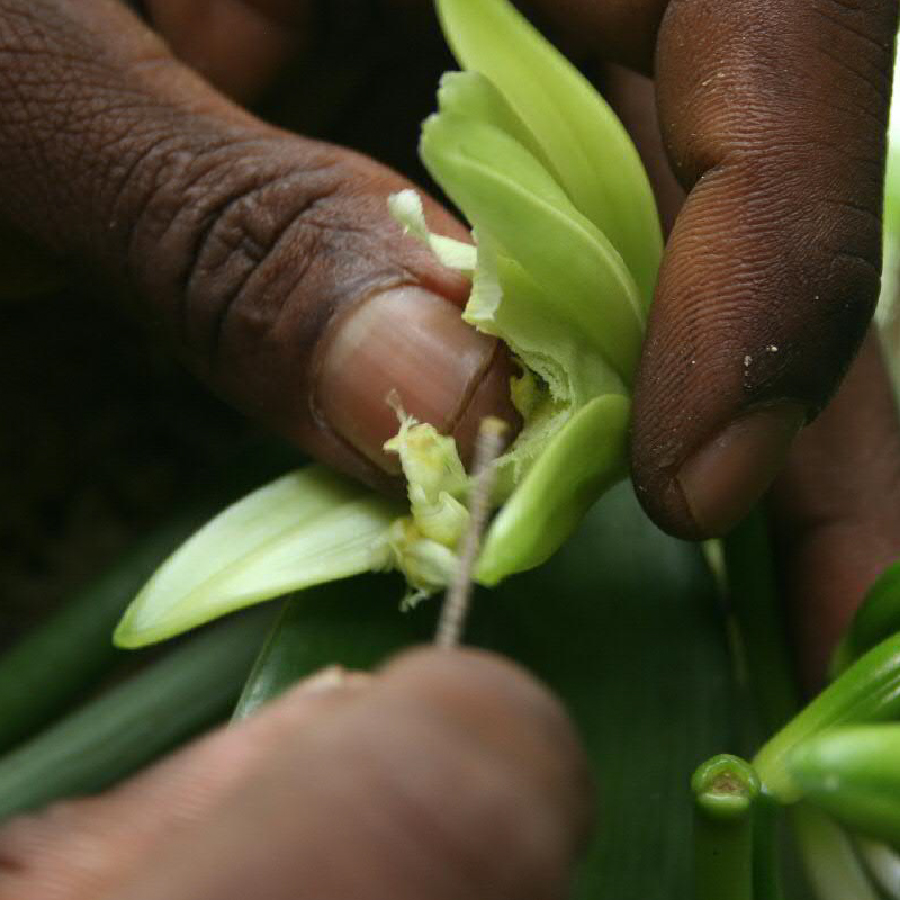
Then in 1841, something remarkable happened. On Réunion Island, a 12-year-old enslaved boy named Edmond Albius discovered the secret. Using a small stick, he lifted the thin membrane separating the pollen from the stigma and gently pressed them together. For the first time, vanilla produced fruit outside its homeland. Botanists were astonished.

Nearly two centuries later, vanilla workers still follow Edmond’s simple technique. Like busy bees, they labor during the brief one- to two-month flowering season, racing against the clock under the blazing sun. Each blossom remains open for less than two days, and every flower must be pollinated by hand. Afterward come eight months of careful tending, followed by half a year of curing, sweating, drying, and aging. Only through long toil and patient waiting does that familiar ribbon of sweetness emerge.

Because of its labor-intensive cultivation, vanilla is now the world’s second most expensive spice, surpassed only by saffron. This “queen of spices” is cherished by pastry chefs, perfumers, and coffee lovers alike. Yet those who nurture it may never taste the sweetness it brings. Edmond himself gained neither wealth nor recognition from his discovery. Instead, he became entangled in legal disputes and controversy, and died in poverty.


Vanilla

The world’s most popular flavor. In the 17th century, a Spanish princess developed a passion for hot vanilla chocolate. By the 18th century, vanilla was valued alongside silver. By 2025, the global vanilla market is expected to exceed US$3.6 billion, growing at roughly 6 percent annually. The United States and the European Union are the largest consumers, while Madagascar and Indonesia together produce about two-thirds of the world’s supply.


Prayer

Heavenly Father, thank You for creating flowers and plants that enrich our lives with fragrance and flavor, lifting the human spirit. You know that even the finest vanilla cannot yield its sweetness without careful hands to tend it. Bless the workers who labor in the vanilla fields. Send faithful gardeners to the people of Réunion Island—men and women who will cultivate the soil of human hearts, nurturing lives toward maturity and drawing forth a spiritual fragrance sweeter than vanilla. Raise up good shepherds and devoted disciples who invest time, witness, and service, carrying the pollen of the gospel to those who do not yet know You. We also ask that You bring justice to exploited workers around the world, granting them fair wages and the joy of enjoying the fruit of their labor. In the name of Jesus Christ we pray, Amen.

The Paradox of Fairness

Madagascar’s Vanilla

12Apr

Eighty percent of the world’s vanilla comes from Madagascar—an island that nurtures the finest sweetness, yet ranks as the world’s fourth poorest country. As many as 93 percent of Malagasy people live on less than two U.S. dollars a day. The island’s 80,000 vanilla farmers spend their lives battling cycles of drought, theft, and debt. Though twelve fair-trade organizations are active there, they collectively reach only about 6,780 farmers.

Seventy-year-old Denis reflects with resignation: the real profits belong to exporters. He has grown vanilla for half a century and has never become wealthy—his only hope is that his children might receive an education. During vanilla’s long cultivation period, farmers often mortgage their unharvested crops to traders in exchange for advance payments. Climate volatility and poor harvests lock them into cycles of debt, while theft is so rampant that many farmers scarcely dare sleep. One neighbor, Kune, put it starkly: “If nothing changes, people in Madagascar will go mad because of vanilla.”

Yet the heaviest blow has come from afar. In 2025, the United States—the largest buyer of vanilla—imposed tariffs of up to 47 percent on Malagasy imports (later reduced to 15 percent), citing “trade fairness” and the need to reduce deficits.

Neither erratic weather nor machete-wielding thieves have ever moved exporters to absorb Denis’s losses. Now he must also bear the cost of trade imbalances negotiated by distant powers.

Vanilla’s sweetness carries both joy and sorrow—within it lingers one of the world’s most unequal flavors.

Prayer

Heavenly Father, vanilla farmers in Madagascar live with constant fear of being abandoned by global markets, or of foreign investment shifting elsewhere. Grant them peace, and guide them toward new markets and more diversified, sustainable industries. Protect both farmers and crops, and strengthen law enforcement to improve rural security. May local churches become channels of Your grace—building mutual aid networks and cultivating shared fields that provide timely relief and comfort when farmers face hardship or hunger. Let the justice of Your kingdom reach those at the very bottom, restoring dignity and tangible blessing. Send missionaries and humanitarian organizations deep into rural communities, so that lives marked by bitterness may yet be transformed into sweetness. In the name of Jesus Christ we pray, Amen.

The Cadillac of Spices

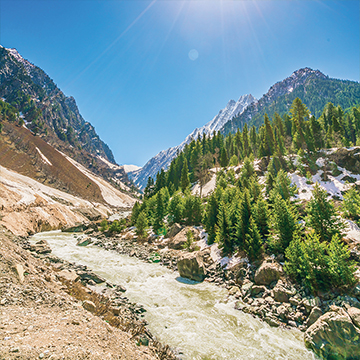
Kashmir’s Saffron

13Apr

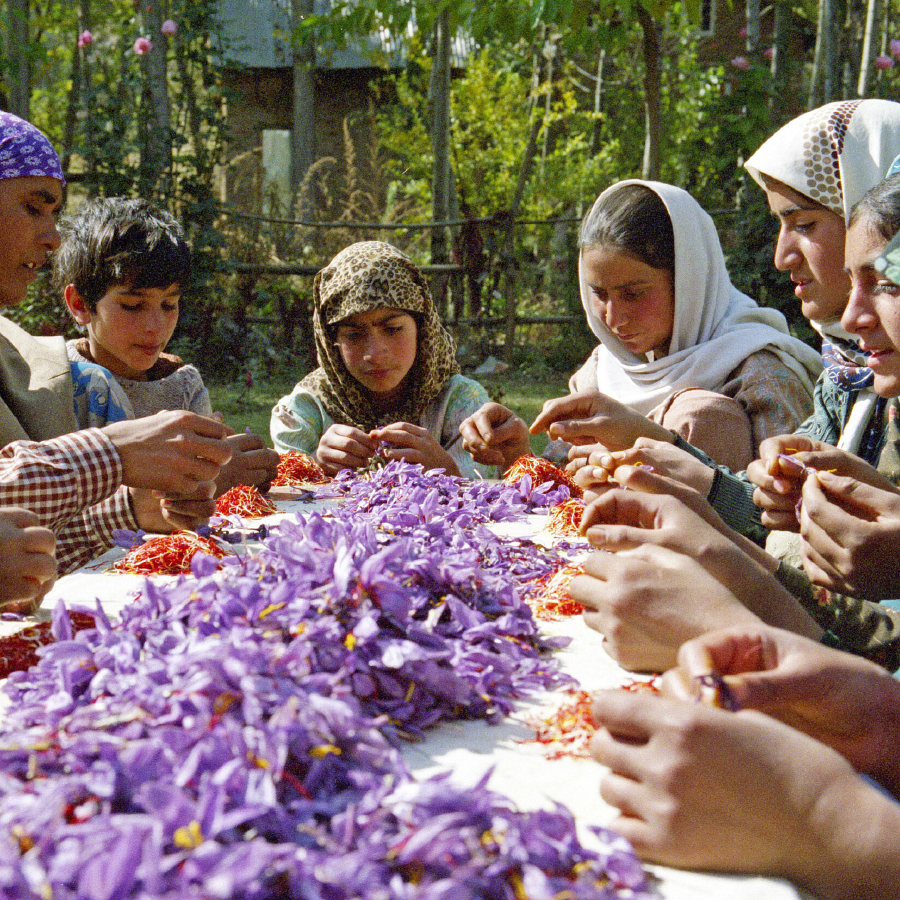
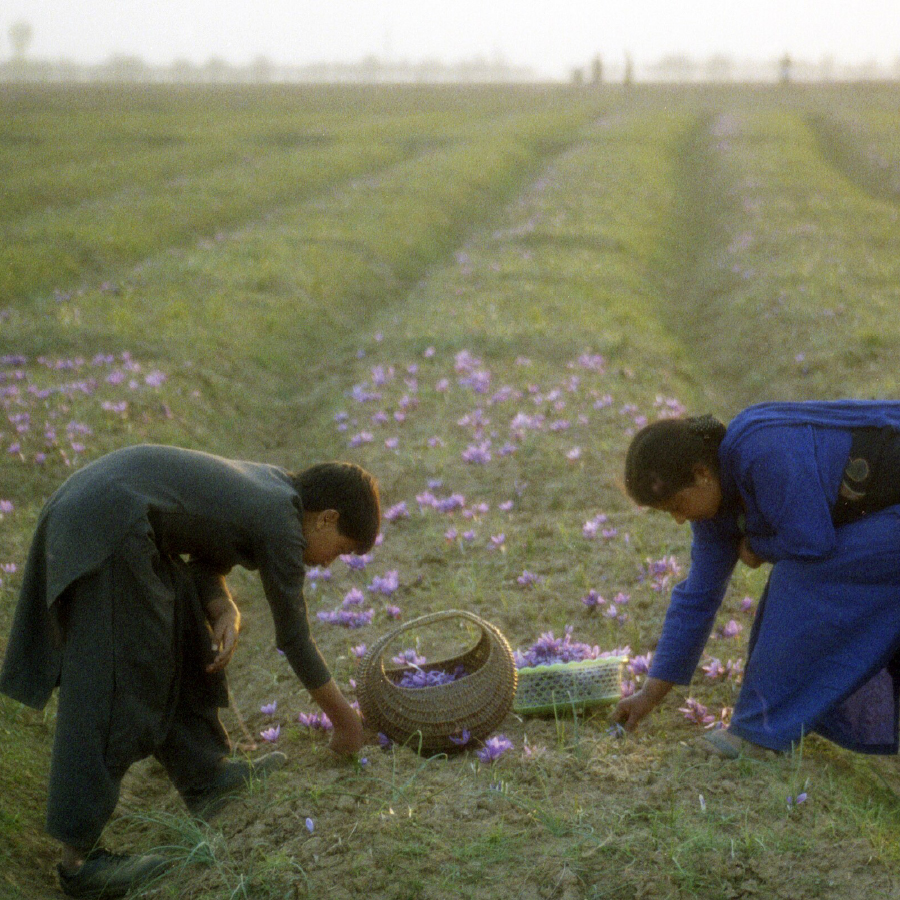
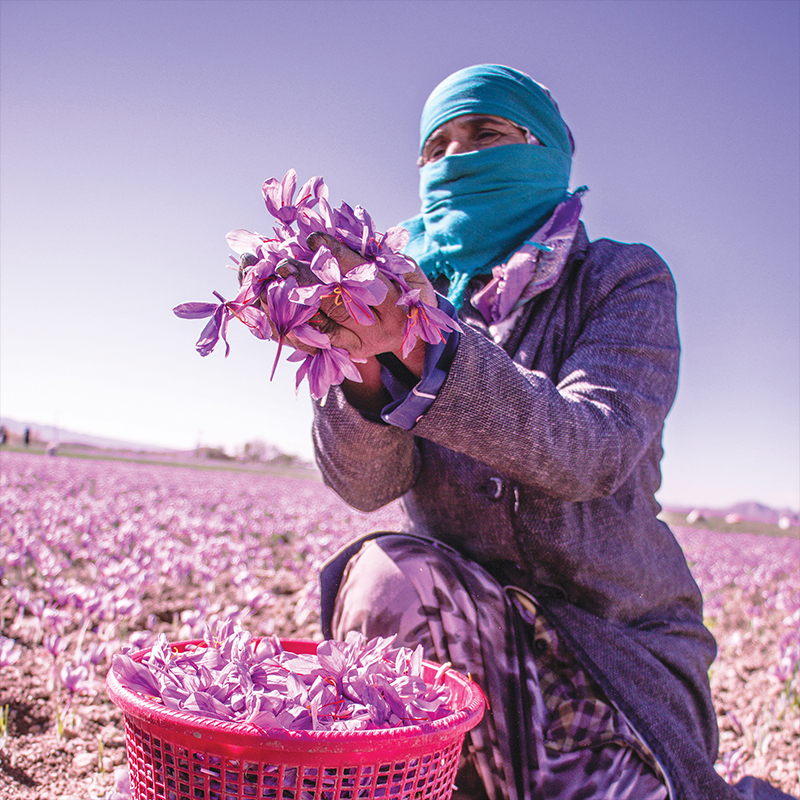
At 5:00 a.m. on November 15, 2024, farmers in Pampore, India stood in their fields in tears. The rains had failed, and the saffron blossoms barely opened. On the final day of harvest, yields reached only 30 percent of what they once were. At the same time, industrial-scale Iranian saffron—exported in massive quantities at half the price—continued to dominate 95 percent of the global market.

Each saffron flower produces just three delicate stigmas. It takes 160,000 blossoms to produce a single kilogram of spice, making saffron the most expensive spice in the world. Iranian saffron threads glow pinkish-red; Kashmiri saffron, by contrast, is a deep crimson and contains higher concentrations of crocin, the compound responsible for its color and potency.

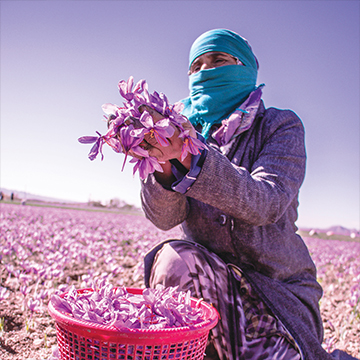
Every October, at the foot of the Himalayas, Pampore is washed in romantic shades of purple. Before sunrise, villagers hurry to gather the blossoms, later separating each stigma by hand with meticulous care. Compared to machine-processed threads, these hand-harvested filaments retain richer oils and fuller aroma—long regarded as the finest in the world.

Yet handcraft meets machinery in an uneven struggle. In 2007, saffron sold for 250 rupees per gram; today the price has fallen to 120. Ecological pressures add to the strain, as habitat disruption, porcupines damaging crops, and dust from nearby cement factories all take their toll. Discouraged farmers have shifted to apples and walnuts. In just two decades, saffron acreage and production have declined by 65 percent. The most prestigious “Cadillac” of spices now edges toward a cliff.

In the new year, Pampore’s farmers wait—waiting for generous snow and rain to nourish the soil, waiting for markets to recognize the worth of handcrafted labor. Behind the fragrance of Kashmiri saffron stand countless hands unwilling to be erased by the times—and a people clinging to what remains of their pride.


Saffron

A prized spice with anti-inflammatory properties, rich in nutrients and minerals. Long used as a natural dye and valued for its distinctive aroma, just a pinch can turn Spanish paella a radiant gold.


Prayer

Heavenly Father, You are the Creator of seasons and the Giver of rain. Send timely snow and nourishing rainfall to Kashmir, restoring life to its soil and blossoms. Grant wisdom to government leaders and research teams, that breakthroughs in irrigation, drainage, greenhouse technology, and ecological management may allow traditional cultivation and modern innovation to flourish together. May the Geographical Indication (GI) certification promoted by India become a true guarantee of quality, strengthening saffron’s competitiveness and ensuring farmers receive fair compensation. Raise up churches and believers to bring creative blessing to Pampore’s communities and agricultural life, preparing hearts to become fertile soil for the gospel. Let dry and weary hearts be refreshed by the living water You alone provide. In the name of Jesus Christ we pray, Amen.

The Secret Behind Saffron’s Withering

A Land Under Siege

14Apr

The saffron in Kashmir is fading not only because of climate change, ecological strain, or market competition. Farmers will quietly tell you another reason: no one dares to invest. Their land is a battlefield.

“Curfews can be imposed at any moment—even ambulances can’t move. Internet and phone lines are cut without warning—we can’t contact buyers. Borders close, shipments grind to a halt. Workers can’t show up because of security conditions. Would you still come do business here?” Raqib isn’t exaggerating. In 2019, when India revoked Kashmir’s autonomous status, communications went dark. Networks were shut down, borders sealed. Raqib could no longer reach traders in Delhi or Kolkata.

In the five years since, security lockdowns have become routine. While the world upgrades to 5G, many Kashmiris still live with internet blackouts or throttled 3G speeds. “It’s not that we don’t want to progress. But upgrading saffron technology? Expanding marketing? How can we even begin?”

Kashmir has known little stability since 1947. After the partition of India and Pakistan, the two nations fought wars over the region in 1947 and 1965, while China also came to control portions of its territory. Across this small land, more than half a million troops from three countries remain stationed. Some Kashmiris seek independence—but neither India nor Pakistan will permit it.

Under the shadow of rifles and encirclement, even the most beautiful flowers—and people—struggle to breathe. Both the saffron rooted in this soil and the Kashmiri people themselves long for a more secure place to live and flourish.

Prayer

Heavenly Father, have mercy on this land watched so closely by nations. Bring peace to Kashmir. May India, Pakistan, and China see not only its strategic value, but care deeply for the well-being of its people. As Kashmiri farmers tend their saffron with meticulous devotion, may they come to know You as the Gardener who understands them best and cares for them most tenderly—enabling them to release a heavenly fragrance even in hardship. We pray for the youth of Kashmir. When the future feels uncertain and aspirations feel out of reach, let Your living Spirit guide them to find hope and calling in Christ. Bless the region’s infrastructure, education, healthcare, and commerce—so that in peace they may be rebuilt and flourish under the light of Your glory. In the name of Jesus Christ we pray, Amen.

Waiting for Someone to Come Home

The Double Tragedy of Half-Widows and Orphans

15Apr

Early one morning, as her husband left for the day, he turned back and said, “See you later.” It was the last time Naseema saw him. Five years on, she still does not know whether he is dead or detained in some military camp. Without a death certificate, her legal status remains suspended—she cannot inherit property, receive widow’s benefits, or remarry.

Decades of conflict and separatist movements have claimed more than 40,000 Kashmiri lives. Another 10,000 men have simply “disappeared.” Countless women like Naseema have become what the region calls “half-widows.” To qualify for compensation or inheritance, they must prove their husbands have been missing for more than seven years—and were not militants. Military authorities often deny documentation. Even when aid is approved, portions are siphoned off through bureaucratic corruption.

A 2013 legal reform shortened the waiting period for remarriage to four years. Yet social norms still restrict women to marrying a deceased husband’s brother. When Tamanna remarried her late husband’s nephew after waiting twelve years—a union permissible under Islamic law—she was still shunned by relatives and neighbors, barred even from entering the kitchen reserved for the household’s leading woman.

War has also devoured the futures of children. By 2014, Kashmir had roughly 215,000 orphans. Here, a child without a father is considered an orphan, because women often lack the means to provide. With family support, healthcare, and education all compromised, an estimated 53–57 percent of these children suffer from depression. Humanitarian and medical organizations have repeatedly sought access, yet many applications are denied by India on “security grounds.”

Prayer

Heavenly Father, Your heart breaks for widows and orphans. You hear every sigh uttered in the night, for You are also the God who watches and waits for the lost to come home. Raise up churches, believers, and pathways for the gospel in places of unrest—drawing the abandoned into Your household, assuring them that You will never forsake them, and providing for their needs beyond human limits. Open doors into Kashmir, that Your people may become instruments of Your grace—bringing healing, education, refuge, and love. Many who have suddenly lost family members live in constant fear that disaster may strike again. Bind up their wounds, and raise up greater access to counseling and psychological care. May compassionate social systems and just institutions uphold widows and orphans—granting protection, dignity, and mercy. In the name of Jesus Christ we pray, Amen.

A Remedy for Society

Chili Peppers of Mexico

16Apr

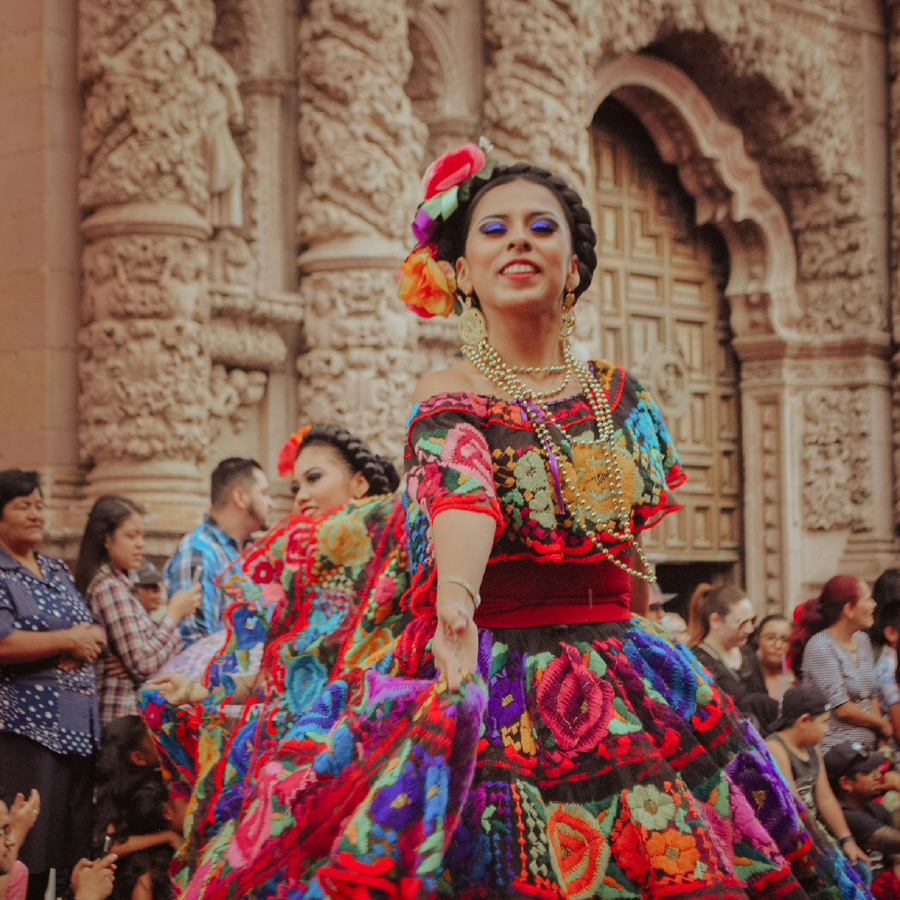
Chili peppers are the soul of Mexican cuisine. Carried back to Europe by Columbus, they swept across the globe—igniting tongues with a “fire of hell” that delivers both pain and pleasure, releasing endorphins that momentarily lift the spirit. In their homeland of Mexico, they have become a kind of “social remedy”—rousing people from numbness and drawing them back into the present, lighting a small flame in tired hearts.

Mexico’s melancholy is rooted in a fall from former splendor. It was the cradle of three of the world’s great ancient civilizations—the Olmec, the Maya, and the Aztec. That trajectory was violently interrupted when the Spanish conquest severed the development of Indigenous societies, branding them as “backward” under the gaze of European modernity.

After independence, the Mexican–American War stripped Mexico of nearly half its territory—land that now makes up close to ten U.S. states. Onto the wound of national confidence grew a complicated psyche: resentment toward, yet fascination with, the powerful neighbor to the north.

In the modern era, Mexico has wrestled with revolution, corruption, and drug violence. Many seek fragments of dignity in memories of ancient glory, yet centuries of mestizo blending between Europeans and Indigenous peoples have profoundly reshaped the nation’s demography and identity. Even Indigenous traditions struggle to function as a shared anchor.

Mexico’s spirit often feels marked by loss. Perhaps chili peppers serve as a kind of folk remedy—a spark that ignites itself, offering, if only for a moment, the strange pairing of pain and exhilaration on the tongue.


Chili peppers

A New World flame that Columbus inadvertently carried back, now igniting kitchens around the world. From Indian curries to Korean kimchi to Sichuan hotpot, their heat has become essential across cuisines. Their global spread owes much to their resilience, their ability to self-pollinate, and an unlikely ally—birds immune to capsaicin that carry their seeds far and wide.


Prayer

Heavenly Father, Mexico once knew great glory. Today, many turn to the burning heat of chili peppers for a fleeting lift of the spirit. May the risen Christ personally touch the many Catholics of this land, and may His love become the true remedy that heals society and its people. Heal the wounds left by colonial history. Let people receive their redeemed identity and victory in the Lord, gaining strength to cut through thorns and walk new paths. When governments and civil society feel trapped by fragile rule of law, poverty, and the grip of narcotics violence, we ask that Your sovereign power intervene. Where human effort fails, stretch out Your arm. Where all solutions are exhausted, make a way. Be Mexico’s shield and strength. Lead its people through hardship, that they may witness You as the One who ultimately transforms destiny. In the name of Jesus Christ we pray, Amen.

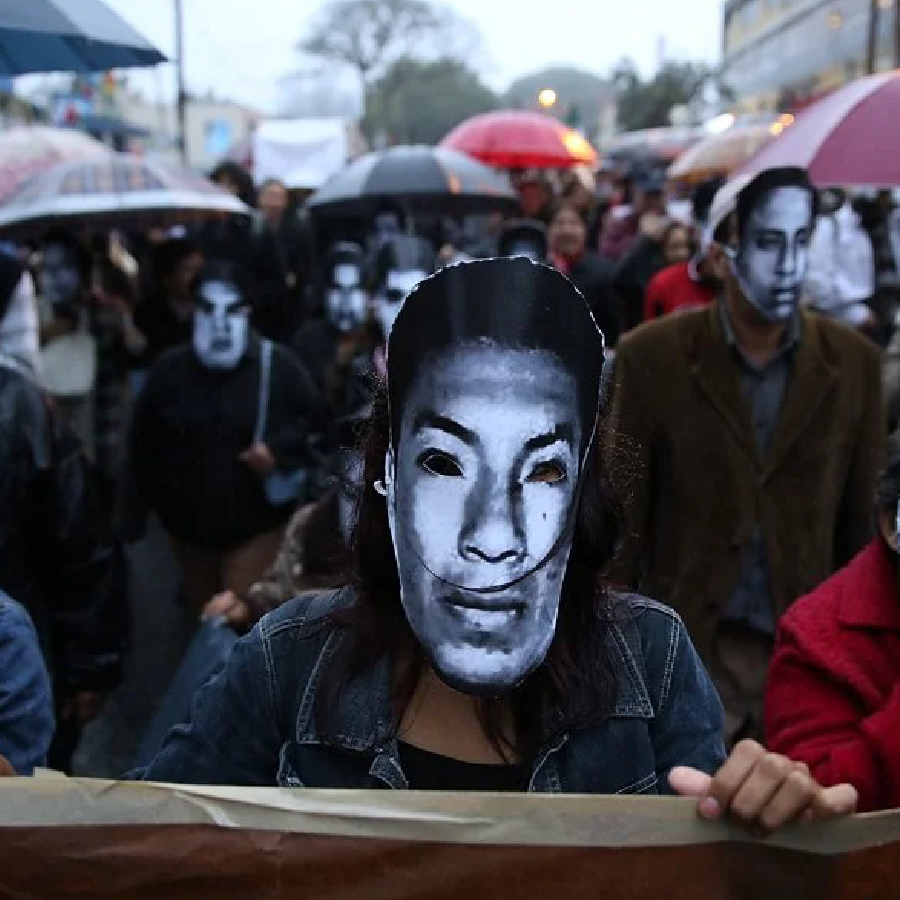
After the government launched its drug war, security conditions in Mexico deteriorated further. Murder and disappearance cases surged, and families marched wearing masks of their missing loved ones.

A Social Poison

Mexico’s Cartels

17Apr

A grain of fentanyl no larger than a sesame seed can cost less than fifty cents—yet its potency and euphoric effect are fifty times that of heroin. As little as two milligrams can be fatal. This century’s deadliest drug claims some 70,000 lives each year in the United States, and one of its primary manufacturing hubs lies in Mexico.

Fentanyl has made Mexico’s drug syndicates, locally known as cartels, more destructive than ever. Chemical precursors costing about US$3,600 can yield fentanyl worth up to US$3 million, generating profits twenty times higher than cocaine. Unlike traditional narcotics, it requires no poppy fields—only modest equipment and small laboratories. A new transnational supply chain has emerged: chemical inputs from China, production in Mexico, and distribution and money laundering in the United States.

In 2006, the Mexican government declared war on the cartels. Yet the more aggressively they were targeted, the more powerful they became. The long-dominant Sinaloa Cartel splintered into hundreds of even more violent factions. Over a decade, the national homicide rate surged by 55 percent. Local courts, compromised by massive bribes, became extensions of cartel influence.

In 2017 alone, twenty-five major gang clashes displaced some 20,000 civilians. By 2024, the violence had spilled into electoral politics, with more than thirty candidates assassinated. In 2025, the mayor of a city in Michoacán was gunned down in public—shot seven times during Day of the Dead observances.

Today, cartels are no longer content with drug trafficking. Equipped with drones and private militias, they are battling rival groups and government forces for control of roughly a third of the country. Much of their firepower comes from an estimated 500,000 firearms smuggled each year from the United States.

Prayer

Heavenly Father, fentanyl spreads through the fractures of poverty and loneliness. We ask that You heal the deep emptiness in this generation. Bring about cooperation among governments to dismantle transnational drug networks, and raise up gospel-centered ministries of recovery, restoration, and job training, so that those in bondage may be set free. Lord, bring down the cartels and corrupt powers that are so deeply rooted in Mexico. Protect law enforcement officers who seek to act with integrity, granting them wisdom and courage to restore justice and social order. Raise up leaders like Nehemiah—men and women who will repair what has been broken and rebuild strong defenses against the spread of narcotics. May the Church in Mexico become a channel of healing within society, bringing transformation to communities in despair, and leading both those struggling with addiction and those caught in gangs back to the Savior. In the name of Jesus Christ we pray, Amen.

Whose Paradise, Whose Hell

When Migration Strains Communities

18Apr

In 2025, Mexico ranked fourth among the world’s top retirement destinations. Yet in news footage, it often appears as a place people are desperate to escape. This stark contrast reveals two parallel realities within one nation.

For retirees from Europe and North America, Mexico offers warm weather, vibrant culture, affordable living, and accessible healthcare.* Foreign retiree communities cluster in relatively safe, tourism-developed cities such as San Miguel de Allende, Cancún, and Oaxaca. To them, Mexico represents a welcoming refuge—comfortable, colorful, and cost-effective.

For many ordinary Mexicans, however, home offers little security. Seventy percent of the nation’s wealth is held by just 10 percent of its people. Rural and southern regions struggle with poverty and scarce employment. Organized crime, drug violence, corruption, and fragile governance form a web that feels impossible to escape. With safety and hope in short supply, many turn their eyes northward—toward the U.S.–Mexico border.

Migrants and refugees from other parts of the world gather there as well, searching for a promised land. In the dead of the night, countless figures dodge floodlights and patrols, pressing toward the north. The border has become a modern Jabbok River—a place where people wrestle with destiny, fearful they may not cross.

In 2025, the United States intensified enforcement against unauthorized border crossings. As migrants are returned, Mexico faces mounting pressure: strained resources, rising unemployment, and deepening economic challenges. Criminal organizations recruit those with nowhere else to turn, swelling their ranks.

* According to official Mexican statistics, nearly one million Americans travel to Mexico each year for medical care and tourism, drawn by comparable quality at far lower cost.

Prayer

Heavenly Father, You brought order out of chaos—separating light from darkness, sky from earth, and waters from land—so that all creation could flourish as it should. Today, sin has seeped into Mexico, blurring the line between criminal groups and public authority, entangling justice with corruption. Where these boundaries are crossed, confusion and suffering follow. Mighty God, restore order in Mexico by Your creative power. Let light drive out darkness, and bring repentance and renewal to hearts. Rebuild strong institutions and just laws that allow people to live in safety, and restrain criminal networks from preying on communities. Raise up entrepreneurs with vision and integrity to create opportunities for work and lasting hope. May the Church shine along the border and in places of need, becoming a refuge for the displaced and undocumented—so that those on the move may find shelter, belonging, and strength in the Lord. In the name of Jesus Christ we pray, Amen.

The Flavor No One Can Do Without

America’s Vietnamese Boat People Communities

19Apr

For many people, few things feel worse than waking up to the news that Sriracha is out of stock.

This iconic hot sauce, never advertised and unchanged in price for over 30 years, was created by Vietnamese refugee David Tran. His story begins in one of the late twentieth century’s most painful humanitarian crises.

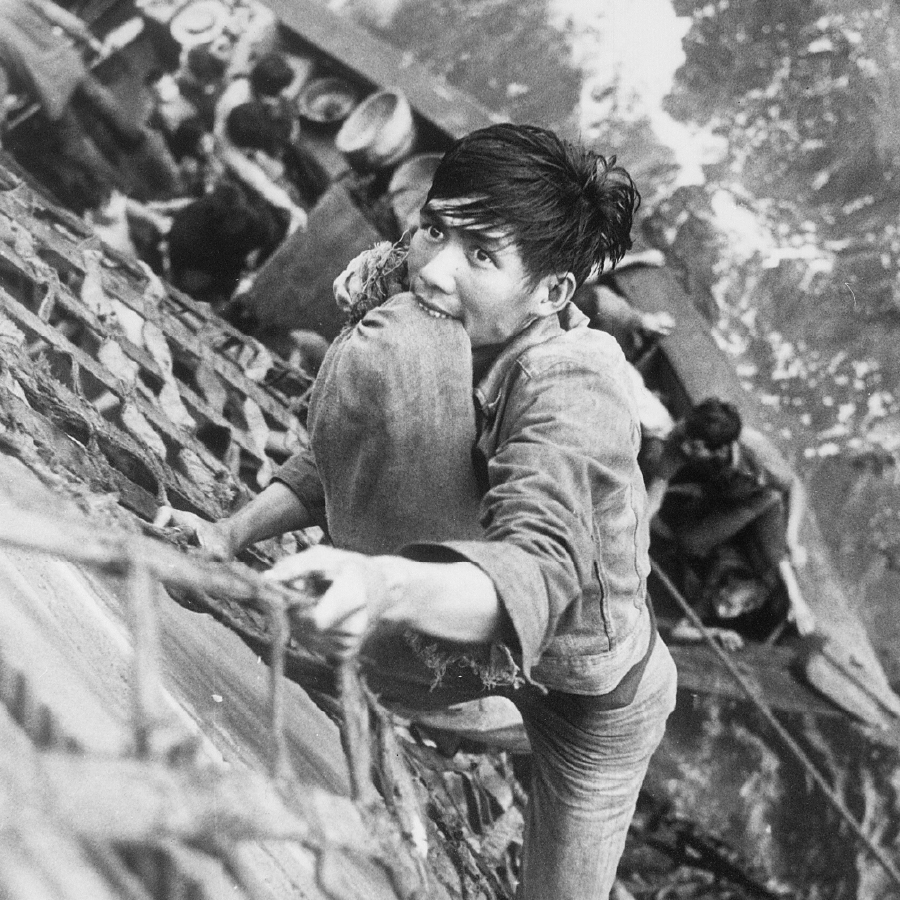
In 1975, when North Vietnam captured Saigon, waves of South Vietnamese fled—escaping political reprisals, poverty, and forced conscription. Some paid in gold; others gave up their homes, all for a place aboard decommissioned cargo ships or fragile fishing boats. The vessels were packed with people, heavy with the stench of waste and vomit. Over the next two decades, more than 800,000 set out across open waters; between 200,000 and 400,000 never made it to shore.

Although 53 percent of Americans at the time opposed taking them in, the United States ultimately accepted more boat refugees than any other country. Those who survived, marked by endurance and resolve, took low-wage jobs and rebuilt their lives with remarkable speed. Many became deeply devoted to temples or churches—perhaps fulfilling vows made during long nights at sea.

Vietnamese Americans are often portrayed as a success story. Median household income stands around US$94,000—higher than the U.S. national median of US$75,000. Yet this statistic masks deep disparities within the community. Early arrivals with greater means often settled in San Jose, while later waves of refugees clustered along the Southern California coast, especially in Orange County, relying on fishing for livelihood. In recent years, oil spills and the invasion of tiger shrimp have devastated shrimping incomes, creating urgent needs within these communities.


Today, roughly 2.3 million Vietnamese Americans live in the United States, with the largest populations in California (about 670,000) and Texas (about 280,000). Hong Kong, Malaysia, and Taiwan also share deep historical intersections with Vietnamese boat refugees—we encourage you to explore local stories within your own regions.


Prayer

Heavenly Father, You have brought boat refugees and their families to safety and given them a place to call home in Your love. May churches across the United States welcome and care for Vietnamese communities, especially those most vulnerable, so that even in a foreign land they may find belonging again. Send Christian groups to walk alongside Vietnamese fishing communities in Orange County—strengthening neighborhoods and helping them build stable, sustainable livelihoods, turning hardship into new opportunity. Lord, though the Vietnamese boat refugee crisis has passed, new tragedies continue across the Mediterranean and the Bay of Bengal. Give wisdom, compassion, and strength to host nations and humanitarian workers as they respond to new waves of refugees. In the name of Jesus Christ we pray, Amen.

Strange Chili

Pakistan’s Chili Farmers

20Apr

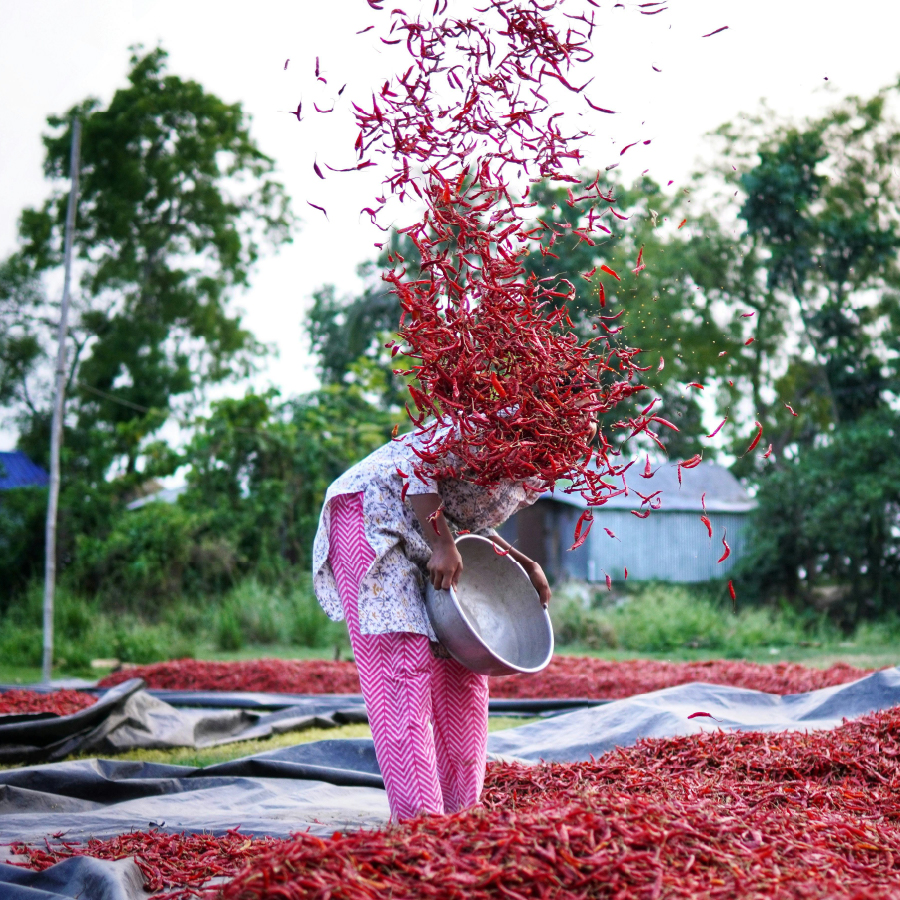
Asia’s red chili capital lies in Kunri, a small town in Pakistan’s southeastern Sindh Province. In peak season, the landscape is often a blazing sea of red. But in 2022, disaster struck the chili harvest. What should have been vibrant, fiery pods instead shriveled into gray-black husks, resembling dried fish.

Rising temperatures year after year, coupled with declining rainfall, unleashed waves of pests and disease. Then came catastrophic floods—the worst in a century—rotting entire fields. Jalil watched helplessly as floodwaters swallowed his land. Standing beside a pumping machine, he struggled to divert water from his chili fields into neighboring cotton plots. In the end, he salvaged only 30 percent of his chilies—while the cotton crop was entirely sacrificed. He sighed, “When I was a child, the weather wasn’t this harsh. Chilies weren’t this hard to grow.”

Pakistan is the world’s fourth-largest producer of chili peppers, with Sindh Province accounting for 85 percent of the country’s output. The devastation there highlights how vulnerable agricultural economies have become under extreme climate stress. In recent years, other chili-growing regions have also seen declining yields as weather patterns shift.

Yet even in hardship, these chilies have brought people closer together. In Pakistan, for example, to prevent aflatoxin during sun-drying, American teams have introduced foldable drying sheets and safer storage methods. China, meanwhile, has supplied improved seed varieties and increased imports to meet the strong demand for chilies in Sichuan and Chongqing cuisine.

Prayer

Heavenly Father, as chilies around the world suffer under climate change, they echo the groaning of all creation (Romans 8:22). Teach us to be good stewards of the earth, responding to the calling You first gave Adam to tend the garden.

Protect farmers whose livelihoods depend on the land and the weather. May they come to know You as the Lord who governs the heavens, learning to entrust their worries to You and bring before You their hopes for a good harvest. Help both crops and those who cultivate them to grow in resilience and wisdom amid a changing climate. We pray that people across nations, cultures, and faiths would break down barriers and support one another. Raise up skilled Christian workers to serve farming communities—bringing practical knowledge, integrity in trade, and the light of salvation and eternal hope. In the name of Jesus Christ we pray, Amen.

The True Engine of Colonial Economies

Mercantilism

21Apr

At aristocratic banquets in Europe, sugar was the sweetest star of the table. Yet in the Caribbean plantations where it was produced, it was the crystallized result of whips and sweat. Sugar underwrote one of the largest systems of human bondage in modern history—over four million Africans were “imported” to the Caribbean under slave contracts.

Many assume that racial supremacy gave birth to colonialism. But the causal chain may run the other way. Historian Eric Williams proposed a striking reversal: it was economic profit that drove colonization and slavery, while racism emerged largely as a justification for exploitation.

Behind the tragedy stood mercantilism—a doctrine that placed national interest above all and treated trade surplus as supreme.

To ensure profits flowed back with precision, Britain’s Navigation Acts mandated that colonial goods could be exported only to Britain, and that all trade be carried on British ships. Colonies were forced to produce goods they themselves could not consume, and even basic tools and daily necessities had to be purchased from the colonizers. One laborer thus generated profit twice over for the empire. British records celebrated this arrangement, noting how colonial production and consumption created immense benefit and employment for the mother country.

The Caribbean became a source of wealth that fueled Europe’s rise, helping shape the global balance of power we see today. Mercantilism’s pursuit of profit above all else—treating people as expendable—laid the groundwork for later capitalist systems. Perhaps its spirit never disappeared, but simply took on a more respectable face.


Sugar

Queen Elizabeth I was famously fond of it, even rinsing her mouth with sugar each day—unsurprisingly leaving her with blackened teeth. Among colonial commodities, sugar reigned supreme, exceeding the value of all other plantation products combined. Yet in the West Indies, it was also the most labor-intensive and demanding crop to produce.


Prayer

Heavenly Father, give us insight to understand how the world works. In the spirit of Jubilee and Sabbath, free us from systems of endless production that wear down both people and the land. Teach us to rest—to let go of our need to control and accumulate, and to resist the constant drive for more—so that both people and the earth can recover and breathe. You established Jubilee, with its rhythms of release and restoration, to break the grip of those who control labor and its fruits. Help us see Your mercy in this, and humbly confess that people, land, and time all belong to You. Raise up economists, entrepreneurs, and leaders shaped by faith in Christ to build fair and just systems of trade. Bring healing to the Caribbean, and make the Church there a people who restore what has been broken and live out the gospel in word and deed. In the name of Jesus Christ we pray, Amen.

From Slave Rhythms to a Global Beat

Reggae

22Apr

When we’re restless or tense, reggae’s steady dut-da, dut-da groove has a way of easing the soul—like a Caribbean breeze swaying through palm trees. Even wedding playlists often include “I’m Yours” by Jason Mraz, its lighthearted rhythm carrying unmistakable reggae roots.

But don’t mistake reggae’s laid-back feel for passivity. In its very bones runs Jamaica’s fiercest spirit of resistance. Reggae was born in the ghettos of Kingston, forged amid postcolonial unrest and political turbulence. What began as folk expression became the soundtrack of the streets.

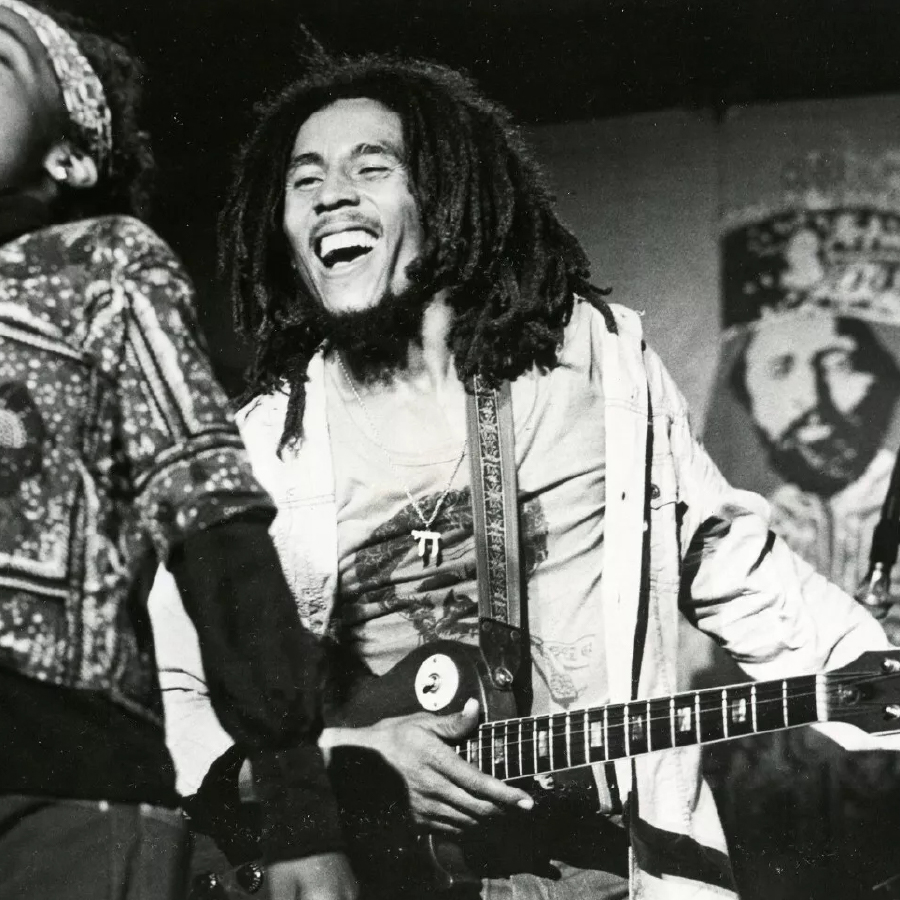
Bob Marley’s songs of love, freedom, and human rights carried Jamaica’s struggle beyond its shores, giving it a voice the world could hear. “Get Up, Stand Up” calls people to rise, while “Redemption Song” offers a quieter reminder: true liberation begins within—it cannot simply come from outside.

If Marley was a musical diplomat, Peter Tosh was a blade—cutting straight to the heart of the system, angry and unyielding in his call for land, dignity, livelihood, and justice.

Jamaica is more than the empire’s sugar bowl. It has turned the bitterness and sweetness of its history into reggae and carried it out into the world. That laid-back rhythm is a calm shaped by exhaustion—and a quiet defiance against oppression. Long before, in cane fields where their ancestors labored without rest, they had already learned: only music could give back the rhythm of body and soul.

The gentle vocal line of “Redemption Song” amplifies both sorrow and vulnerability.

Prayer

Heavenly Father, You are the King of glory, yet You care deeply for the poor and the oppressed. You heard the cries of slaves in Exodus, and You hear the longing of the human soul in Jamaica’s music. Today, You still listen to those who suffer and draw near to the brokenhearted. Use Your people and the global Church not only to worship You in song, but to step into places of poverty and need in Jamaica—with love, with action, and with a desire to see things made right—so that people may see the justice and hope of Your kingdom. May Jamaica lift up a new song of salvation and proclaim what You have done. Raise up a new generation who will write songs that move hearts and awaken a deeper longing for You in worship. In the name of Jesus Christ we pray, Amen.

Exile and the Longing for Zion

Rastafarians

23Apr

Dreadlocks are not a fashion statement—they represent Samson’s strength, a sign of refusing bondage. The spark of cannabis between the fingers is not for recreation, but for meditation—seeking the presence of Jah (Yahweh) in the rising smoke. The spiritual map of the Rastafarian does not align with the mainstream world. The West is “Babylon.” Ethiopia is Zion—the promised homeland. It is the only ancient African nation never colonized, a symbol of freedom, and the resting place Bob Marley once envisioned for himself.

Emerging in the 1930s, the Rastafari movement led Jamaicans into a bold spiritual break from colonial society. At the time, Black nationalism was on the rise, and a prophecy took hold among Jamaica’s Black population: a Black king would come to deliver the oppressed. When the Ethiopian prince Ras Tafari Makonnen resisted the Italian invasion and was crowned Emperor Haile Selassie I, many believed he was that promised Messiah. “Ras” means head or prince, and “Tafari” was his name. In this way, Rastafari was born.

In Scripture, they saw themselves as Israel in bondage—longing to rise as the Lion of Judah and find their voice. They retold the Exodus as their own story, seeking to heal the shame of history: we are not slaves, but a people set apart by God, waiting to return to our homeland.

To this day, Rastafarian communities can be found across Africa and the Americas. Amid the steel towers of modern Babylon, they continue—through their hair, their music, and ritual smoke—steadfast in holding on to their vision of Zion.

Prayer

Heavenly Father, as Rastafarians seek Zion, may they come to know Christ, who took on flesh—who bore humiliation and suffering on the cross, yet through His love and forgiveness, and the power of His resurrection, overcame death and darkness. He has opened a greater Exodus, leading people out of darkness into light and into the eternal city You have promised. Lord, may they also see in Joseph’s story what it means to trust in You: though his brothers, out of their own desires, sold him into slavery in a foreign land, You were with him and caused him to prosper. Lead Rastafarians out of hardship and into renewal. Clothe them in righteousness, and strengthen them with the power of Christ, so that they may leave behind stories of slavery and exile and recover the strength of the Lion of Judah. In the name of Jesus Christ we pray, Amen.

The Illusion of the 51st State

Sugar in Puerto Rico

24Apr

As of 2025, Puerto Rico has held seven referendums expressing the desire to become the 51st state of the United States—yet the appeals have met with silence.

In 1898, during the Spanish–American War, the United States seized this Caribbean gateway and built a sugar empire to supply North America’s insatiable appetite for sweetness. Puerto Ricans were granted U.S. citizenship and the status of a self-governing territory. They do not pay federal income tax, yet they also lack voting representation in federal elections.

But reliance on a single industry and a single market came at a cost. During the Great Depression of the 1930s, Puerto Rico felt the impact as sugar prices collapsed. Failed land reforms and a rushed shift toward industrialization drove workers out of agriculture, and sugar mills began closing one after another.

Mass migration drained the life out of the island. After World War II, labor shortages in the mainland United States drew large numbers of Puerto Ricans north. In just two decades, the island lost a third of its population. By 2022, about 5.9 million Puerto Ricans were living in the United States—far more than the island’s 3.5 million residents.

After the United States ended key tax incentives in 2006,* American capital pulled out, and by 2017 the island had declared bankruptcy. Today, Puerto Rico faces one of the world’s lowest birth rates; only 29 percent of its residents have a university degree; energy costs remain high; and medical workers continue to leave. By 2030, nearly a third of the population is expected to be over 65.

People are a nation’s greatest strength—and Puerto Rico’s most valuable resource has long since been drawn away. Washington’s inaction may simply confirm what many on the island have long suspected.

*Tax incentives once allowed manufacturing investors to operate tax-free for ten years.

Prayer

Heavenly Father, Puerto Rico’s journey from a sugar empire to bankruptcy has left deep scars. We ask You to raise up people and resources to strengthen infrastructure, address energy needs, and improve education and cultural life. Help the island build a more diverse economy and draw in entrepreneurs committed to sustainable work. Let the younger generation see hope in their homeland. Stir a movement of return that heals the loss of those who have left. Raise up young Christians to serve in Puerto Rico’s churches and communities, becoming a steady presence in an aging society. May they show Your love through their work in healthcare, education, and care for the elderly, and in bringing generations together. In the name of Jesus Christ we pray, Amen.

West Side Story

Puerto Rican Migrants in the United States

25Apr

Have Puerto Rican migrants in the United States fallen out of favor? Are they really, as some employers claim, lazy and costly workers?

Maury likes to call himself a jíbaro—a word often used to mean “country bumpkin.” Though he’s young and grew up in New York, he wears the label with pride. His grandparents were true jíbaros—arriving in the 1950s and helping drive the rise of the U.S. East Coast economy.

Loud and rough around the edges, yet deeply hardworking, these jíbaros packed into tenement apartments and labored on the painstaking assembly lines of the garment industry. Through salsa and vibrant graffiti, they brought warmth and color to New York’s gray streets—shaping the restless, vibrant street life of East Harlem.

Yet praise could not erase their frustration. As manufacturing jobs moved overseas, yesterday’s working-class heroes became today’s “surplus population.”

By the 1990s, Puerto Rican poverty rates in New York were five times higher than other groups. Rates of long-term disability, cirrhosis-related deaths, and HIV infections all ranked among the highest.

Those now called “expensive workers” have a median household income of about $31,800 in New York—less than half that of nearby Nassau County. As employers turn to newer immigrants seen as “hardworking and cheaper,” many second- and third-generation Puerto Ricans are left more marginalized—and poorer—than the newcomers.


The film West Side Story tells the story of Puerto Rican migrants in 1950s New York.


Prayer

Heavenly Father, You see how Puerto Rican migrants are finding it harder to make a place for themselves amid changing social and economic realities. Make a way for them. Raise up job training, educational opportunities, community renewal, and new paths for economic growth. May the Church become a place of support—helping them find their footing in times of change, break free from social labels, and rebuild their lives. Through the gospel, let them see their unshakable worth in Your eyes. May the name jíbaro become a sign of Your grace—that You choose what the world calls foolish to shame the wise and the strong. Draw them into deeper fellowship with You. Let salsa carry the joy of worship, and let the creativity of street murals reflect Your beauty. In the name of Jesus Christ we pray, Amen.

A Sweet Alliance

Sugar in the Philippines

26Apr

After Spain lost the Spanish–American War, it ceded Puerto Rico, Guam, and the Philippines to the United States. Filipino farmers began growing sugar for the North American market, and for a time, life felt secure. Today, however, many look back with disappointment—toward both the United States and former president Marcos.

In earlier years, the Philippines traded with partners across Europe, the United States, Japan, and China. But after the United States took control, Filipino farmers began to benefit from duty-free sugar exports to the U.S. market. Over time, the country’s sugar trade with the rest of the world dwindled to almost nothing.

Then came the shock of the Great Depression in 1929. American sugar producers demanded protection, and Washington’s priorities turned inward. Philippine sugar prices collapsed by three-quarters, and export quotas were slashed by 55 percent.

The United States had already begun signaling a gradual separation. As early as 1934, it placed limits on sugar imports and set a ten-year course toward Philippine independence. But duty-free access had bred deep dependence. When it ended in 1974, the Philippines was thrown off balance—without new markets, without experience in global sugar trade, and without mechanization. It was like trying to chase a galloping horse on a donkey.

Then came further blows: the Marcos family’s monopoly over the sugar industry, followed by the 1984 collapse in global sugar prices. Together, they left a million sugar workers out of work. On Negros Island alone, around 1,000 children died of hunger in a single year.

When sugar workers rose in protest, they were met with brutal repression. Today, many remain landless and poor. Fifty years on, little has changed.

Prayer

Heavenly Father, the Philippines was once bound by a sweetness that led to dependence, losing strength and independence in its sugar industry. Help the nation rebuild wider and more diverse trade relationships. Renew its agricultural practices, and improve the protection and working conditions of smallholder farmers and sugar workers. Raise up leaders and public servants like Joseph and Daniel, with clean hearts and wisdom from above. Give them courage and discernment to confront corruption, set wise policies, and restore justice in the land. May the Philippines move forward with steadier steps, and under Your guidance avoid the traps that hinder its growth. Lead the nation toward stability, strength, and a shared prosperity for all. In the name of Jesus Christ we pray, Amen.

Two in the Morning on Negros

Sugar Workers in the Philippines

27Apr

By two in the morning, the trucks are already rumbling, hauling half-awake workers to the fields by three. To meet the daily quota, they must push on until nightfall, exhausting themselves to get the job done.

During peak season, sugar workers earn about three U.S. dollars a day—less than half the legal minimum wage. Seasonal migrant workers, known as sakada, make just two. In the off-season, it’s worse: barely twenty dollars a month to feed a family and raise children.

Meals at work are little more than salted rice or porridge, with the occasional expired can of food. Workers are chronically malnourished and often ill, borrowing from landowners just to see a doctor. Some loans carry staggering interest—over 100 percent—leaving families to wait until their children are old enough to help repay the debt. When the milling season ends, belts tighten further. No work. No income. On Negros, they call it the “season of death.”

Why did Negros become a stronghold of communist activity? Because sugar workers here own nothing—no land, no tools—only their labor, which they must sell to those who own the mills and the fields. They long for land reform, for even a small plot of their own, enough to grow food and eat their fill. But for landowners, reform would mean losing their workforce. Successive presidents have shown little will to act, and the news reduces the island to unrest and trouble.

The sugar cane keeps growing. The workers, meanwhile, are worn down as they produce wealth for others. The sweetness in the fields is always tasted by someone else.

Prayer

Heavenly Father, Negros is often overlooked by the wider Church in the Philippines, and many Muslim sugar workers still struggle with hunger and poverty. Stir the Filipino Church to become a source of provision in this land—working with local groups to enter these communities and care for both physical and spiritual needs. Help them build schools and clinics, offer skills training, and speak up for fair labor and land policies. Lead them to work with business leaders to create new paths for livelihood, so that the body of Christ not only proclaims the good news of the Kingdom, but also brings relief to those who suffer. May the Beatitudes awaken hope and faith. May they see Your provision, like the loaves and the fish. Graft the people of Negros into the true Vine, that they may draw life from Christ and live in His abundance. In the name of Jesus Christ we pray, Amen.

Mojitos with the Masters

Cuba’s Rum

28Apr

A swallow of strong rum goes down like fire, igniting the chest. The English once used the Devonshire dialect word “rumbullion”—meaning excitement or uproar—to describe the effect. Over time, the word was shortened to the name we know today: rum.

This fiery drink was born in the makeshift stills of enslaved Africans in the Caribbean. They discovered that molasses—the waste left over from sugar refining—could be fermented into alcohol. Rum quickly became a favorite among sailors and pirates alike. Colonizers even used it as currency: four gallons of rum and a bolt of cloth could be exchanged for an underage enslaved person.

With the end of the Age of Sail, rum moved from the hold to the bar in Cuba—no longer a currency of blood and sweat, but a drink of style. Mojitos and Cuba Libres soon made it their base.

A mojito, with mint and crushed ice, became a favorite of both Ernest Hemingway and James Bond. During his 21 years in Cuba, Hemingway rarely drank fewer than six a day, and sometimes as many as twelve. Inspiration returned again and again at Havana’s La Bodeguita del Medio. Even during the U.S. embargo, one thing could not be kept out—his novels.

In recent years, Cuba’s rum industry has begun to pick up again—but sugar production has dropped to its lowest level in a century. The rainy season disrupts the harvest, leaving cane in the fields, and long-running U.S. sanctions have brought fuel shortages and aging equipment. What was once a point of pride for Cuba now faces an uncertain future.


Rum

The pirates’ “happy water”—a byproduct of sugar, once a sailor’s staple and now the soul of modern mixology.


Prayer

Heavenly Father, the crisis facing Cuba’s rum industry echoes the wedding at Cana, when the wine ran out. May the people of Cuba experience for themselves Jesus’ miracle of turning water into wine—seeing Him meet their need and leave behind signs of His grace, even when raw materials and fuel are scarce. With aging equipment, long-standing sanctions, and political isolation, development has been difficult. Have mercy on this land. Bring about the renewal of new wine in new wineskins—opening new paths for the economy and restoring life to both the sugar and rum industries. More than this, may the people of Cuba taste a love better than wine. Fill them with the joy of the Holy Spirit, and lead them into the fullness of life found in the salvation of the cross. In the name of Jesus Christ we pray, Amen.

Cuba Libre — “Free Cuba”

The Entanglement of Cuba and the US

29Apr

Cuban rum mixed with American cola—the cocktail Cuba Libre commemorates a brief moment of pure friendship between the two nations. When the Spanish–American War ended in 1898 and the United States helped Cuba break free from Spain, soldiers combined their national drinks, raised their glasses, and shouted: “¡Viva Cuba Libre!” But was Cuba ever truly free?

Cuba sits at the gateway to the Gulf of Mexico, just across the water from Florida, and has long been under the watchful eye of the United States. Just as its struggle against Spain was nearing victory, the sudden outbreak of the Spanish–American War placed the island under U.S. control. Though Cuba gained formal independence, it was quickly bound by new constraints. The Platt Amendment gave the United States the right to intervene in Cuban affairs and barred Cuba from forming alliances with other nations.

Less than a decade after independence, three-quarters of Cuba’s land was in foreign hands. In 1959, Fidel Castro and Che Guevara overthrew the pro-U.S. government and nationalized American assets. Washington responded with an embargo. Cut off and isolated, Cuba turned to the Soviet Union—setting the stage for one of the Cold War’s most dangerous crises. The Cuban Missile Crisis brought the world to the brink of war.

Years later, U.S.–Cuba relations briefly thawed under Barack Obama, only to harden again when Donald Trump reinstated strict sanctions. For decades, ordinary Cubans have found themselves caught between Castro’s authoritarian rule and the pressures of great-power geopolitics.

Today, a Cuba Libre is made with Cuban rum and Mexican cola—but the drink still lacks the one ingredient its name proclaims: freedom.


Two works that explore Cuba’s story: 1. Cuba: An American History: Historian Ada Ferrer, born in Cuba and raised in the United States, helps readers understand Cuba from two perspectives. 2. The Courier — A spy thriller based on a true story, portraying the Cuban Missile Crisis through British and American eyes.


Prayer

Heavenly Father, “Cuba Libre” carries the Cuban people’s deep longing for freedom. May they find true freedom in Christ—freedom from the chains of history, geopolitics, and ideology. In times of material lack, let them discover the spiritual abundance of having nothing, yet possessing everything. In the midst of political pressure, may they live out a freedom no one can take away. As Cuba has turned toward atheism and the Church has faced restrictions, may the Holy Spirit still move among the younger generation. As they read Your Word, set their hearts on fire. With new life and wisdom from above, may they bless their nation’s economy and culture, and through prayer, open a path toward reconciliation between Cuba and the United States. May the Church become one who invites others to Your table, lifting up the cup of salvation, so that people may truly declare: Only Christ can set us free. In the name of Jesus Christ we pray, Amen.

Xinjiang: Fast and Slow

Uyghur Smallholder Farmers

30Apr

When cumin hits the grill and releases its fragrance, that warm, rugged aroma feels unmistakably like Xinjiang. Its character mirrors the Uyghur people who grow it—resilient, openhearted, and adaptable. Farmers know its “short, flat, fast” rhythm well: sown in March, harvested in June, and intercropped with corn and cotton so the land stays productive year-round. Cumin’s speed is one of the clearest expressions of life on this land.

But Xinjiang moves to another tempo too—the slow kind. Azat, an elderly farmer from Kashgar, has spent a lifetime tending apricot trees and sun-drying fruit. He says the finest dried apricots come from patient waiting. Yet whether fast cumin or slow apricots, they run into the same barrier: they cannot be sold. In local bazaars, everyone is selling the same crops.

A young volunteer in Xinjiang tried helping small farmers sell their produce on Taobao, only to be met with jokes: “What, do you deliver by donkey?” To get around the region’s vast distances and shipping challenges, they rented warehouse space in Beijing and handled logistics from there. They also tried to close the distance of the heart—adding QR codes to the packaging so customers could scan and see photos of the farmers, along with their messages.

These efforts began to change lives, drawing more Uyghur youth to join in. They brought the “fast” resourcefulness of the younger generation alongside the “slow” patience of their elders—trying to carry the fragrance of their land beyond the desert winds, and onto more tables.

*Short growing cycles, low barriers to entry, and quick returns.


Cumin

One of the Silk Road’s most distinctive spices—known for aiding digestion, cutting the gaminess of meat, and serving as the soul of desert barbecue.


Prayer

Heavenly Father, we lift up the sale and transport of Xinjiang’s agricultural produce to You. Break through the limits of distance, and open the way for cumin, dried apricots, and other local goods to reach wider markets—so that more people may taste the fruit of Uyghur farmers’ labor and see the hands behind it. Give Uyghur youth wisdom and creativity to renew traditional industries and find their place in today’s markets. May the creativity of the young and the experience of their elders come together, learning from one another with humility as they build the future of their homeland. Bring peace to this land. Help Uyghur communities and neighboring peoples move beyond cultural and language barriers, growing in understanding and working together. In the name of Jesus Christ we pray, Amen.